

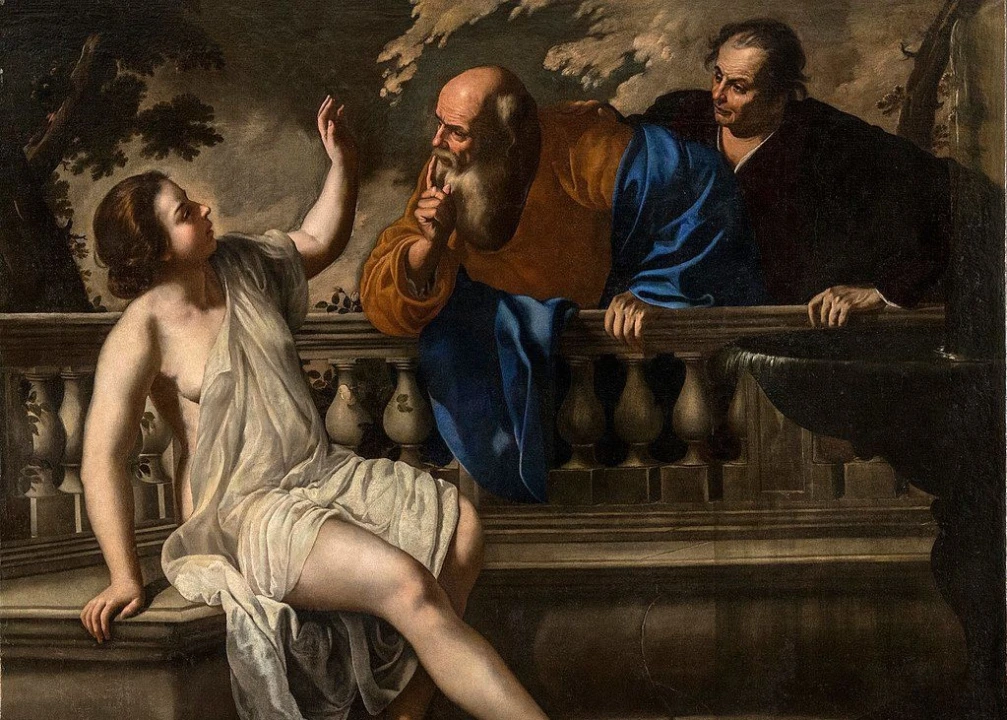
You will find the spirit of Caesar in the soul of a woman.” —Artemisia Gentileschi, 1649
IN Fredericksburg today, one can find many women artists who work in every media: painting, sculpture, printmaking, and ceramics, but also paper and book arts, mosaic, jewelry, weaving and textiles, photography, neon, video, and calligraphy, as well as architecture, interior design, and urban planning.
But women’s presence in these fields is recent in the history of Western art. The life of acclaimed painter Artemisia Gentileschi (1593–1654) allows us to consider how artists were trained in early modern Europe and why a woman might enter the profession in the 17th century, a time when such accomplishments by a woman were rare indeed.