

In 2026, We the Italians celebrates “Two Anniversaries, One Heart” – the 250th anniversary of the United States and the 80th anniversary of the Italian Republic. This article is part of the “Happy Birthday USA: Unsung Italian Heroes” project, in which we share how, in every corner of the United States, an Italian has made a positive impact on their local community.
---
Cesidio Perruzza and the true story of the Rockefeller Center Christmas tree
There are lights that, every year in the heart of winter, set New York aglow and speak to the entire world. They are the lights of the Rockefeller Center Christmas tree – towering, dazzling, alive with thousands of reflections that shine in the eyes of those who stop to look. It is one of the most famous, photographed, and shared images of the Big Apple. Yet behind those lights lies a story that doesn’t shine in quite the same way – and perhaps for that very reason, it feels more real.
It is a story that smells of earth and hard work, of departures with no return, of dreams packed into a single suitcase. It is the story of Cesidio Perruzza.
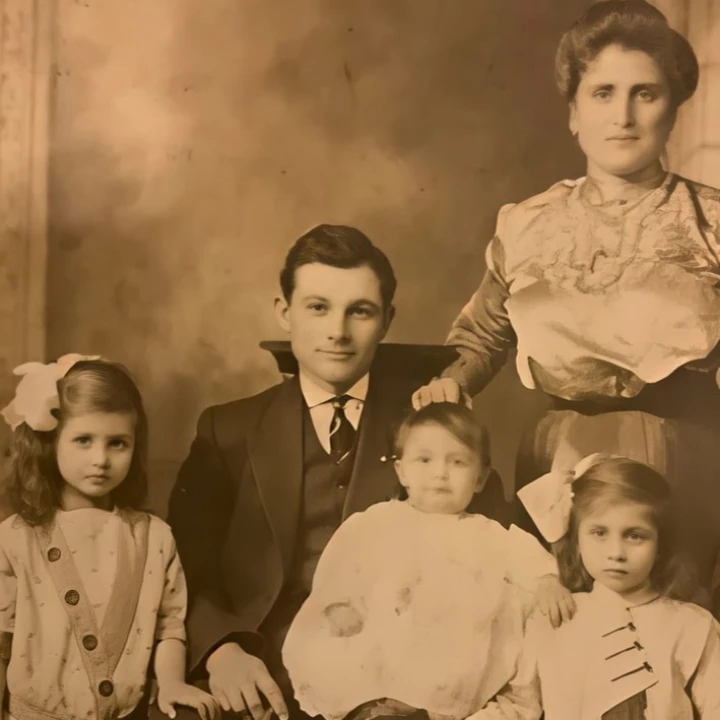
Born in 1884 in San Donato Val di Comino, a small village tucked among the mountains in the southern edge of Lazio near the Abruzzo border, Cesidio learned early what life demanded. His schooling ended after the third grade, and soon came the time for difficult choices. In 1901, at just seventeen years old, he crossed the ocean. Like millions of Italians, he left everything behind – family, language, the star-filled winter skies above the mountains of San Donato that he loved so deeply. He carried with him only a few certainties: to work, to endure, to build.
The America he found was not the land of dreams and promises. It was dust, construction sites, and blistered hands. Cesidio became a digger, a blaster – a man capable of shaping rock with strength and courage. They called him “Joe Blaster,” a name that says more than a thousand words. That young man from Ciociaria worked relentlessly, saved his money, and eventually managed to bring his young wife Gerarda – whom he had married just before leaving – to New York.
Then came the Great Depression. America slowed, faltered, collapsed – but on construction sites, something endured. Amid steel and dynamite, men from faraway lands kept working, kept building the city. Many of them were Italian. Among them was Cesidio.
In 1931, at the construction site of the RCA Building – the future symbol of Rockefeller Center – Christmas approached quietly. There were no decorations, no gifts. Only cold, exhaustion, uncertainty, and days that all felt the same. And yet, right there, an idea was born.
Cesidio looked at that empty stretch of cold concrete and imagined a sign – not something grand, not something perfect, but something human. He organized a collection among the workers to buy a tree, and together they planted it in the heart of the construction site. Then they decorated it with whatever they had: paper, electrical wires, tinfoil salvaged from detonators… small fragments of life turned into light.
That tree was more than just a tree. It was a quiet declaration. It said that even in poverty, beauty can be created; even in hardship, dignity can be found… even far from home, a sense of community can endure.
The following year, they did it again. Two years later, in 1933, that gesture became a tradition: Rockefeller Center lit its first official tree. The lights multiplied, the spectacle grew, and the world watched – without knowing.
In 1999, Governor Mario Cuomo, the son of Italian immigrants, presented the Perruzza family with a photograph dated December 24, 1931. It shows workers lined up for their pay, faces worn, caps pulled low over their eyes. Among them are Cesidio and his brother Loreto. Beside those men stands a fragile, glowing tree. On the back, a handwritten note reads: “New York thanks the people of San Donato Val di Comino,” and just below it, “I am from Salerno.”
Perhaps that is the true meaning of it all.
Because the story of the Rockefeller Center Christmas tree is not just a holiday tradition. It is the story of Italian immigration – of men and women who started with nothing, who built cities, who endured hardship, and who left their mark without asking for anything in return.
And every year, when those lights are switched on, they illuminate more than just a tree. They illuminate a memory.
Within those lights, even today, there is a piece of Italy.
Special thanks to:
the MEI – Museo nazionale dell’emigrazione italiana
the Museo del Novecento e della Shoah di San Donato Di Comino
for the kind permission to use the image.