

In 2026, We the Italians celebrates “Two Anniversaries, One Heart” – the 250th anniversary of the United States and the 80th anniversary of the Italian Republic. This article is part of the “Happy Birthday USA: Unsung Italian Heroes” project, in which we share how, in every corner of the United States, an Italian has made a positive impact on their local community.
---
Charles Paterno, the Napoleon of skyscraper builders
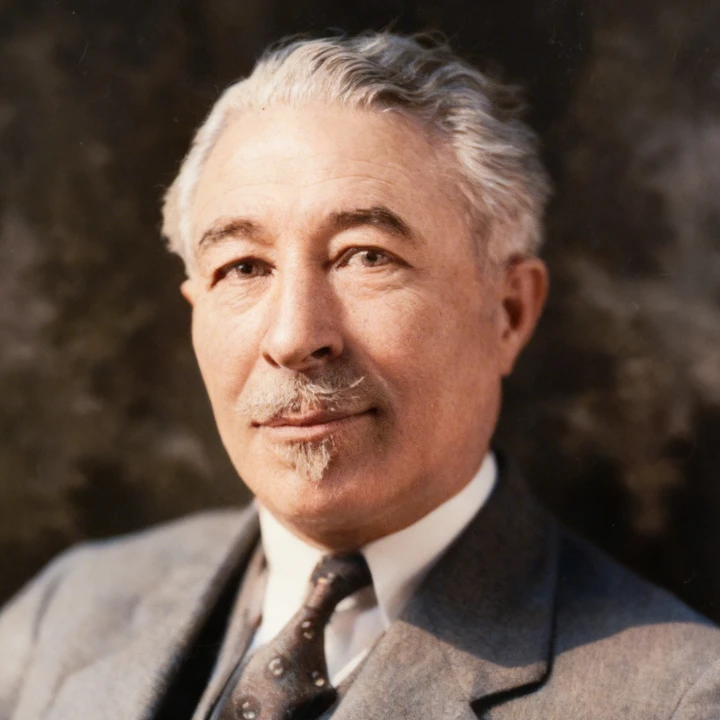
Canio Paternò, known in the United States as Charles Vincent Paterno, was born in 1878 in Castelmezzano, in the heart of Basilicata, southern Italy. His father, Giovanni, was a bricklayer who understood early on that America offered opportunities unimaginable in the struggling Italian South of the late nineteenth century. After emigrating to New York, he sent for his family a few years later, bringing young Canio into the dynamic and demanding world of a rapidly expanding city.
Gifted with sharp intelligence and strong determination, Canio pursued higher education and earned a medical degree from Cornell Medical School. Yet his life took a decisive turn when his father died. He abandoned medicine and joined his brother Joseph in the construction business. From that decision grew one of the most influential real estate enterprises in early twentieth-century New York. Paterno was eventually nicknamed “the Napoleon of Manhattan skyscraper builders” for his ability to design and develop innovative, functional buildings tailored to the needs of America’s growing middle class.
His buildings were not simply residential structures; they symbolized New York’s transformation from an industrious port city into a modern metropolis. It is estimated that Paterno developments housed tens of thousands of residents in more than seventy-five buildings across neighborhoods such as the Upper East Side, Morningside Heights, and Washington Heights.
Yet beyond Manhattan’s skyline, a more personal and symbolic dimension of his story emerges along the Hudson River and in what we now call the Hudson Valley region. In the 1920s, when Washington Heights was still evolving, Paterno purchased a large tract of land overlooking the Hudson River. There he built a spectacular residence – a European-style castle complete with towers, battlements, and architectural details inspired by medieval Italy.
The so-called Paterno Castle dominated the landscape. It was visible from New Jersey and from boats traveling up and down the Hudson. More than a private home, it was a statement of identity. The structure reflected Paterno’s Lucanian roots and his desire to bring a piece of Europe to the banks of the Hudson while celebrating the success he had achieved after an immigrant childhood marked by uncertainty and sacrifice. The castle quickly became a visual landmark and helped shape the residential identity of Washington Heights.
His decision to build there was strategic as well as symbolic. Paterno recognized the scenic and real estate potential of the cliffs overlooking the river. He developed residential complexes that maximized Hudson views, incorporating green spaces and forward-looking architectural solutions. Although he died in 1946, the castle itself had already been demolished in 1938 to make way for Castle Village, a residential complex that still occupies the site and continues to offer some of the most striking views of the Hudson River and the George Washington Bridge.
Paterno’s impact on the Hudson Valley area extends beyond architecture. His developments helped open up previously marginal areas, fostering stable, well-connected communities. His attention to landscape, light, and livability anticipated modern concepts of residential urban planning.
Today, his legacy remains visible along the Hudson’s shores – solid buildings, harmonious complexes, and panoramic vistas that continue to define the character of Washington Heights and northern Manhattan, an integral part of the greater Hudson Valley region. From the mountains of Basilicata to the cliffs above the Hudson, Charles Paterno transformed an immigrant dream into a lasting imprint on the American landscape.