In 2026, We the Italians celebrates “Two Anniversaries, One Heart” – the 250th anniversary of the United States and the 80th anniversary of the Italian Republic. This article is part of the “Happy Birthday USA: Unsung Italian Heroes” project, in which we share how, in every corner of the United States, an Italian has made a positive impact on their local community.
---
Before the Gateway Arch, an Italian story in St. Louis
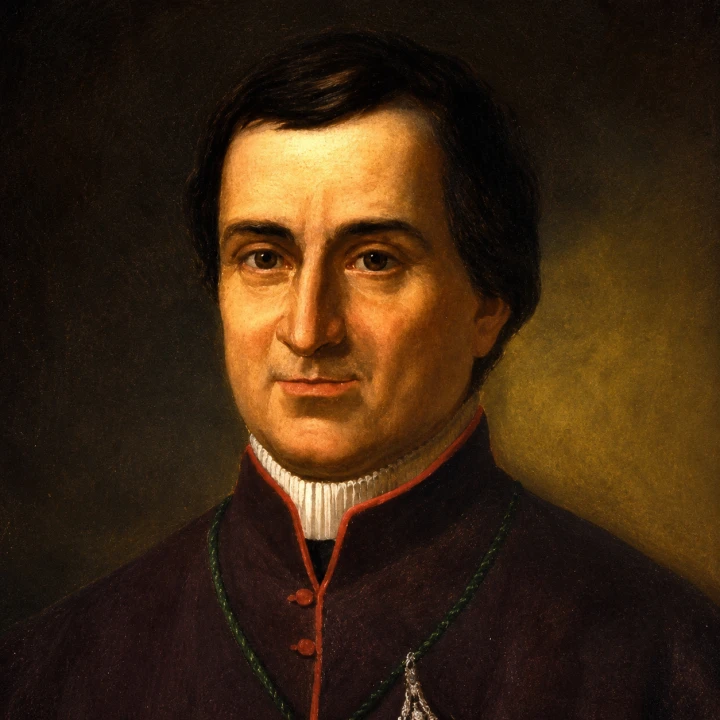
Italian immigrants and their descendants left an indelible mark on St. Louis, Missouri. Among the many Italians and Italian Americans who contributed to the city, one Italian changed St. Louis forever: Bishop Giuseppe Rosati, the Vincentian missionary who became the first Bishop of St. Louis and one of the foundational figures of the Catholic Church in the American Midwest.
Born on January 12, 1789, in Sora, Italy, in the Lazio region, Rosati entered the Congregation of the Mission in Rome and was ordained a priest in 1811. His life changed when his theology professor, Felix de Andreis, persuaded him to join a pioneering mission to the United States.
Rosati arrived in Baltimore in 1816, studied English, and taught theology in Kentucky before moving to Perryville, Missouri, in 1818. There he served as rector of St. Mary’s of the Barrens Seminary, an important center of Catholic education on the American frontier.
Recognized for his administrative abilities and missionary commitment, Rosati was consecrated coadjutor bishop in 1824. In 1826, when Pope Leo XII created the Diocese of St. Louis, Rosati became its first bishop. His enormous jurisdiction included Missouri, western Illinois, and vast American territories west of the Mississippi River and north of Louisiana.
Despite the challenges of the frontier, Rosati built institutions that would shape St. Louis for generations. He helped strengthen Saint Louis University and recruited religious communities to serve the rapidly growing region. Among them were the Sisters of Charity, who established the first hospital west of the Mississippi in St. Louis in 1828.
Rosati’s most visible legacy is the Cathedral of St. Louis, King of France, today known as the Old Cathedral. He planned, financed, and supervised its construction. The historic church remains one of the city’s landmarks, standing beside the Gateway Arch as a reminder of the religious foundations of early St. Louis.
Rosati’s work extended far beyond Missouri. He supported missionary activity throughout the Mississippi Valley and toward the Rocky Mountains, Oregon, and Texas, while participating in the first four Provincial Councils of the Catholic Church in the United States.
His diplomatic abilities eventually brought him back to the international stage. In 1840, Pope Gregory XVI appointed him Apostolic Delegate for negotiations with Haiti. After completing the mission, Rosati traveled to Rome, where his health deteriorated. Hoping to return to St. Louis, he became too ill to make the journey and died in Rome on September 25, 1843, at age 54.
More than a century later, in 1954, his remains were returned from Italy to St. Louis and reinterred beneath the main altar of the Old Cathedral – permanently reconnecting Rosati with the city he had helped build.
In 2019, the Italian Community of St. Louis, together with the Archdiocese of St. Louis and the Consulate General of Italy in Chicago, commemorated the 230th anniversary of his birth with a solemn Mass celebrated in Italian.
The year 2026 brings together three important anniversaries: 250 years since the Declaration of Independence, 80 years of the Italian Republic, and 200 years since the establishment of the Diocese of St. Louis. It is therefore especially fitting to remember Giuseppe Rosati – an Italian missionary whose courage, vision, and faith helped shape St. Louis and whose legacy remains alive two centuries later.
Nel 2026 We the Italians celebra Two Anniversaries One Heart, i 250 anni degli Stati Uniti e gli 80 anni della Reubblica Italiana. Questo articolo fa parte del progetto Happy Birthday USA: The Unsung Italian Heroes, in cui raccontiamo perchè in ogni angolo degli Stati Uniti qualcuno italiano ha lasciato un impatto positivo per il singolo territorio.
---
Prima del Gateway Arch, una storia italiana a St. Louis
Gli immigrati italiani e i loro discendenti hanno lasciato un segno indelebile a St. Louis, Missouri. Tra i molti italiani e italoamericani che hanno contribuito alla città, un italiano cambiò St. Louis per sempre: il vescovo Giuseppe Rosati, missionario vincenziano che divenne il primo vescovo di St. Louis e una delle figure fondamentali della Chiesa cattolica nel Midwest americano.
Nato il 12 gennaio 1789 a Sora, in Italia, nella regione Lazio, Rosati entrò nella Congregazione della Missione a Roma e fu ordinato sacerdote nel 1811. La sua vita cambiò quando il suo professore di teologia, Felix de Andreis, lo convinse a partecipare a una pionieristica missione negli Stati Uniti.
Rosati arrivò a Baltimora nel 1816, studiò l'inglese e insegnò teologia in Kentucky prima di trasferirsi a Perryville, Missouri, nel 1818. Qui fu rettore del seminario St. Mary’s of the Barrens, un importante centro di formazione cattolica sulla frontiera americana.
Apprezzato per le sue capacità amministrative e il suo impegno missionario, Rosati fu consacrato vescovo coadiutore nel 1824. Nel 1826, quando Papa Leone XII istituì la Diocesi di St. Louis, Rosati ne divenne il primo vescovo. La sua enorme giurisdizione comprendeva il Missouri, l'Illinois occidentale e vasti territori americani a ovest del fiume Mississippi e a nord della Louisiana.
Nonostante le difficoltà della frontiera, Rosati costruì istituzioni destinate a influenzare St. Louis per generazioni. Contribuì a rafforzare la Saint Louis University e chiamò diverse comunità religiose al servizio di una regione in rapida crescita. Tra queste vi furono le Sisters of Charity, che nel 1828 fondarono a St. Louis il primo ospedale a ovest del Mississippi.
L'eredità più visibile di Rosati è la Cathedral of St. Louis, King of France, oggi conosciuta come Old Cathedral. Rosati ne pianificò, finanziò e supervisionò la costruzione. La storica chiesa rimane uno dei simboli della città e sorge accanto al Gateway Arch, a testimonianza delle radici religiose della St. Louis delle origini.
L'opera di Rosati si estese ben oltre il Missouri. Sostenne l'attività missionaria in tutta la valle del Mississippi e verso le Montagne Rocciose, l'Oregon e il Texas, partecipando inoltre ai primi quattro Concili Provinciali della Chiesa cattolica negli Stati Uniti.
Le sue capacità diplomatiche lo riportarono infine sulla scena internazionale. Nel 1840 Papa Gregorio XVI lo nominò Delegato Apostolico per i negoziati con Haiti. Dopo aver completato la missione, Rosati si recò a Roma, dove le sue condizioni di salute peggiorarono. Desiderava tornare a St. Louis, ma divenne troppo malato per affrontare il viaggio e morì a Roma il 25 settembre 1843, all'età di 54 anni.
Più di un secolo dopo, nel 1954, i suoi resti furono riportati dall'Italia a St. Louis e tumulati sotto l'altare maggiore della Old Cathedral, ricongiungendo per sempre Rosati alla città che aveva contribuito a costruire.
Nel 2019, la comunità italiana di St. Louis, insieme all'Arcidiocesi di St. Louis e al Consolato Generale d'Italia a Chicago, commemorò il 230° anniversario della sua nascita con una solenne Messa celebrata in italiano.
Il 2026 riunisce tre importanti anniversari: i 250 anni dalla Dichiarazione d'Indipendenza americana, gli 80 anni della Repubblica Italiana e i 200 anni dall'istituzione della Diocesi di St. Louis. È quindi particolarmente significativo ricordare Giuseppe Rosati – un missionario italiano il cui coraggio, la cui visione e la cui fede contribuirono a plasmare St. Louis e la cui eredità rimane viva ancora oggi, due secoli dopo.