
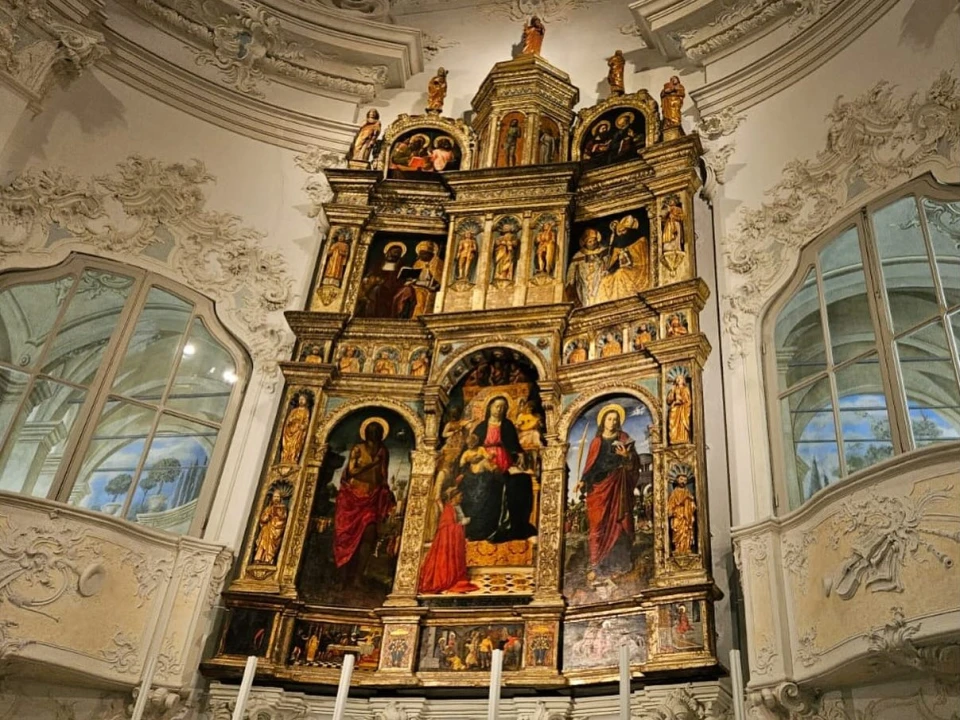

In the oratory of Nostra Signora di Castello in Savona, a remarkable altarpiece stands as both a devotional object and a symbol of civic pride. Known as the Polittico della Rovere, this multi-panel work was painted around 1490 by Vincenzo Foppa and Ludovico Brea. Its survival through centuries of political upheaval and architectural change makes it not only a masterpiece of Renaissance art but also a resilient witness to history.
The vision of a powerful patron
The polyptych was commissioned by Giuliano della Rovere, a towering figure in the late 15th century who would later become Pope Julius II. At the time, the della Rovere family was eager to affirm its influence in Savona, their place of origin, by sponsoring monumental works of art. Through this commission, Giuliano demonstrated his devotion while also consolidating his family’s prestige. The polyptych thus embodies the dual role of Renaissance patronage - fostering genuine spirituality while asserting dynastic power.
Two masters at work
The altarpiece is the fruit of collaboration between two distinguished painters. Vincenzo Foppa, one of the leading figures of Lombard painting, was admired for his command of perspective and his careful use of light and shadow. Ludovico Brea, active in Liguria and along the Provençal coast, favored softer forms and vibrant colors that appealed to local taste. Their combined efforts created a balanced composition - Foppa providing structure and solemnity, Brea infusing warmth and expressive detail. Together they produced a work that is both stately and accessible, intellectual and emotional.
From cathedral to oratory
The original setting for the Polittico della Rovere was Savona’s cathedral on the Priamar hill. When that church was demolished in the 16th century to make way for Genoese fortifications, the panels were removed and eventually transferred to the oratory of Nostra Signora di Castello. Over the following centuries the work faced many challenges - fires, renovations, and even threats of wartime destruction. Each time, however, careful custodians preserved and restored the polyptych, allowing it to remain a living part of Savona’s heritage.
Sacred themes and artistic language
The structure of the polyptych follows the traditional format of multiple registers, with saints and holy figures presented in separate but connected panels. At the center, the Virgin and Child preside with serene dignity, surrounded by prophets and apostles. The figures are painted with attention to detail - flowing drapery, luminous skin tones, and subtle facial expressions that bring them to life.
The golden backgrounds recall medieval traditions, yet the handling of perspective and volume reflects Renaissance innovation. Each saint seems rooted in space, modeled by light and shadow rather than existing as a flat icon. This fusion of old and new styles gives the work a transitional character - linking Gothic formality with Renaissance naturalism.
A mirror of its time
The polyptych not only illustrates sacred stories but also mirrors the aspirations of its era. In late 15th-century Liguria, art was a way to assert civic identity and spiritual devotion. By commissioning such an ambitious project, Giuliano della Rovere tied his personal legacy to the cultural life of his native city. The altarpiece thus reveals how art could serve multiple purposes - inspiring prayer, decorating sacred space, and celebrating political power.
Resonance today
For modern visitors, the Polittico della Rovere offers more than historical curiosity. Standing before its panels, one can sense the devotion that inspired its creation, the artistic dialogue between Lombardy and Liguria, and the resilience that has allowed it to endure. It continues to attract admiration not only as a religious treasure but also as a milestone in the story of the Italian Renaissance.
Legacy of endurance
Few works capture so clearly the intersection of faith, art, and power as this Savona polyptych. Its preservation across centuries of upheaval testifies to the value placed on it by generations of custodians. Today, the Polittico della Rovere remains a proud emblem of the city - a work that unites the ambitions of its patron, the genius of its painters, and the enduring devotion of a community that safeguarded it through time.