

Try multiplying XLVII by XXIII using only pen and paper, as people did in Europe around the year 1200. The result can be found, but the process is slow, indirect, and often frustrating. Roman numerals, lacking positional value, made arithmetic inefficient. Even relatively simple operations required an abacus and considerable time. Mathematics, in that context, was more an obstacle than a practical tool.
This was the world before Leonardo Fibonacci.
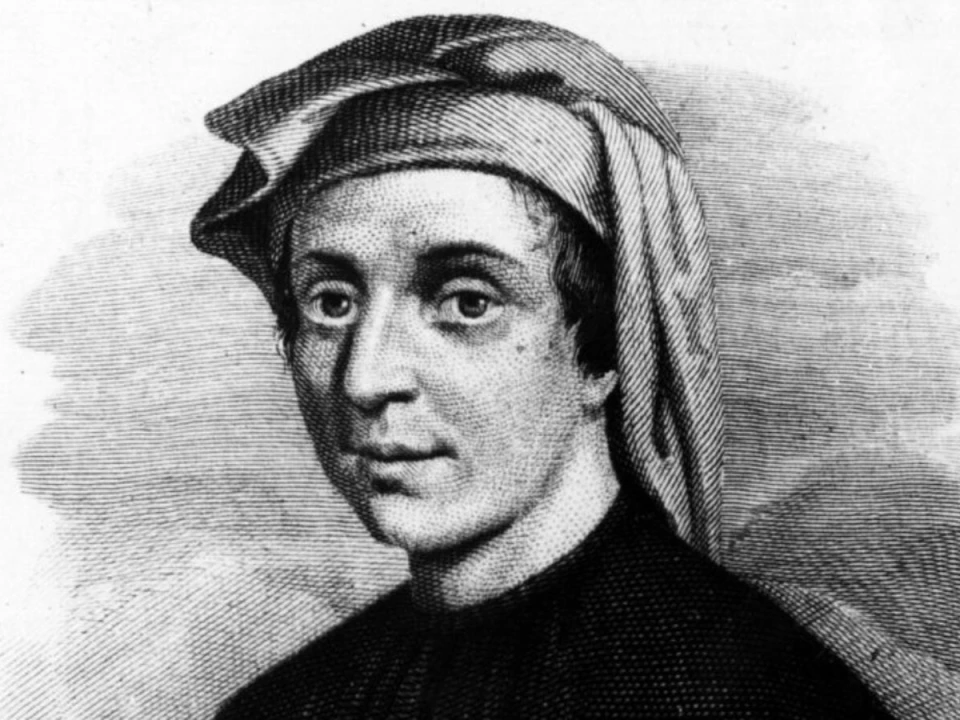
Born in Pisa around 1170, Fibonacci grew up in one of the most active maritime centers of medieval Italy. His life changed when he followed his father to Bugia – today Béjaïa, in present-day Algeria – where his father worked for Pisan merchants. There, in a dynamic crossroads of trade and scholarship, Fibonacci encountered the Indo-Arabic numeral system, already widely used across the Islamic world.
It was a revelation. The system used ten digits, including zero, and relied on positional value. Numbers could be written compactly, and calculations could be performed using written procedures rather than physical tools. Compared to Roman numerals, the difference was transformative.
Fibonacci understood immediately that this was not just a technical improvement but a fundamental shift in how numbers could be handled. When he returned to Italy, he set out to share this knowledge.
In 1202, he published Liber Abaci, a work that would become one of the most influential mathematical texts of the Middle Ages. Rather than focusing on abstract theory, the book was practical in nature. It presented real-life problems related to commerce: exchange rates, profit distribution, weights and measures, and interest calculations. It also explained step by step how to perform arithmetic operations using the new numeral system.
Among its many examples appeared a numerical sequence that would later bear his name. This sequence begins with 0 and 1, and each subsequent number is the sum of the two preceding ones – 1, 1, 2, 3, 5, 8, 13, and so on. What makes it extraordinary is how often it appears in the natural world. Spiral patterns following Fibonacci relationships can be observed in sunflower seeds, pinecones, shells, and even the arrangement of leaves on a stem. These structures often reflect efficient growth patterns, where space and resources are optimized. Over time, this connection between mathematics and nature has fascinated scientists, artists, and architects, reinforcing the idea that numerical order can underlie organic forms.
A second edition followed in 1228, dedicated to Michael Scot, a scholar connected to the court of Emperor Frederick II. Fibonacci himself had already been invited to that court, a sign of how seriously his work was taken at the highest levels. Frederick II, known for his intellectual curiosity, helped create an environment in which new ideas could circulate.
From there, the Indo-Arabic system began to spread across Europe. Merchants, scholars, and craftsmen gradually adopted it, recognizing its advantages in everyday use. The transition was not immediate – traditional methods persisted for generations – but the new system proved too effective to ignore.
Fibonacci’s role in this transformation is deeply tied to his Italian background. Pisa, like other Italian city-states, was a gateway between different cultures, particularly between Europe and the Mediterranean world. This openness allowed knowledge to move across regions, and Fibonacci became one of the key figures in that exchange. His work reflects a broader Italian tradition of connecting ideas, trade, and innovation.
The long-term impact of this shift is immense. The positional number system introduced through Fibonacci’s work became the foundation of modern mathematics. Without it, the development of algebra, science, and eventually computing would have been unthinkable. Every digital system in use today relies on numerical principles that trace back to that transition.
Fibonacci did not invent the numbers he promoted, but he recognized their power and ensured their adoption in Europe. His achievement lies in making a complex idea accessible and useful, transforming the way numbers were written, understood, and applied.
In that sense, his legacy extends far beyond mathematics. It represents a turning point in cultural and intellectual history – one rooted in Italy, shaped by travel and exchange, and still visible in every calculation performed today.