

One particularly significant aspect of the relationship between Italy and the United States is undoubtedly the world of fashion. The United States is widely recognized as having played a fundamental role in reviving Italy’s textile industry, particularly from the end of World War II through the years of the economic boom.
Fortunately, Italy’s factories in this sector had remained intact during the war. Because they were not considered strategic military targets, they had largely been spared from Allied air raids. In the postwar period, the United States was therefore able to allocate a substantial share of the financial resources provided through the Marshall Plan to restarting and revitalizing their production.
The United States also introduced its mass-production technologies into Italian factories, enabling the country to modernize its machinery and provide professional training for a new generation of Italian technicians. At the time, many Italian engineers traveled to the United States for advanced professional training. The trips made by Adriano Olivetti are especially well documented, although they fall outside the specific field of fashion.
More specifically, the phenomenon that would later become known around the world as Italian fashion emerged from the visionary initiatives of Tuscan marquis Giovanni Battista Giorgini in the years following World War II and from his connections with the United States.
Giovanni Battista Giorgini, affectionately known as Bista, was born in Forte dei Marmi in 1898 into a family of patriots associated with the Italian unification movement. Bista’s family owned a company that exported finished marble, one of the signature products of the local economy.
Neri Fadigati, the marquis’s grandson, recalls: “In 1923, my grandfather felt trapped in Forte dei Marmi and wanted to leave the provinces for Florence, where he opened a buying office with a Swiss partner. In 1924, he went to America and began exporting fine Italian handicrafts. These included straw goods, table linens, and leather goods from Florence, ceramics from Faenza, Capodimonte figurines, and Murano glass.”
The marquis successfully became part of America’s social and business world. As Neri Fadigati also explains: “He spoke English fluently because he had studied it, understanding that communication on equal terms was essential. He also spoke French well, having learned it from his Swiss mother, and he was a Protestant, which allowed him to join an American charitable organization.”
The talented Tuscan businessman was therefore well positioned to distribute Italian handicrafts through major U.S. department stores, from Neiman Marcus to Bergdorf Goodman, bringing them into the homes of millions of Americans.
At the time, luxury was a highly exclusive sector dominated almost entirely by French products. Giorgini, however, had understood that the Roosevelt-era vision of extending prosperity to an ever-wider range of social groups was opening the way for a different kind of offering and for Italian goods.
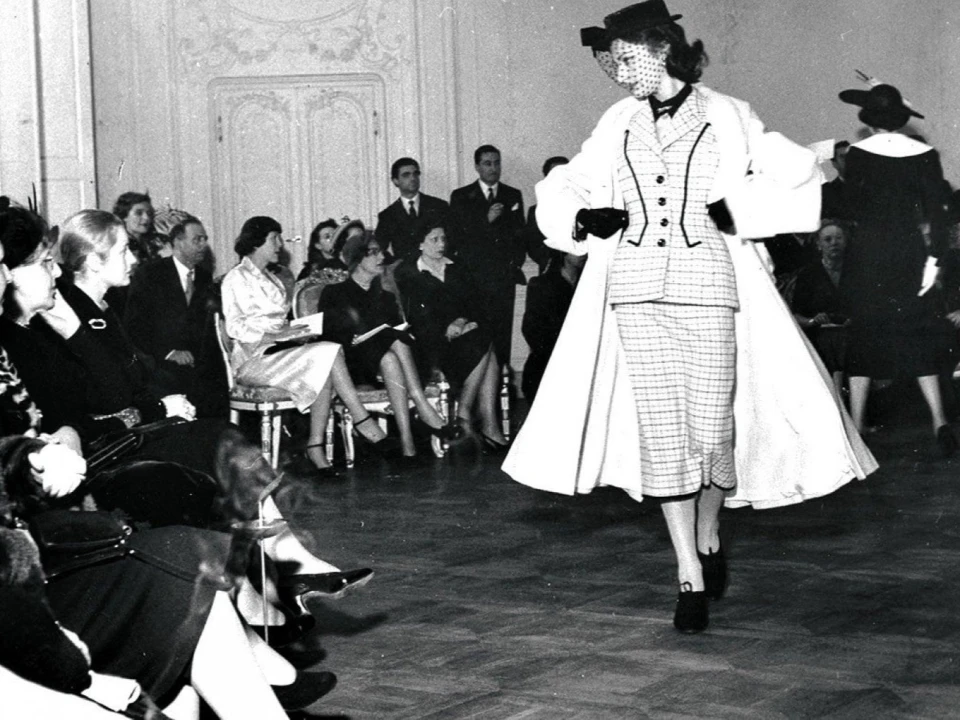
On February 12, 1951, Giovanni Battista Giorgini organized Italy’s first true fashion show in the ballroom of his Florence residence, Villa Torrigiani on Via dei Serragli.
The runway featured garments from a number of Italian fashion houses and designers, including Carosa, Fabiani, Simonetta, Schuberth, Fontana, Veneziani, Noberasco, Marucelli, Emilio Pucci, and Gallotti.
Giorgini also invited several leading U.S. buyers and five prominent journalists to the event. From the outset, he understood that presenting the products to the international press, and especially to American buyers, was essential.
The initiative was an enormous success. French newspapers reported that the Florence show had shaken the salons of Parisian haute couture. It marked the birth of Italian fashion and of the Made in Italy identity.
As Bista had perceptively anticipated, American consumers were especially captivated by the products of Italian companies. They were drawn to creations that may have been less elaborate than their French counterparts but were simpler, more practical, and easier to wear.
“Wearable” was, in fact, the term coined by the U.S. press to describe the clothing coming from Italy.
The following year, in July 1952, Giorgini moved the shows to the magnificent Sala Bianca in Palazzo Pitti. Bista continued to oversee their organization until 1965.
The relationship between Italy and the United States in the world of fashion has never been interrupted. It has remained active, vibrant, and productive.
The connections between Italy’s textile and fashion industry, its designers, and American cultural influences have been constant, numerous, and wide-ranging.
Publications such as Vogue USA, where American journalist Bettina Ballard wrote, and Women’s Wear Daily, edited by Italian journalist Elisa Massai, one of the five reporters invited to the February 12, 1951 event, helped introduce Americans to the ideal of the “Italian way of life.”
The era of “Hollywood on the Tiber” is equally unforgettable. Screen icons such as Ava Gardner and Linda Christian wore designs by the Fontana sisters, while Italy’s own Sofia Loren and Gina Lollobrigida appeared in exclusive creations by Schuberth.
The birth of Italian fashion, made possible by the genius of Giovanni Battista Giorgini and his strong ties to the United States, is among the milestones now celebrated in Florence at Giardino Bardini in the exhibition “Florence and the U.S.: The Story of a Friendship.”
The exhibition opened on July 2, 2026, as part of the celebrations marking the 250th anniversary of American independence. It is presented by the Consulate General of the United States of America in Florence, Fondazione CR Firenze, and Fondazione Parchi Monumentali Bardini e Peyron.