

Molise may be Italy’s second-smallest region, but its street food proves that geographic size has little to do with culinary personality. Located between the Apennines and the Adriatic Sea, Molise has preserved a food culture shaped by farming, livestock, village festivals, and centuries of transhumance. Its street food is not polished or elaborate. It is hearty, intensely flavored, and designed to be eaten while people gather at markets, festivals, and community celebrations.
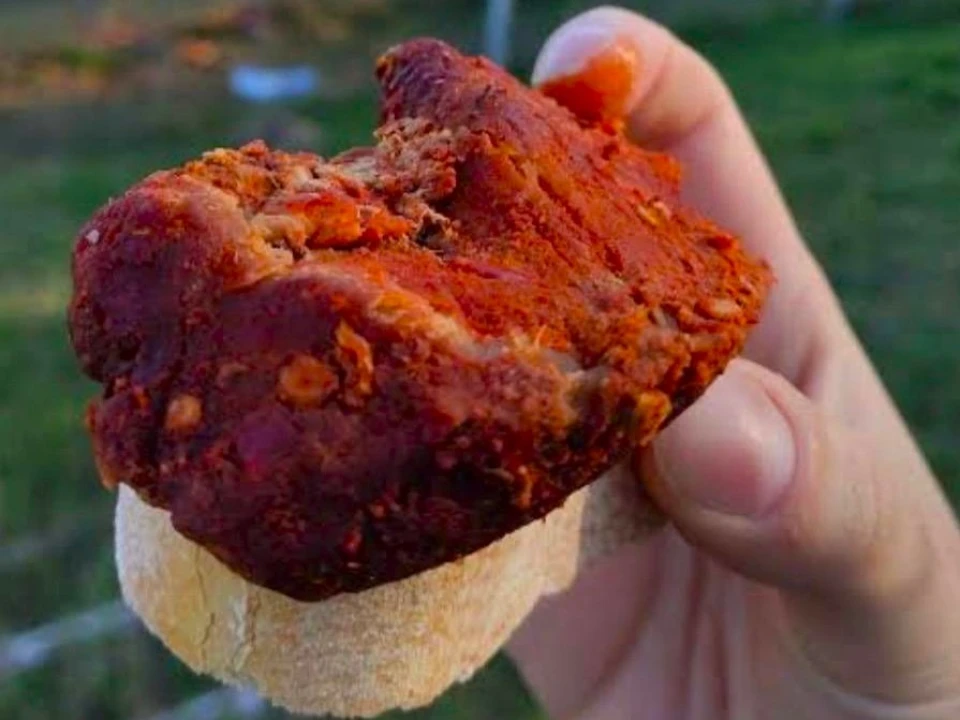
The undisputed star is pampanella, one of Molise’s most distinctive foods. The specialty is closely associated with San Martino in Pensilis, a small town in the province of Campobasso, where it remains a source of local pride. Pork is generously seasoned with garlic, salt, and both sweet and hot red pepper, giving the meat its unmistakable bright red color. It is then slowly baked until tender and juicy.
Pampanella can be eaten hot or cold, but one of the simplest ways to enjoy it is inside slices of rustic Molisan bread. That combination transforms it into genuine street food - portable, inexpensive, intensely flavorful, and particularly popular at festivals and fairs. The municipality of San Martino in Pensilis itself identifies pampanella as the food most closely associated with the town.
Its unusual name is traditionally connected to “pampino,” the Italian word for vine leaf, because the meat is believed to have once been cooked or wrapped using vine leaves. The precise history is difficult to reconstruct, but the dish has deep rural roots and eventually moved from domestic cooking into the public world of village celebrations, becoming known throughout Molise.
Another striking expression of Molisan food culture is grilled cheese. Caciocavallo, particularly associated with areas such as Agnone, is one of the region’s characteristic cheeses. At festivals across southern Italy, caciocavallo can be suspended near a flame until its surface begins to melt, then scraped or allowed to fall onto bread. The preparation known as caciocavallo impiccato turns an ancient pastoral product into spectacular street food: fire, melting cheese, and bread are essentially all that is required.
Meat traditions are equally important. Torcinelli are small rolls made from lamb offal held together with intestines and traditionally grilled. San Martino in Pensilis lists them among its characteristic meat dishes, another reminder of a rural cuisine in which virtually nothing from the animal was wasted.
Molise also has a sweeter side. In Agnone, ostie ripiene consist of thin wafers enclosing a rich filling traditionally made with ingredients including walnuts, almonds, honey, sugar, chocolate, and cocoa. They are especially connected with the Christmas season and represent a very different side of the region’s culinary heritage.
What makes Molise’s street food fascinating is precisely what it lacks: standardization. These foods emerged from individual towns, pastoral traditions, family kitchens, religious celebrations, and seasonal gatherings rather than modern street-food culture.
For travelers accustomed to Italy’s famous pizza, arancini, and focaccia, Molise offers another experience. A fiery pampanella sandwich or bread covered with melting caciocavallo tells the story of a small region that never needed international fame to develop an extraordinary culinary identity.