
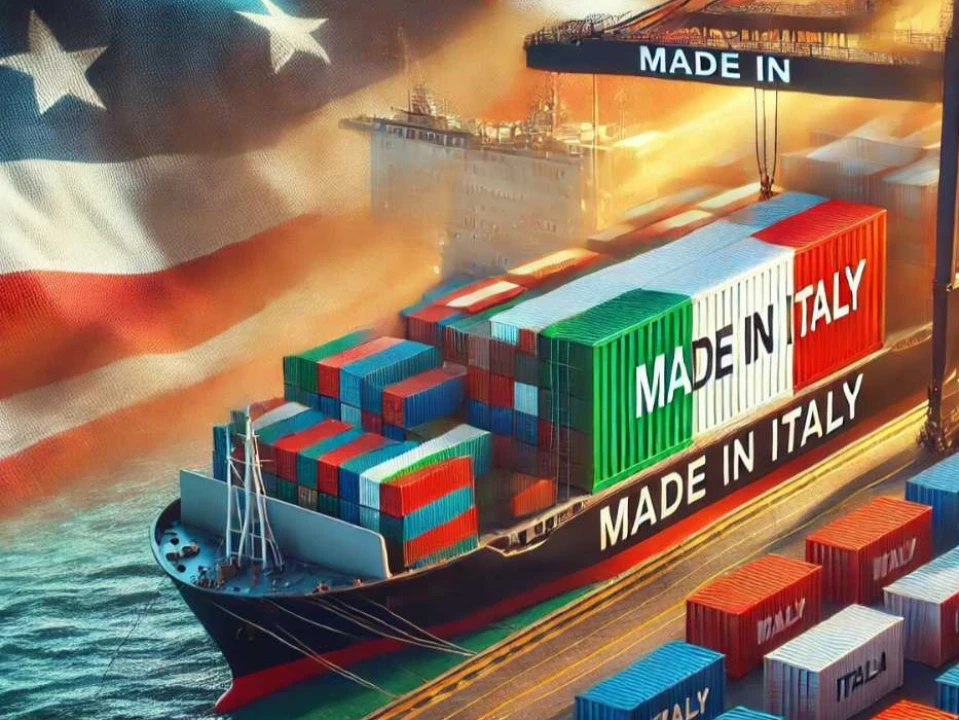
In August 2025, Italy’s exports to the United States fell by about 21.2% compared with the same month a year earlier – a sharp reversal after many companies had shipped goods early to avoid upcoming trade barriers. The decline comes as new U.S. tariff measures begin to take hold.
During the same period, Italian exports to non-EU markets dropped 8.1% from July, confirming a wider slowdown in global shipments. Imports from the United States moved in the opposite direction – rising by 68.5% year over year – creating further imbalance and pressure on Italian producers.
Several sectors were heavily affected. Machinery and industrial goods registered notable losses, while consumer durables were hit the hardest, with declines of more than 25%. Fashion, textiles, and food and beverage products also suffered, down by about 13% compared with August 2024. Taken together, exports of consumer goods slipped nearly 10%.
Part of the downturn can be explained by timing. Many companies rushed to send shipments in July before the tariff rules changed, which depressed volumes in the following month. Yet the broader challenge lies in the new cost structure and uncertainty generated by the U.S. measures – making it more difficult for Italian firms to remain competitive in such a key market.
The effects are visible across non-EU trade as well. Overall, Italy’s sales outside the European Union weakened in August, weighed down both by the earlier front-loading of exports and by weaker global demand. Competition from countries not targeted by tariffs further eroded Italy’s position.
The picture suggests more than a temporary dip. What started as a tactical concern has grown into a structural threat for the export sector. Businesses are being forced to reassess strategies, faced with tighter margins and higher risks. Finding new outlets, reworking supply chains, or emphasizing high-value specialization are some of the few ways to adapt, though none will be simple.
For policymakers and industry leaders, the challenge will be to strengthen resilience while navigating uncertain trade relations. Without a shift in the tariff environment, Italy’s exporters are likely to face continuing headwinds – and the coming quarters may bring even stronger turbulence.