
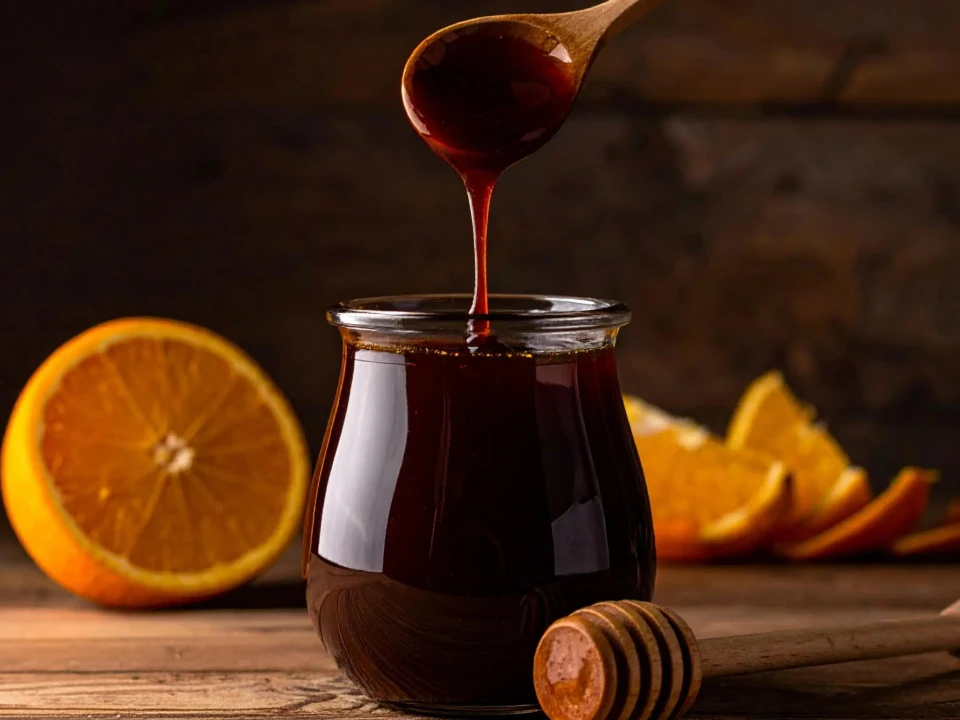

Among the extraordinary foods of Sardegna, few are as mysterious and deeply rooted in the island’s history as abbamele. Dark, dense and intensely aromatic, this ancient honey-based preparation is sometimes described as Sardinia’s “black gold.” It is not simply honey, nor is it exactly a syrup. Abbamele belongs to an older culinary world, one shaped by rural ingenuity, beekeeping and the determination to waste absolutely nothing.
Its origins are believed to reach back to the Nuragic age, making it one of the oldest products associated with Sardinian food culture. Long before modern beehives existed, honey was collected from wild colonies found in rocks and hollow trees. Later, traditional Sardinian beekeepers used cylindrical cork hives known as su casiddu, a method whose roots have been linked to practices already present on the island in ancient times.
Honey was precious, and leaving part of it trapped inside the comb would have been unthinkable. Abbamele developed from the need to recover what remained after the main honey extraction. That practical solution eventually became a distinctive product in its own right.
The name itself explains the idea. In Sardinian, abba means water and mele means honey. Depending on the area of Sardegna, the product may also be called abbattu, saba ’e mele or by other local variations. In 2010, abbamele was officially included among Italy’s Prodotti Agroalimentari Tradizionali, or PAT, recognizing its importance within the island’s agricultural and culinary heritage.
Traditional production begins after honey has been removed from the combs. The remaining pieces of wax can still contain roughly 20% to 30% honey, together with pollen and other components from the hive. These combs are immersed in water heated to about 50°C, or 122°F, allowing the residual honey to dissolve while the wax separates.
The resulting liquid is filtered and then cooked slowly for hours. As the water evaporates, the mixture becomes increasingly concentrated. Its sugars caramelize, developing the deep brown color that gives abbamele its striking appearance.
The flavor is even more distinctive than the color. Abbamele is sweet, but not simply sweet. It can have caramelized, toasted and almost smoky notes, balanced by a subtle bitterness and a complex aromatic character. Orange or lemon peel is frequently added toward the end of cooking, while some traditional preparations may include quince or other local flavorings. The result is a condiment with remarkable depth – simultaneously fruity, earthy, bitter, sweet and roasted.
That complexity makes abbamele surprisingly modern in the kitchen.
For generations, it was used primarily in Sardinian home cooking and pastry making. It can be spread on bread, mixed into traditional sweets or paired with fresh ricotta. It also works beautifully with one of Sardegna’s most famous desserts, seadas – fried pastries filled with cheese and traditionally finished with honey.
Yet abbamele is equally compelling with savory foods. Its sweetness and slight bitterness create a natural contrast with Pecorino Sardo and other sheep’s-milk cheeses, especially mature varieties with pronounced saltiness. A few drops can accompany cured meats, roasted pork or grilled meats, adding both sweetness and acidity-like balance without overwhelming the main ingredient.
Contemporary chefs have pushed it further. Abbamele can glaze roasted meats, finish sauces, complement sheep or pork, flavor yogurt and panna cotta, or add depth to gelato. Its caramel and citrus notes also make it particularly successful with nuts, fresh fruit and desserts based on ricotta.
In this sense, abbamele perfectly represents Sardegna itself. The island’s cuisine is built on strong flavors, limited resources and centuries of adaptation to a rugged Mediterranean environment. Shepherds, farmers and beekeepers learned to transform simple ingredients into foods capable of lasting, nourishing and carrying flavor far beyond their apparent simplicity.
What once emerged from necessity now feels almost luxurious.
A spoonful of abbamele contains honey, pollen, citrus aromas, caramelized sugars and generations of Sardinian knowledge. Its story stretches across centuries, yet its taste fits naturally into contemporary cooking.
That may be abbamele’s greatest peculiarity – one of Sardegna’s most ancient flavors tastes remarkably ready for the future.