

In the hills above Lake Orta, in northern Piedmont, the small villages of Quarna Sotto and Quarna Sopra have built an international reputation around a highly specialized craft: the production of wind instruments. With fewer than 1,000 residents combined, this area represents one of Italy’s most distinctive artisan districts, where music is not only performed but physically created through skilled hands and generations of knowledge.
The origins of this tradition date back to the early 19th century, when local craftsmen began producing simple wooden flutes and gradually expanded into more complex instruments. By the late 1800s, Quarna had developed a structured production system, with workshops exporting instruments across Europe and, eventually, to the United States. At its peak in the 20th century, dozens of small factories operated in the area, employing a significant portion of the local population and contributing to a niche but globally recognized industry.
What makes Quarna unique is its dual expertise in both brass and woodwind instruments. On the brass side, artisans produce trumpets, trombones, flugelhorns, and French horns. These instruments require precise metalworking, often involving multiple stages such as casting, bending, soldering, and polishing. Even small variations in thickness or curvature can affect sound quality, which is why much of the process still relies on manual adjustments rather than full automation.
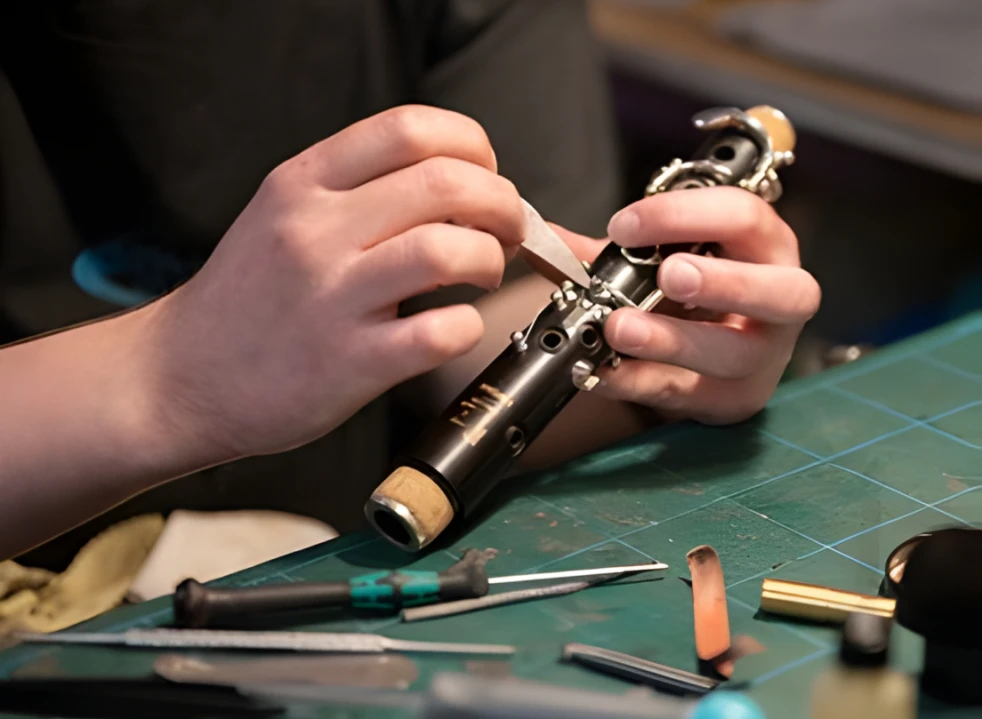
At the same time, Quarna has long been known for its woodwind production. Clarinets, oboes, and flutes are crafted using carefully selected woods such as grenadilla and boxwood, materials chosen for their density and acoustic properties. Although saxophones are typically made of metal, they are classified as woodwinds due to their reed system, and they are also part of the local tradition. Producing these instruments requires a combination of woodworking and mechanical precision, with tolerances often measured in fractions of a millimeter.
Despite technological advancements, a large portion of the work remains artisanal. Many workshops still use lathes and tools that date back decades, sometimes updated but rarely replaced entirely. This continuity allows craftsmen to maintain a direct connection with traditional techniques while integrating modern innovations where necessary. It is estimated that up to 60% - 70% of the production process in smaller workshops still involves manual labor, particularly in finishing and tuning.
The cultural importance of this craft is reflected in the local Ethnographic and Wind Instrument Museum in Quarna Sotto. The museum preserves historical machinery, original tools, and a wide range of instruments, offering insight into how production has evolved over time. It also documents the social impact of the industry, which for generations provided employment and shaped the identity of the community.
Training and knowledge transfer have always been central to the district’s survival. Skills are often passed down within families or through informal apprenticeships, creating a continuity that formal education alone cannot replicate. At the same time, collaboration with musicians plays a key role in refining instruments, as feedback from performers helps improve tone, ergonomics, and durability.
Although global competition and industrial manufacturing have reduced the scale of production compared to the mid-1900s, Quarna remains a reference point for quality. Today, the district focuses more on specialized, high-end instruments rather than mass production. This shift reflects a broader trend in European craftsmanship, where value is increasingly tied to precision, customization, and heritage rather than volume.
In a world where many products are standardized, the wind instruments of Quarna stand out for their individuality. Each piece reflects a balance between technical accuracy and human touch, where sound is shaped not only by materials and design but also by the experience of the artisan. The result is not just an object, but a tool for expression, carrying with it the history of a place where craftsmanship and music have been inseparable for over two centuries.