

Street food in Emilia Romagna reads like a living poem made of flavors, dialects, and shared habits. Across an area of about 22,000 square kilometers, similar ingredients take on different names and forms depending on the province, yet they all express the same devotion to quality and tradition. Here, eating on the go does not mean compromising. Even the simplest snack carries centuries of know-how and a strong sense of local identity.
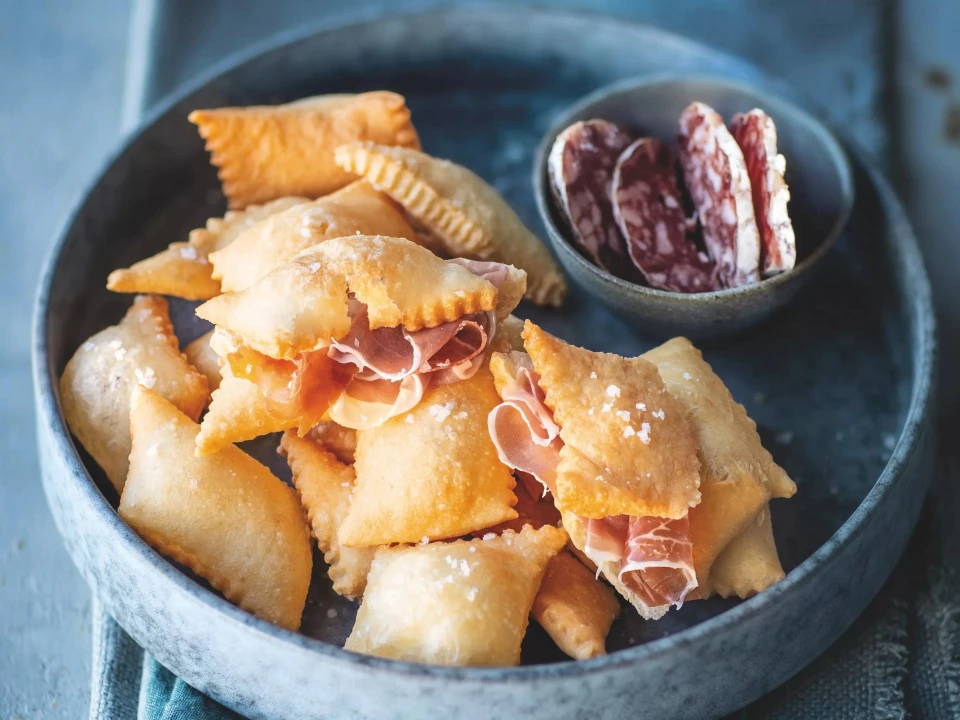
One of the clearest examples is fried dough. In Modena and Reggio Emilia, it is called gnocco fritto. The dough is made with flour, water, salt, and lard, then cut into rectangles or diamonds and fried until it puffs dramatically. As it cooks, it inflates and becomes hollow inside, creating a pocket of air that makes it light yet indulgent. In Bologna, the same fried dough often goes by the name crescentina. The name changes, but the ritual stays the same. It is served hot, usually within seconds of leaving the fryer, and paired with local cured meats and soft cheeses. A single portion can include 3–5 pieces, easily enough for a quick lunch.
Then there are tigelle, also known as crescentine modenesi. These are small, round flatbreads cooked on a hot surface rather than fried. Traditionally, they were baked between terracotta disks, which gave them their name. Today, steel or cast-iron griddles are more common, but the result is similar. Each tigella is about 8–10 centimeters wide and split open while still steaming. The classic filling is cunza, a spread made from finely chopped lard, garlic, and rosemary. The heat melts the fat instantly, releasing aroma and flavor. Tigelle are especially popular in the hills and villages of the Apennines, where they are sold at festivals, food trucks, and casual eateries.
Another specialty, less known outside the region but deeply rooted in local life, is borlengo. It looks like an ultra-thin crepe, often no more than 1 millimeter thick, cooked on a large, blazing-hot metal plate. The batter is extremely liquid, made with water, flour, and salt. Once cooked, the borlengo is folded into quarters and seasoned generously with lard, garlic, rosemary, and grated aged cheese. Crisp, salty, and intense, it is typically eaten standing up and shared among friends, especially during winter gatherings.
In other areas, particularly around Parma, similar fried dough may be called torta fritta or pasta fritta. The thickness may vary by a few millimeters, or yeast may be added or omitted, but the purpose remains unchanged. It is food meant to be eaten with the hands, accompanied by conversation and local wine.
In Emilia Romagna, street food is not a trend but a habit shaped over generations. Whether fried, griddled, or paper-thin, these foods show how simplicity, when handled with care, can become culture.