

High in the northern Apennines, where ridges rise like rolling waves of stone, lies a territory shaped by both nature and imagination. This land, called Frignano, spreads across the Modenese mountains and has long stood as a frontier between regions and cultures. Its forests, villages, and legends make it more than a geographical area – it is a living story where past and present intertwine.
The mountains dominate every view. Monte Cimone, the tallest peak of the northern Apennines, watches over the valleys with its broad shoulders. Its slopes shift with the seasons – wildflowers and buzzing bees in spring, herds grazing in summer pastures, fiery foliage in autumn, and glittering snow in winter. From the summit, the panorama stretches north across Emilia-Romagna and south into Tuscany, underscoring the region’s role as a threshold between worlds.
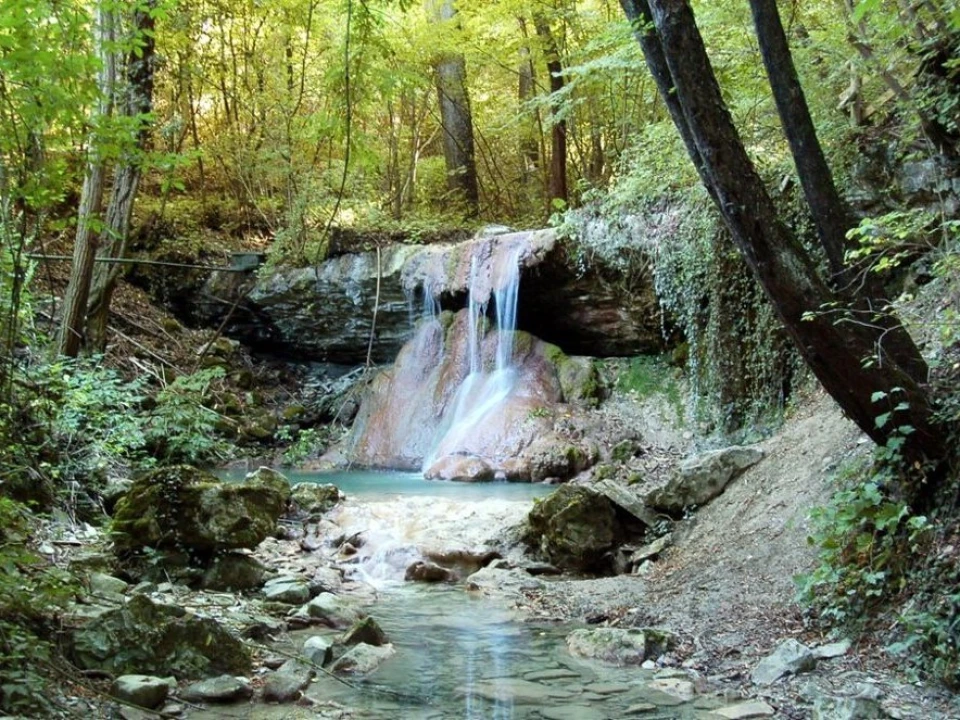
Frignano’s forests create vast, shaded cathedrals of beech, oak, and fir. They shelter wolves, deer, wild boar, and golden eagles that soar above the ridges. Among these woods, chestnut groves once sustained entire communities. The chestnut tree was known as “the bread of the mountains” – its nuts dried, ground into flour, and stored to carry families through long winters. Even today, the scent of roasted chestnuts at village festivals carries memories of survival and solidarity.
Stone villages seem to grow out of the slopes themselves. Houses built from local rock cluster tightly around piazzas, while bell towers rise like beacons above tiled roofs. Romanesque churches and medieval towers line ancient roads once crossed by merchants and pilgrims. These paths carried wool, salt, and spices, but also ideas, faith, and music. Life was never easy in these mountains, yet hardship bred resilience, pride, and strong community ties.
One of Frignano’s jewels is Lago Santo, a glacial lake. Surrounded by forests and peaks, the lake mirrors the changing sky, from bright summer blue to moody autumn grays. Families hike along its trails, anglers cast lines from its shores, and in winter, snow transforms the entire basin into a quiet, frozen world. For centuries, Lago Santo has inspired both practical use – as a water source and pasture landmark – and poetic imagination, fueling local tales of spirits and mysterious lights flickering on its surface.
Not far from the lake lies Pievepelago, a town that captures the essence of Frignano. Its name recalls the medieval parish church (pieve) that once served as a religious and civic center for scattered mountain hamlets. Today, Pievepelago welcomes visitors with alpine charm, offering access to ski slopes in winter and mountain trails in summer. Its streets reveal layers of history – old stone houses, shrines at crossroads, and memories of the partisan resistance that found refuge in these mountains during World War II. The town’s role as a gateway between Emilia-Romagna and Tuscany makes it a crossroads of dialects, traditions, and hospitality.
The Regional Park of the Upper Modenese Apennines safeguards much of this landscape. Covering ridges, valleys, and alpine meadows, the park protects biodiversity and offers countless opportunities for outdoor adventure. In summer, trails lead to panoramic ridgelines where edelweiss and gentians bloom. In winter, Monte Cimone becomes a hub for skiing and snowboarding, while snowshoes crunch softly along forest paths. The park ensures that Frignano’s natural beauty remains not just a backdrop but a living environment where people and nature coexist.
Yet Frignano is also a land of stories. For centuries, villagers explained the mysteries of life through legends that blurred fact and fantasy. Witches feature prominently in these tales – sometimes feared as bringers of storms and misfortune, other times respected as healers with knowledge of herbs and remedies. Enchanted animals also roam the folklore: wolves that vanish into mist, serpents guarding sacred springs, or spectral lights leading travelers astray. These stories gave meaning to natural forces that felt uncontrollable, transforming fear into narrative and shared memory.
Bandits and hidden treasures also play their part. Tales abound of gold buried beneath ruined towers or caves concealing gateways to other worlds. The landscape itself became a stage for imagination – lakes like Santo linked to spirits, cliffs associated with heroic deeds, and groves where people swore they had seen gatherings of otherworldly beings. The myths remind us that Frignano’s identity is not only carved in stone and wood but also in the invisible realm of belief.
History, too, left strong marks. Castles perched on ridges guarded valleys and trade routes, their ruins still looming over forests. Stone bridges arch over torrents, silent witnesses to the passage of armies, merchants, and pilgrims. During the 20th century, these mountains became a theater of resistance during World War II. Partisan fighters used their knowledge of ridges and valleys to oppose occupation, adding another layer of courage and sacrifice to the local memory.
Today, visitors to Frignano discover both the tangible and the intangible. They hike through alpine forests, savor chestnut cakes and mountain cheeses, and listen to stories that keep alive the witches, spirits, and heroes of the past. Festivals bring communities together with music, food, and folklore, creating bridges between generations. In the small towns of this beautiful territory, elders recount winters of hardship and nights of storytelling by the fire, while children race through alleys that echo with laughter.
Frignano is not a museum frozen in time – it is alive, adapting while preserving its soul. Its mountains remain steady, but the people give them meaning, weaving history, legend, and daily life into a single fabric. To explore this land is to experience both the grounding force of stone and forest and the soaring flight of imagination.
This is Frignano’s gift: a place where the natural and the mythical, the historic and the present, merge seamlessly. From Monte Cimone to Lago Santo to the high meadows of the park, it invites us to see the world not only with practical eyes but also with wonder.