
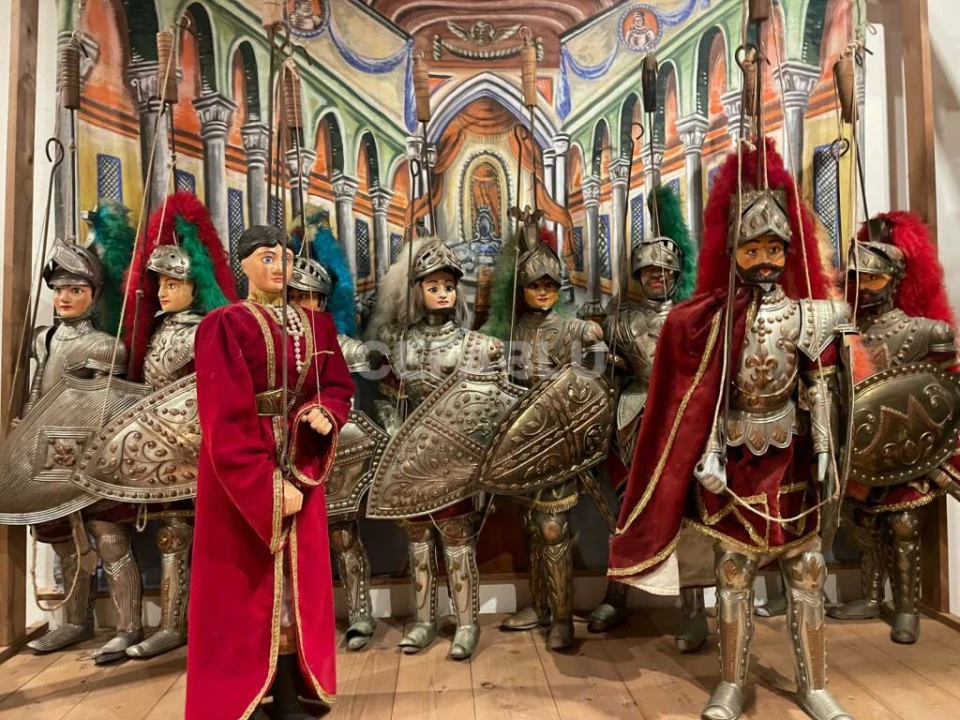

Opera dei Pupi, translating to “The Puppets’ Opera,” is the celebrated Sicilian marionette theater tradition. It emerged in the early 19th century and became immensely popular among working-class audiences. Centered on the exploits of medieval knights from the Carolingian and Arthurian legends, these performances weave together epic storytelling, visual spectacle, and expressive puppetry. In recognition of its cultural significance, UNESCO inscribed the art form on its Intangible Cultural Heritage list in 2001.
Rooted in the traditions of medieval troubadours and Renaissance chivalric epics, Opera dei Pupi presents serialized tales from works like Orlando Innamorato, Orlando Furioso, and Gerusalemme Liberata, compiled in Giusto Lodico’s “History of the Paladins of France” beginning in 1858. Although epic narratives dominate - featuring heroes such as Count Roland, Renaud, Ruggero, Angelica, and the traitor Ganelon - the repertory also extends to Sicilian historical romances, brigand tales, and even Shakespearean works, including Romeo and Juliet and Macbeth.
The signature “pupi” are large, armored marionettes crafted on wooden frames, standing about 110–130 cm tall and weighing up to 30 kg. Their bodies are mounted with pads to stiffen movement, and their arms are manipulated via metal rods and strings, controlled by puppeteers from an elevated bridge behind the stage. Characters fall into two styles: armored knights and comedic “in page” figures like Peppininu in Catania or Nofrio and Virticchio in Palermo. Visual cues - such as shields, helmet plumes, and facial features - help audiences distinguish between Saracens and Christians.
Two Regional Traditions
Opera dei Pupi splits into two primary Sicilian styles: Catania (eastern Sicily) and Palermo (western Sicily), each with distinct theatrical approaches:
- Catania Style: Puppets are hefty (110–130 cm, 20–30 kg), with static legs to bear weight. Puppeteers stand on a backstage bridge, speaking offstage to voice characters. Dialogue is often improvised, with orchestral accompaniment or recorded music. Painted “cartelli” announce the evening’s episode.
- Palermo Style: Puppets are lighter (90 cm, 5–10 kg), with articulated knees and drawing mechanisms. Puppeteers operate onstage from the side wings, visible and handling lighting, sound, and dialogue. Performances were traditionally accompanied by violin or barrel organ, and cartelli panels depict multiple scenes from the epic.
Smaller, regional variants can be found in Acireale and Syracuse, each with modifications to puppet size, control systems, and stage design.
Opera dei Pupi is passed down through apprenticeships, often within families. Puppeteers (pupari, pupanti, teatrinari) teach techniques - puppet crafting, painting, dialogue, and stagecraft - through daily observation and performance. In 2018, thirteen Sicilian puppet families formed a network to safeguard and promote the tradition, officially recognized by Italy’s Ministry of Culture.
Despite dips in popularity - due to competition from cinema in the 1930s and urban migration in the 1950s–60s - Opera dei Pupi has endured. UNESCO recognition in 2001 and its 2008 inclusion on a global heritage list revitalized interest . Contemporary performances, apprenticeships, and internet-based preservation ensure its survival.
The Antonio Pasqualino International Puppet Museum in Palermo houses the world’s largest collection of pupi - over 5,000 puppets from Palermo, Catania, and Naples - alongside posters and stage pieces. Founded in 1975 by folklorist Antonio Pasqualino, the museum hosts the annual Morgana Festival, showcasing traditional and modern puppetry, global collaborations, exhibitions, and workshops .
Opera dei Pupi’s influence has spread beyond Italy. In early 20th-century New York, Palermo immigrants such as Agrippino Manteo brought the tradition to Coney Island; today, his descendants remain among the last active puppeteers in the U.S. and a collection of some of his artworks are on display at the Italian American Museum in Little Italy, Manhattan. The art continues to inspire modern artisan puppet makers, such as Girolamo Botta of Sulmona, who crafts compact touring theaters with 70 cm high puppets depicting Italic legends and other tales.
Opera dei Pupi combines craftsmanship, performance, oral tradition, and visual storytelling. It’s not only an artistic inheritance, but a living tradition reflecting Sicilian identity, history, and human creativity. With its rich choreography of sword fights, heroic narratives, and captivating puppetry, Opera dei Pupi remains a vibrant cultural force—preserved in theaters and museums, yet alive through public performances, apprenticeships, and global adaptations.