



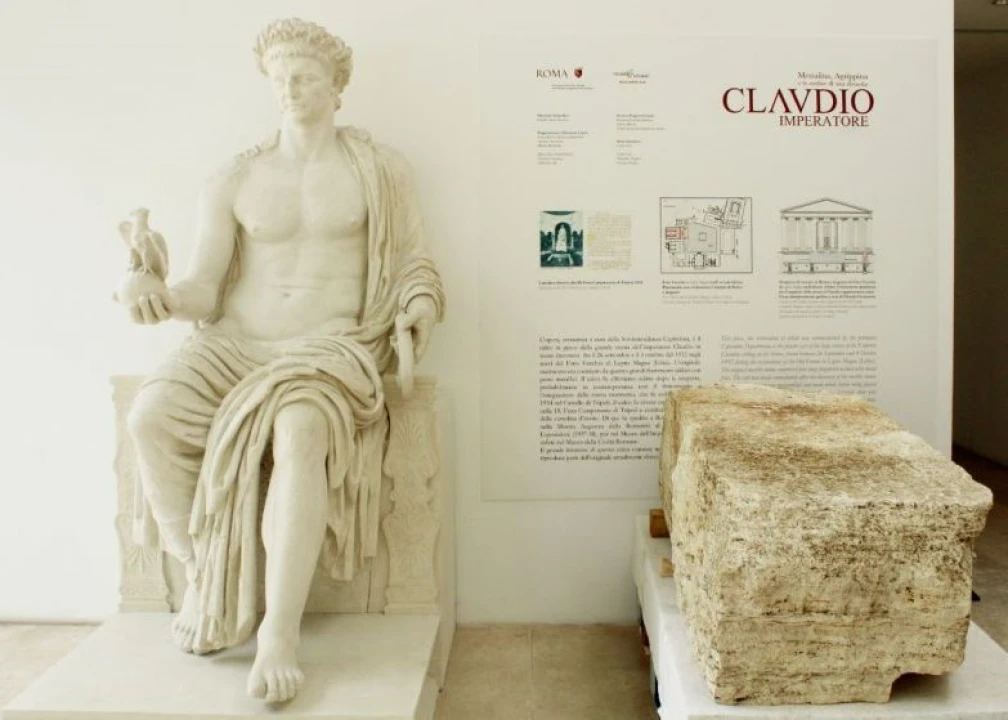
Rome archaeologists have unearthed a border stone laid during the reign of Emperor Claudius almost 2,000 years ago, the first such discovery in more than a century. The 'pomerium cippus' - a marker which defined the city's religious boundary - dates to 49 AD when Claudius expanded the boundaries of the pomerium, a sacred open space in which only Roman gods could be worshipped.
The pomerium, which included the Esquiline, the Palatine, the Quirinal and Capitoline hills, was a consecrated piece of land in which it was forbidden to farm, live or build and beyond which it was forbidden to enter carrying arms.
