
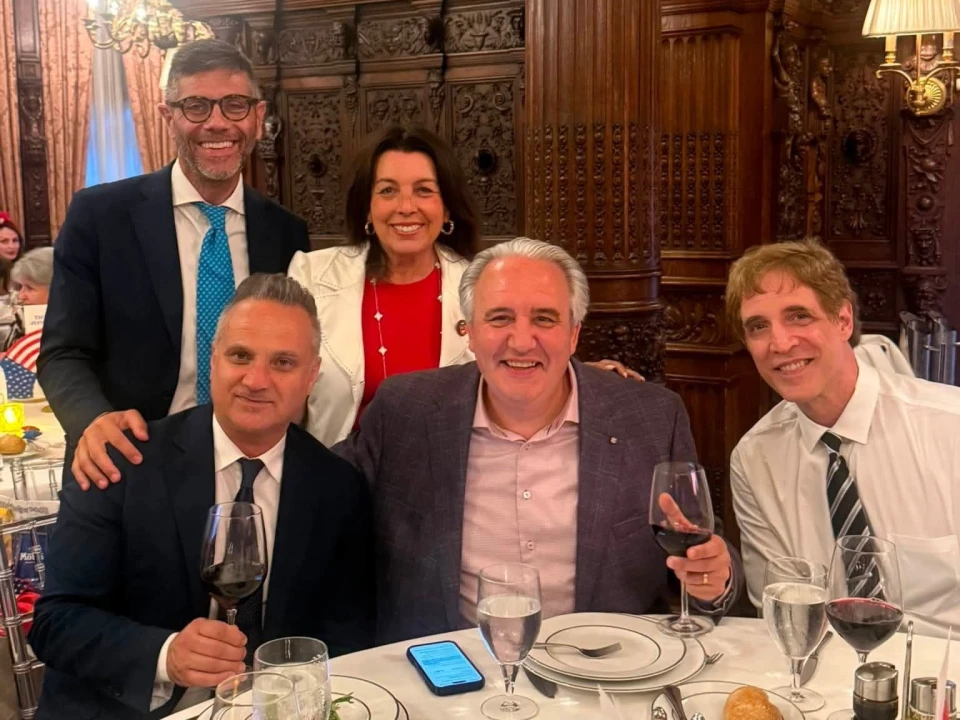
The Municipality of Spilinga and the Province of Vibo Valentia were in the spotlight in New York during the 50th-anniversary celebrations of the Italian Heritage and Culture Committee, a prestigious organization that has been dedicated for decades to promoting Italian culture and strengthening ties with Italian American communities.
Representing the local area was the Vice Mayor of Spilinga and Provincial Councilor Franco Barbalace, who attended the event in New York alongside the President of the GAL Terre Vibonesi, Vitaliano Papillo.
During the meeting, Barbalace highlighted the cultural, historical, and scenic potential of Spilinga and the entire Vibo Valentia area, paying special attention to the "Turismo delle Radici" (Roots Tourism) project, promoted by the Ministry of Foreign Affairs and International Cooperation. The initiative aims to strengthen the bond between Italian territories and the descendants of emigrants, encouraging them to return to their places of origin and fostering new opportunities for tourism and cultural development.
"It was a great honor to represent our community at such a high-profile international event," stated Barbalace. "Opportunities like this allow us to share the history, traditions, and excellence of our region, strengthening our relationship with Italians living abroad and with new generations of Italian descendants."
During his speech, Barbalace also recalled the role that Italian emigration played in the development of the United States, emphasizing how the connection to one's roots still represents a human and cultural heritage of extraordinary value today.
The ceremony was attended by numerous authorities, including Ambassador Giorgio Marrapodi, Italy's Permanent Representative to the United Nations, and John F. Calvelli, Chairman of the Board of the National Italian American Foundation (NIAF). They were joined by other prominent representatives of Italian institutions and the Italian American community, offering an important opportunity to discuss future shared initiatives aimed at promoting Italian cultural heritage and consolidating relations between the Vibo Valentia area and the United States.
Participation in these important events also made it possible to open a dialogue with American cultural institutions and organizations to develop projects dedicated to cultural exchanges, the promotion of local territories, and the involvement of Italian communities living abroad.
At the end of the event, Barbalace expressed his gratitude to the President of the Italian Heritage and Culture Committee, Joseph Sciame, Vice President Maria Marinello, and the entire Board of the organization for the warm welcome given to the Italian delegation and for the opportunity to contribute to an event of such great cultural and institutional significance.