
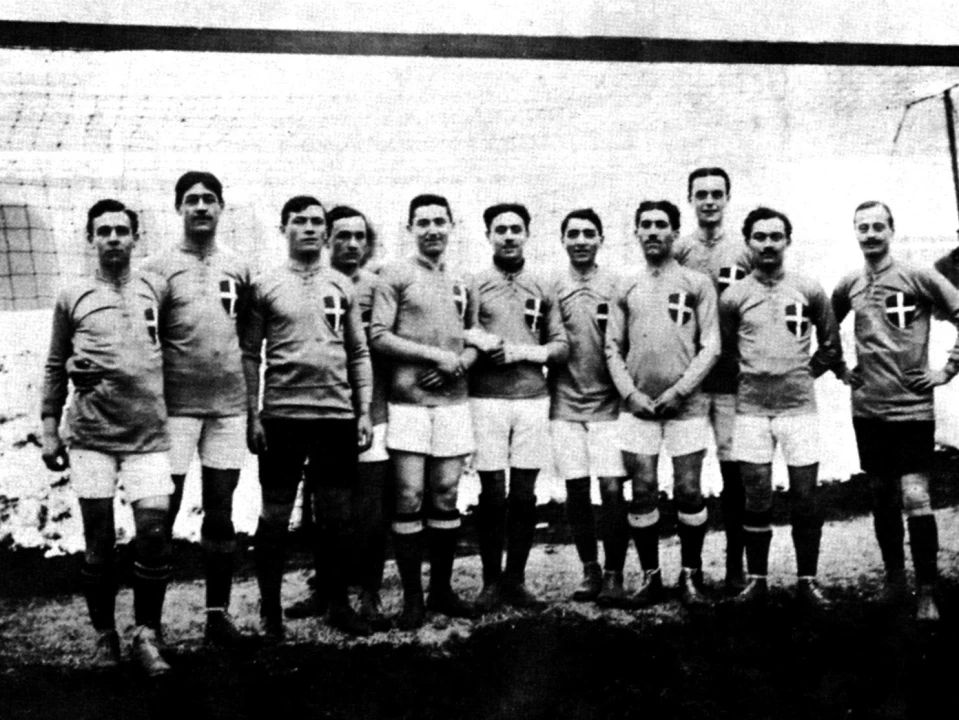
The iconic blue shirt of Italy’s national soccer team has been worn for more than a century and is now one of the most recognized jerseys in world sport. The team’s first official matches in 1910 were played in plain white shirts with a small Italian tricolore ribbon, largely because there wasn’t yet an agreed-upon national kit.
On May 15, 1910, Italy beat France 6–2 in that debut game wearing white. But a few months later, on January 6, 1911, the team turned up in a new blue jersey for a friendly against Hungary in Milan – the color that would become a lasting symbol of Italian sport.
That shade of blue, known historically as Savoy azure, was associated with the House of Savoy, the royal dynasty that ruled Italy from 1861 until the monarchy ended in 1946. It was also tied to cultural symbolism, as blue had been used in banners and insignia since the Middle Ages and was linked in Italian tradition to the mantle of the Virgin Mary. The Savoy blue stood apart from the green, white, and red of the national flag, yet it quickly became the identifying color for Italian athletes at international events.
Over the decades, the blue shirt has been central to many of Italy’s greatest football moments. Italy has won four FIFA World Cup titles and two UEFA European Championships while wearing the blue strip, fostering deep pride and affection for the color among fans at home and around the globe. Though the design and shade have evolved, and alternate or away kits have sometimes appeared in white or other colors, the blue shirt remains the core identity of the national team. It is a visual reminder of more than 110 years of history, passion, and national pride on the world’s biggest sporting stages.