
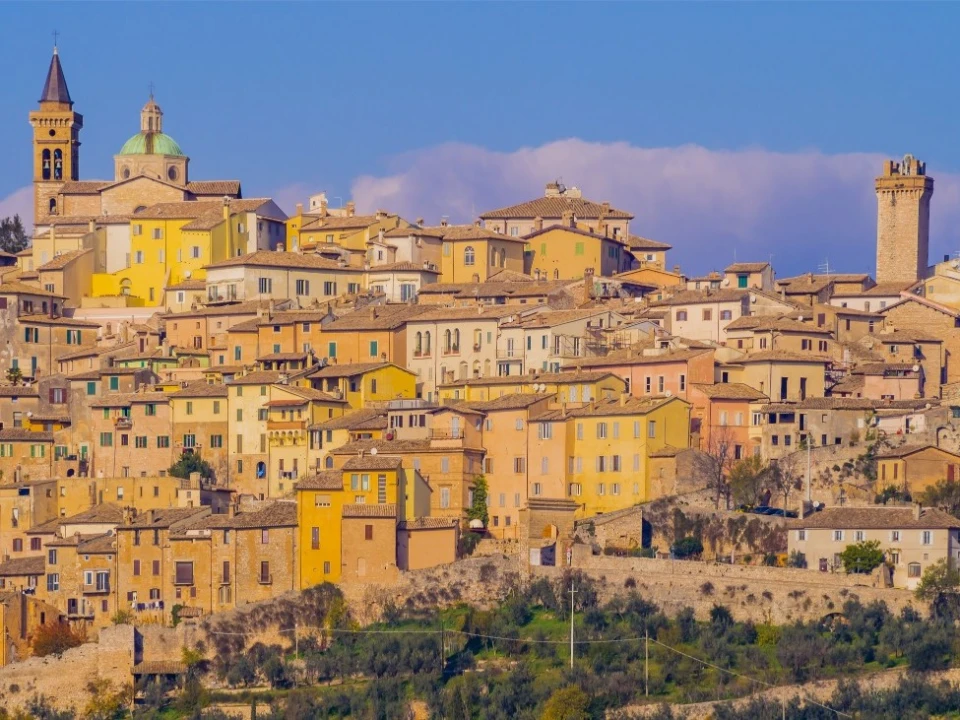
Located above the Clitunno plain between Foligno and Spoleto, Trevi comes into view as a single slope of olive trees and pale stone. The town sits on the old Via Flaminia axis, close enough to Perugia for an easy day trip and reachable from Rome by regional trains that follow the valley before the road climbs to the historic center. While you reach it, you already get an idea of its character: terraces, walls, and a compact summit that still looks quintessentially medieval.
Sources place Treviae along the Flaminia and point to Roman activity around Pietrarossa on the valley floor; earlier Umbrian presence is plausible and appears in scattered finds. Local lore adds a link to Diana Trivia, an etymology kept as tradition rather than fact. Through the communal age, the hillside community organized its own affairs, then in 1438 entered the Papal States; trade in oil and goods during the fifteenth century earned it the sobriquet porto secco, a dry port on inland routes. In 1470, printers set up Umbria’s first press here, one among Italy’s earliest.