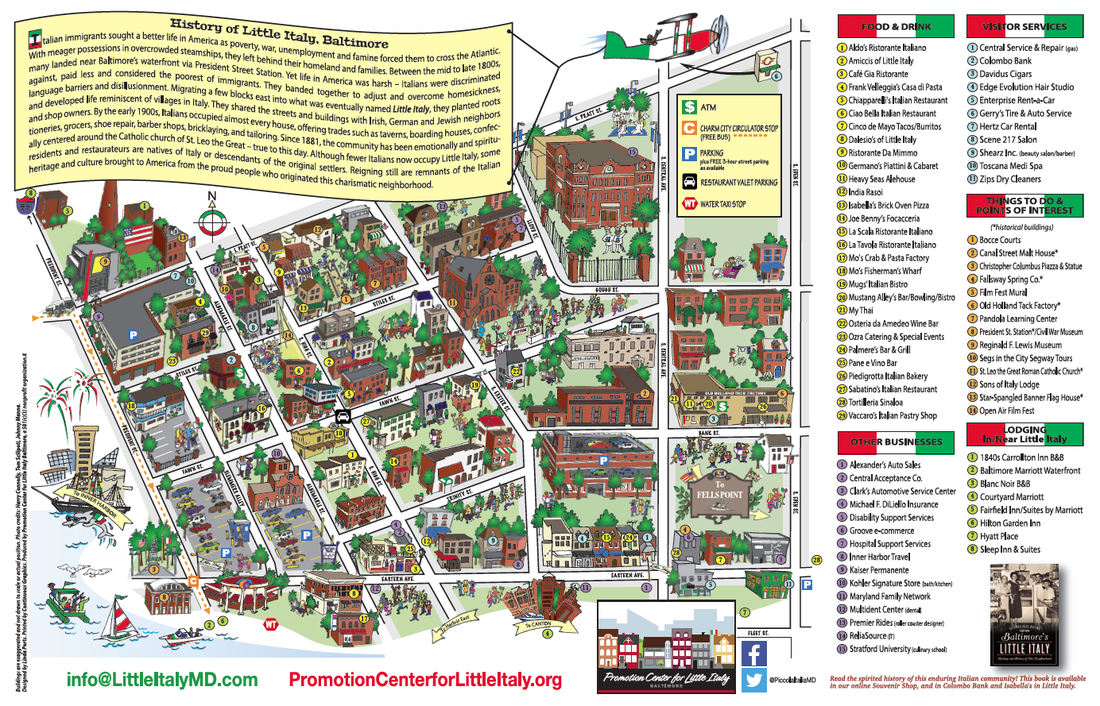
Baltimore has a very lively Little Italy, and a promotion center that does a lot of interesting and important things to represent and promote what's Italian in "The city that reads", as once somebody nicknamed it.
The President of this Promotion center is a young successful Italian very proud of his roots. We're thankful to Gianni Andracchio for being our guest in this new interview regarding another interesting story of another Italy in another part of the US
Hi Gianni, first of all, please let us know something about the story of the Italian emigration to Baltimore
Italian emigration in Baltimore started in the late 1800’s. Over time, more and more of them came. As they came over, many of them came in larger groups who then migrated together. Some entered the US via the Port of Baltimore, and others came from New York by train. They settled in different parts of the city, but there were two neighborhoods in the city where they were prevalent – Highlandtown and Little Italy.
I grew up in Highlandtown where I was able to experience the influence and the culture that Italian-Americans brought with them. The neighborhood was full of Italian immigrants and their families. The Roman Catholic Church of Our Lady of Pompei was established, funded, and built by Italian-Americans. The Our Lady of Pompei school shortly followed. There were stores and shops all around the neighborhood owned and operated by Italian Americans.
In my teenage years, I started working in Little Italy where I was able to experience an even larger concentration of Italians and Italian influence over a neighborhood. The center of the community is St Leo’s Church. The St. Leo’s school was also established. Of course Little Italy is full of restaurants still owned and operated by the same families that established them when they first immigrated to Baltimore.
How would you describe Baltimore's Little Italy to those who have never been there?
Baltimore’s Little Italy is a cozy, friendly, and welcoming neighborhood. All the neighbors are like a close knit family. We really are. We all know each other. Sometimes walking to my car in the morning before work is an adventure because of all the people I run into along the way. These are the people that I have come to know and love during the past 4 years that I have lived in Little Italy and the previous 10 years working here. They welcomed me in as part of the neighborhood.
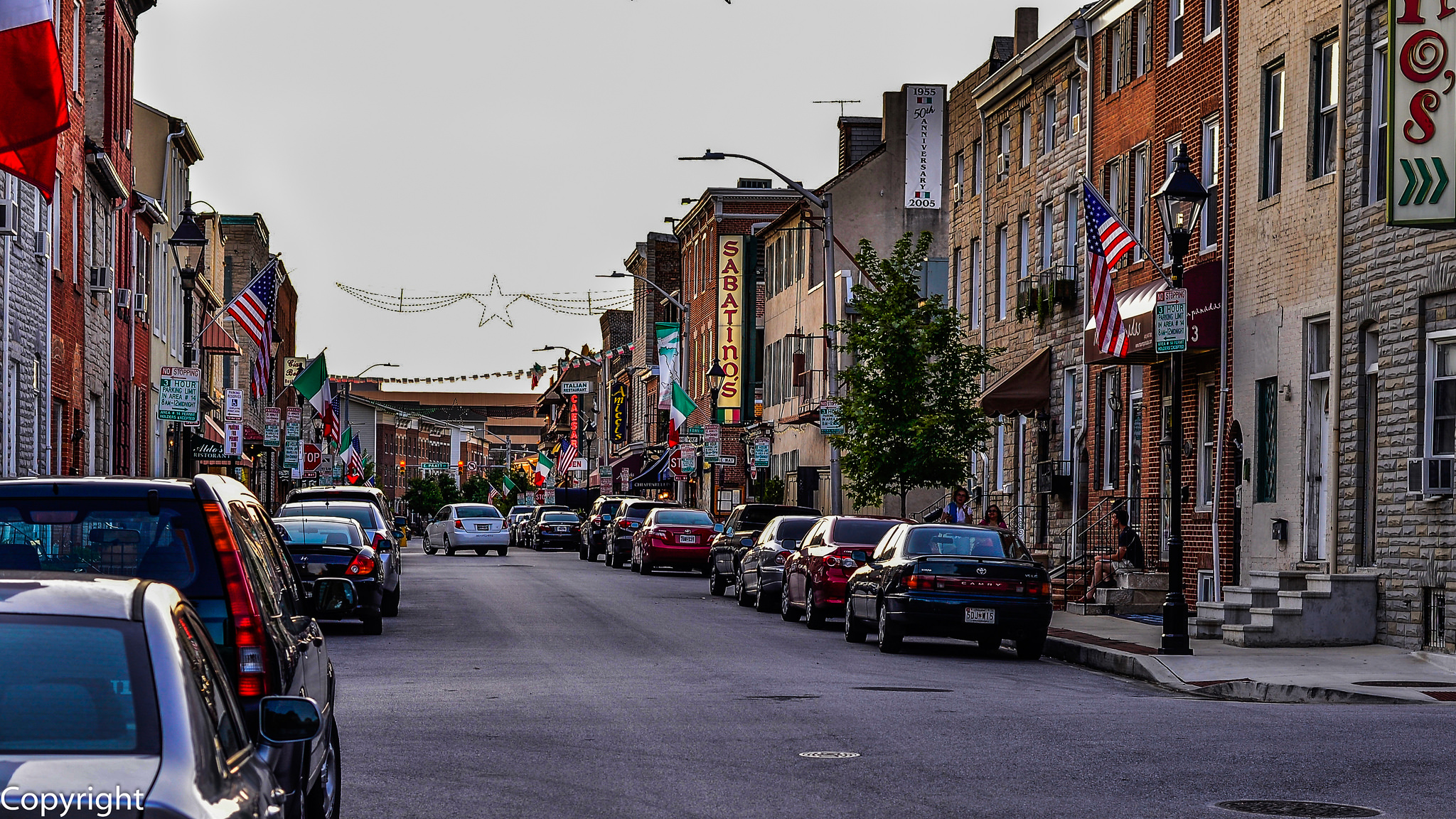
But not only are we welcoming to residents; we love visitors! We want people to come visit Little Italy. Little Italy is very well known for its popular restaurants serving authentic Italian cuisine. And while we are very proud to have so many restaurants that were established long ago with great reputations, there is so much more in Little Italy than restaurants. We have bocce leagues, several festivals throughout the year, a film festival in the summer, an Italian language school, several shops and salons, St Leo’s church, other landmarks, and so much more.
You are the President of the Advisory Board of the Promotion Center for Little Italy. Please, tell us more about this organization
The Promotion Center for Little Italy was established 8 years ago as a non-profit organization that wanted to promote the neighborhood of Little Italy to people outside of Little Italy to attract them down to the neighborhood to support all of our businesses, organizations, our church, and our neighborhood as a whole.
Our goal is also to preserve the Italian-American culture in the neighborhood. As the city grows, there is also increased real estate development in and around Little Italy. While we embrace the development, we want to make sure we preserve our Italian American foundation that was brought here over a century ago.
The Promotion center organizes several events during the year …
Yes, that is true. Our most prominent events are our two annual social events in the spring and fall. We try to use a different themes for each of our social events. This past fall was a Wine Tasting which was very popular.
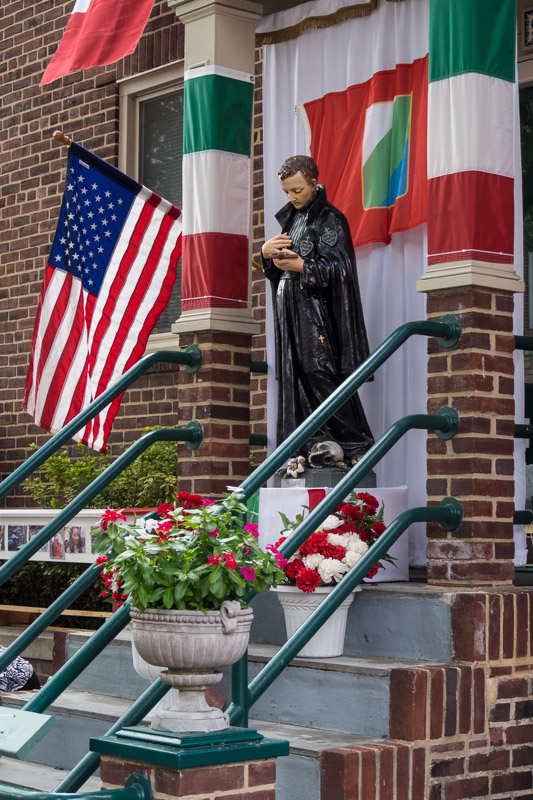
However, rather than organizing several events ourselves, we were established to help promote all the other events that occur in Little Italy organized by the Church, the businesses, and the organizations. The biggest events of the year held in Little Italy are our two Italian Festivals and our two Ravioli Dinners. St Anthony Festival is held in June. St Gabriel Festival is held in August. The Ravioli dinners are usually held in October and April. These are 4 events that help to raise significant money for the church. Other significant events are the summer film festival every Friday in July and August and the Columbus Day parade in October.
I understand that St. Leo's church is very important for the community, am I right?
St. Leo’s Church really is the center of the community. The weekend masses are very well attended, which is the first sign of a great relationship between church and community. While many churches have good attendance numbers, our residents go beyond mass attendance. We have so many volunteers who help the church with all functions sponsored by the church.
As I stated before, the biggest events are our festivals and dinners. We have hundreds of volunteers who donate their time to help with these events in one way or another. But there are also so many other occasions where the church does what it can to help the community, and volunteers step up to help. My wife likes to get together with other members of the community to help make pizzelle for the bake sales. She also cooks casseroles and dishes that she donates to the church who then brings them to food shelters in the city. The church holds dinners throughout the year, especially during Thanksgiving and Christmas.
There are so many ways the church integrates itself into the community, and the community really feels a sense of pride belonging to this parish. My relationship with God has grown over the past few years mainly due to the relationship I have developed with St. Leo’s church and parish.
Baltimore's Little Italy also has a Columbus Piazza, and every October there is a Columbus Day Parade. How do you feel about the attacks against Columbus that seem to grow year by year in the US?
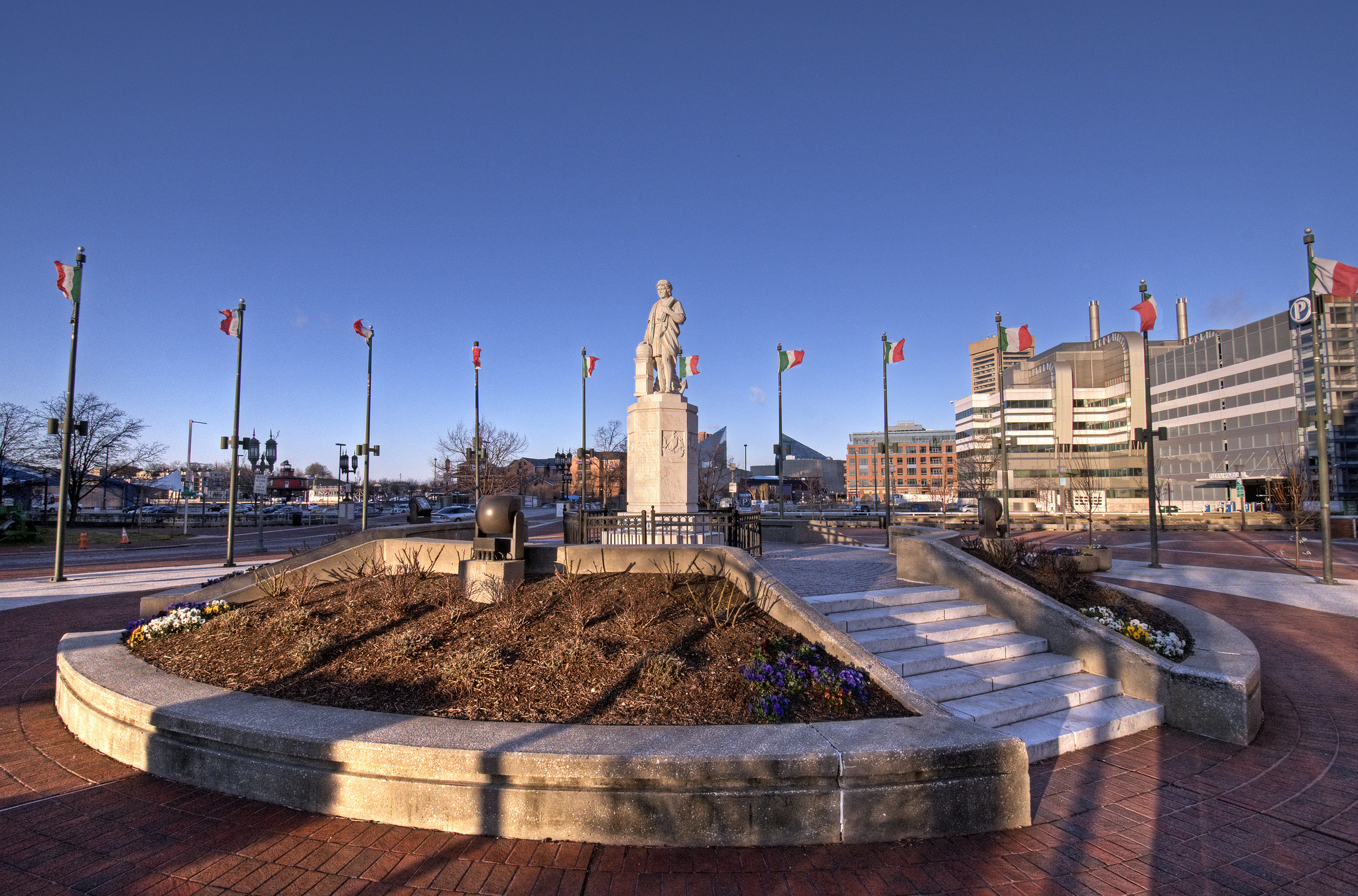
Yes, Little Italy does have a Columbus Piazza. It was established and dedicated in 1984. And we hold an annual Columbus Day Parade. We believe it is the longest running Columbus Day Parade in the country at over 125 years.
Italians are a very proud people. When we first immigrated to the United States, we earned the reputation for being hard workers. At times, we were discriminated against, and life was very hard. However, we persevered. Now, I can’t speak for all Italian-Americans, so my opinion on the Columbus attacks may be different than others. I try to be open-minded, and I want to hear other opinions. However, in my opinion, Columbus Day has become less of a day to celebrate the discovery of the new world, and more of a day to celebrate Italian American culture. I am very much in favor of preserving and recognizing the many accomplishments and contributions of Italian-Americans to our culture and society. Christopher Columbus has become a symbol of perseverance and accomplishment. Columbus Day is a day that we Italian Americans celebrate all the contributions that Italian Americans have made to our society. I can run down a long list of names of people who have contributed in science, politics, music, arts, sports, history, and so many more. Columbus Day celebrates those important people in our culture who must never be forgotten.
After a very important meeting, in December the Baltimore City Council voted to keep Columbus Day, rejecting the proposal to cancel it in favor of an Indigenous Day. Do you have any suggestion for other Italian American communities all over the US that eventually will have to face the same situation?
My biggest piece of advice to all the Italian American communities around the country is to have a unified voice. We did not have a unified voice. We have several Italian American organizations in and around the city of Baltimore. Representatives of several of these organizations had conversations with several councilmen. However, each of these representatives had different perspectives. We tried our best to get unified very quickly. Luckily, we were able to organize just enough that we prevented the vote from passing.
As a result, we will soon be organizing a council of unity on Italian American affairs. This council will invite all organizations who have Italian American interests to participate. In addition, my advice is to not make this council too formal. It doesn't need to be too bureaucratic. It just needs to be a group of people that can represent all Italian Americans in your city who can come together quickly whenever something needs to be discussed.
Is there a new flow of Italians who come to live in Baltimore these days?
There does not seem to be a large new flow of Italians who have come to live in Baltimore. However, there does seem to be a new flow of people who are passionate about Italy and Italian culture. There is a growing number of people who want to experience more about the Italian way of life. Italian food is and has always been popular. However more people want to speak Italian, listen and dance to Italian music, learn about Italian history, and even live in Little Italy.
There are many new residents in Little Italy from the new generation. Some are descendants of the original settlers. Others are brand new to the area. But all love the close-knit neighborhood and all it has to offer.
How is Made in Italy in Baltimore? Do Italian products arrive to the Little Italy, and can Italy do more to make this happen?
Made in Italy products are very highly perceived in Baltimore. These products are of high class and high quality and great workmanship. However, not many Italian products arrive to Little Italy. I’m not sure if demand is too low or pricing is too high, or if businesses don’t see opportunities in Little Italy. Personally, I would love to see more Made in Italy products brought and sold in Little Italy. It would become an even bigger draw to the neighborhood. It would definitely increase appeal to the neighborhood, help preserve the Italian culture in America, and to add a modern Italian flare to the neighborhood.
Italy can probably do more to make this happen. I am sure there are ways for the Italian government to provide financial incentives to companies who promote and sell Made in Italy products. Also, the Italian government can provide marketing support for those products. I would be overjoyed to see this happen to bring more Made in Italy products to Baltimore.
Baltimore ha una Little Italy molto attiva, e un apposito Promotion Center che organizza molte iniziative interessanti e importanti per rappresentare e promuovere ciò che è italiano nella "Città che legge", come una volta qualcuno soprannominò Baltimore.
Il presidente di questo Promotion Center è un giovane italiano di successo, molto orgoglioso delle sue radici. Siamo grati a Gianni Andracchio per essere nostro ospite in questa nuova intervista che racconta un'altra interessante storia di un'altra Italia in un'altra parte degli Stati Uniti
Ciao Gianni, prima di tutto ti chiediamo di dirci qualcosa sulla storia della emigrazione italiana a Baltimore
L'emigrazione italiana a Baltimore iniziò nel tardo 1800. Nel corso del tempo, sempre più italiani arrivarono qui, alcuni di essi spostandosi in gruppo e non più singolarmente. Alcuni entrarono negli Stati Uniti attraverso il porto di Baltimore, e altri arrivarono in treno da New York. Si stabilirono in diverse parti della città, ma c'erano due quartieri della città in cui erano concentrati soprattutto - Highlandtown e Little Italy.
Io sono cresciuto a Highlandtown, approfittando dell'influenza e della cultura che gli italiani portarono con loro. Il quartiere era pieno di immigrati italiani e delle loro famiglie. Fu costruita la chiesa cattolica della Madonna di Pompei, e poi la omonima scuola. C'erano negozi di proprietà e gestiti da italoamericani in tutto il quartiere.
Nella mia adolescenza, iniziai a lavorare a Little Italy, dove trovai una concentrazione ancora più grande di italiani e di cultura italiana. Il centro della comunità è la Chiesa di San Leo, e anche qui c'è anche una scuola. Naturalmente Little Italy è piena di ristoranti ancora di proprietà e gestiti dalle stesse famiglie che li hanno aperti quando emigrarono a Baltimore.
Come descriveresti la Little Italy di Baltimore a coloro che non sono mai stati lì?
La Little Italy di Baltimore è un accogliente, amichevole quartiere. Tutti i vicini sono come una famiglia, siamo veramente uniti. Ci conosciamo tutti,tra di noi. A volte camminare fino alla mia auto al mattino per andare andare al lavoro è un'avventura, per quanti sono coloro che incontro lungo la strada. Queste sono le persone che ho imparato a conoscere e ad amare nel corso degli ultimi 4 anni, da quando mi sono trasferito a Little Italy, e ancora prima negli ultimi 10 anni, cioè da quando ho iniziato a lavorare qui. Mi hanno accolto come parte del quartiere.
Ma non diamo solo il benvenuto ai residenti; noi amiamo i nostri visitatori! Vogliamo che la gente venga sempre di più a visitare la nostra Little Italy, che è molto conosciuta per i suoi famosi ristoranti, che servono autentica cucina italiana. Noi siamo molto orgogliosi di avere così tanti ristoranti che nel tempo hanno acquisito una così eccellente reputazione: ma Little Italy offre anche molto di più. Abbiamo campionati di bocce, numerosi festival durante tutto l'anno, un festival del cinema in estate, una scuola di lingua italiana, diversi negozi e saloni, la chiesa di San Leo, altri punti di riferimento, e molto altro ancora.
Tu sei il Presidente dell'Advisory Board del Promotion Center for Little Italy. Dicci qualcosa su questa organizzazione
Il Promotion Center for Little Italy è stato fondato 8 anni fa, ed è una organizzazione no-profit che ha come scopo quello di promuovere Little Italy presso le persone al di fuori del quartiere, per attirarli a noi, supportare tutte le nostre imprese e organizzazioni, la nostra chiesa, e la nostra zona nel suo complesso.
Il nostro obiettivo è anche quello di preservare la cultura italoamericana nel quartiere. La città cresce, e vi è anche un aumento di sviluppo immobiliare all'interno e intorno a Little Italy. Noi incoraggiamo lo sviluppo, ma vogliamo anche fare in modo di conservare la nostra essenza e la nostra cultura italoamericana, portata qui oltre un secolo fa.
Il Promotion Center organizza diversi eventi durante l'anno ...
Sì è vero. I nostri eventi più importanti sono i nostri due eventi sociali nella primavera e nell'autunno di ogni anno. Cerchiamo di usare un tema diverso per ciascuno dei nostri eventi sociali. Lo scorso autunno il tema è stato una degustazione di vino, che è risultata molto popolare.
Tuttavia, in realtà, noi non nasciamo per organizzare eventi, quanto per promuovere quelli organizzati nella Little Italy dalla Chiesa, dalle imprese e dalle organizzazioni.
I maggiori eventi dell'anno tenuti a Little Italy sono i nostri due festival italiani e le due cene a base di ravioli. Il St. Anthony Festival si svolge nel mese di giugno, mentre il St. Gabriel Festival si svolge ad agosto. Le cene a base di ravioli si tengono nel mese di ottobre e di aprile. Si tratta di 4 eventi che contribuiscono a raccogliere fondi significativi a favore della chiesa. Altri eventi di rilievo sono il festival del cinema estivo, ogni venerdì di luglio e agosto, e la parata del Columbus Day in ottobre.
Sappiamo che la chiesa di San Leo è molto importante per la comunità, giusto?
La Chiesa di San Leo è veramente il centro della comunità. Le messe del fine settimana sono molto frequentate, e questo è il primo segno del grande rapporto che c'è tra la Chiesa e la nostra comunità. Mentre molte chiese hanno presenze in numero che si può definire buono, i nostri residenti assicurano una partecipazione di massa, e vanno anche oltre. Abbiamo davvero tanti volontari che aiutano la Chiesa in molti modi.
Come ho detto prima, i più grandi eventi sono le nostre feste e cene: in queste occasioni abbiamo centinaia di volontari che donano il loro tempo per aiutare in un modo o nell'altro. Ma ci sono anche tante altre occasioni in cui la chiesa fa quello che può per aiutare la comunità, ed i volontari con essa. Mia moglie ama stare insieme agli altri membri della comunità per cucinare e vendere le pizzelle e raccogliere così denaro per la Chiesa. Lei prepara anche altri piatti che poi dona alla Chiesa, la quale a sua volta li porta presso i rifugi alimentari in città dove vanno coloro che hanno bisogno. La chiesa organizza cene durante tutto l'anno, soprattutto per il Thanksgiving e a Natale.
Ci sono tanti modi con cui la chiesa si integra nella comunità, e la comunità sente davvero un senso di orgoglio nell'appartenenza a questa parrocchia. Il mio rapporto con Dio è cresciuto negli ultimi anni principalmente per merito del rapporto che ho sviluppato con la chiesa e parrocchia di San Leo.
La Little Italy di Baltimore ha anche una "Columbus Piazza", e ogni ottobre c'è una parata del Columbus Day. Cosa pensi degli attacchi contro Colombo che sembrano crescere di anno in anno negli Stati Uniti?
Sì, Little Italy ha una Columbus Piazza. E' stata fondata e dedicata a Colombo nel 1984. E come dicevo, noi teniamo una parata annuale del Columbus Day, da 125 anni: pensiamo sia la più longeva di tutta l'America.
Gli italiani sono un popolo molto orgoglioso. Quando siamo emigrati negli Stati Uniti, abbiamo svolto lavori molto duri. A volte siamo stati discriminati, e la vita era molto difficile. Tuttavia, abbiamo perseverato. Ora, io non posso parlare a nome di tutti gli italoamericani, quindi il mio parere sugli attacchi a Colombo può essere diverso rispetto a quello di altri. Cerco di avere una mentalità aperta, e mi piace ascoltare altre opinioni. Tuttavia, per me, il Columbus Day non è più tanto un giorno per celebrare la scoperta del nuovo mondo, quanto piuttosto soprattutto un giorno per celebrare la cultura italoamericana. Colombo è diventato un simbolo di perseveranza e di realizzazione. Il Columbus Day è un giorno in cui noi celebriamo tutti i contributi che gli italoamericani hanno donato alla nostra società. E' molto lungo l'elenco di nomi di italoamericani che hanno contribuito nella scienza, nella politica, nella musica, nell'arte, nello sport, nella storia, e in tanti altri settori, a far grande l'America. Il Columbus Day celebra quelle importanti persone per la nostra cultura, che non devono mai essere dimenticate.
Dopo un incontro molto importante, in dicembre, il Consiglio Comunale di Baltimore ha votato per mantenere il Columbus Day, respingendo la proposta di cancellarlo per istituire al suo posto un Indigenous Day. Hai qualche suggerimento per le altre comunità italoamericane degli Stati Uniti che prima o poi dovranno affrontare la stessa situazione?
Il mio più grande consiglio a tutte le comunità italoamericane in tutto il Paese è di avere una voce unitaria. Noi non abbiamo avuto una voce unitaria. Abbiamo diverse organizzazioni italoamericane a Baltimore e nei suoi dintorni. I rappresentanti di molte di queste organizzazioni hanno avuto colloqui con diversi consiglieri. Tuttavia, ognuno di questi rappresentanti aveva un diverso punto di vista. Abbiamo fatto del nostro meglio per divenire uniti molto rapidamente. Per fortuna, siamo stati in grado di organizzare quel tanto che è bastato per impedire alla proposta di ricevere un voto favorevole.
In seguito a quanto avvenuto, presto organizzeremo un Consiglio per gli affari italoamericani, che inviterà a partecipare tutte le organizzazioni che hanno interessi italoamericani. Inoltre, il mio consiglio è di non rendere il Consiglio troppo formale. Non c'è bisogno di troppa burocrazia, ma di un gruppo di persone in grado di rappresentare tutti gli italoamericani nella città, che può riunirsi in fretta ogni volta che qualcosa deve essere discusso.
C'è un nuovo flusso di italiani che vengono a vivere a Baltimore in questi anni?
Non sembra esserci un nuovo flusso di italiani che sono venuti a vivere a Baltimore ultimamente. Tuttavia, molti sono coloro che si sono appassionati all'Italia e alla cultura italiana. C'è un numero crescente di persone che vogliono sperimentare di più sul modo di vivere italiano. Il cibo italiano è ed è sempre stato popolare. Tuttavia più persone oggi vogliono parlare italiano, ascoltare e ballare musica italiana, conoscere la storia italiana, e anche vivere a Little Italy.
Ci sono molti nuovi residenti a Little Italy, della nuova generazione. Alcuni sono discendenti di coloro che si stabilirono qui all'epoca. Altri sono nuovi. Ma tutti amano il quartiere e tutto ciò che ha da offrire.
Come va il Made in Italy a Baltimore? Ci sono prodotti italiani, e c'è qualcosa in più che l'Italia può fare per migliorare questo commercio?
Il Made in Italy ha un altissimo valore percepito, a Baltimore. Questi prodotti sono di alta classe e di alta qualità, e di grande maestria. Tuttavia, non molti prodotti italiani arrivano a Little Italy. Non sono sicuro se sia perché la domanda è troppo bassa o perché il prezzo è troppo alto, o se gli imprenditori non immaginano una rendita nell'ipotesi di aprire un business di prodotti italiani, qui. Personalmente, mi piacerebbe vedere più Made in Italy portato e venduto a Little Italy. Anche perché sarebbe un'ulteriore motivo di attrazione per il quartiere.
L'Italia può probabilmente agire meglio per fare sì che questo accada. Sono sicuro che ci sono modi per il governo italiano di fornire incentivi finanziari e un supporto in termini di marketing, alle aziende che producono e promuovono prodotti Made in Italy. Sarei felice di vedere che questo accada, e di dare il benvenuto a nuovi prodotti Made in Italy qui a Baltimore.