As we're having a great time wandering all over the 50 States in search of Italian stories, our trip today stops by Portland, Oregon: we're far from the motherland, but that doesn't mean that there's no Italy, here in the Beaver State.
On the contrary, we're happy and grateful to meet our friend Tonya Russo Hamilton, who will help us understand why and how even in Oregon you can feel a little bit at home if you're Italian.
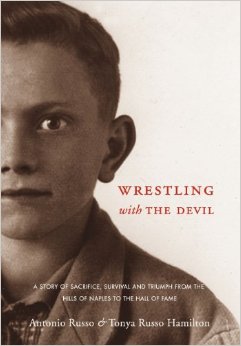
Tonya, your father, Antonio Russo, left Italy all by himself at the age of ten, and managed to become a famous wrestling champion. You wrote a book about this: "Wrestling with the Devil: A Story of Sacrifice, Survival, and Triumph, from the Hills of Naples to the Hall of Fame". Is it a typical story of an Italian who pursue his American dream?
"Wrestling with the Devil" is a story that many people can relate to about Italian immigration to the United States. My father, Antonio Russo, is a southern Italian and he was living in poverty in a small village just northeast of Naples when his family decided to send him on a ship by himself to the U.S.
He was only ten years old when he arrived in New York, and he moved in with family members in Brooklyn. These people were struggling financially and it was very difficult for them to add another mouth to feed. Myb father then moved to Portland with one of his uncles, also named Antonio, who moved all the way to Oregon.
Portland is where my father's story unfolds and he learns to wrestle. He found that wrestling gave him focus and was an outlet for him as he assimilated to a new culture without his family. Even though he became a skilled butcher and this was to be his profession, he also continued to wrestle every day at a local gym. A university noticed his skills and because of this he was able to wrestle in college and go on to become a highly successful teacher and a coach.
Is there, or was there, a Little Italy in Portland?
There was a thriving Little Italy in Portland in the 1900s. It was situated in the heart of downtown Portland and was centered around St. Michael's the Archangel Italian Catholic Church. The newly immigrated Italians needed a place to worship and in 1901 they put their resources together and built the church with their own money and their own labor.
Sadly, in 1961, due to an urban renewal movement the city demolished Portland's Little Italy. The only building they left in place was St. Michael's. Today it is the only building still standing in what used to be Portland's Little Italy with its original identity intact. The church is currently undergoing restorations and the local Italian community has come together to raise money and pay tribute to those early Italians with beautiful stained glass windows that will be put into the church. Each window will represent a different region of Italy. Although there is not a physical location for the Italian community in Portland anymore, the Italian community still thrives through many different Italian organizations.
Are there people, or facts that have had or still have a particular importance in describing Italy in Oregon? Or maybe places outside Portland?
Many Italian immigrants began to farm the land in and around Portland because of the fertile ground and wonderful growing conditions we have here. Several of those family farms are still in operation today. There is even a street just outside of Portland called, Cipole Road, named for the onion fields that were once farmed by the local Italians.
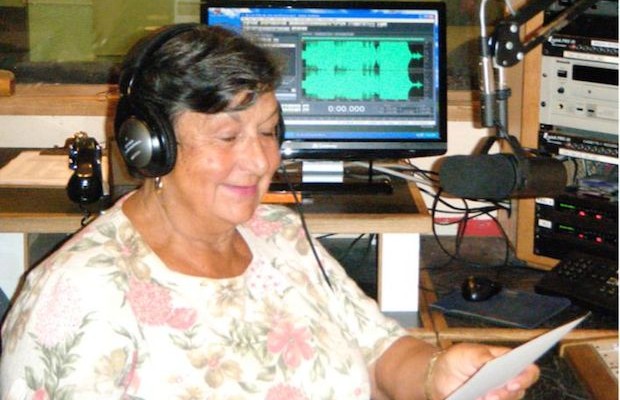
A local citizen, Lucia Galizia, who came to Portland from Naples in 1963, has been a driving force behind the Italian community here for nearly forty years. Lucia has been an integral part of Festa Italiana Portland since its inception in the early 1990s and is currently head of the entertainment committee. Another of Lucia's contributions is her long-held position as host of The Italian Hour radio show on KBOO Community Radio. She has been hosting the radio show for twentyseven years.
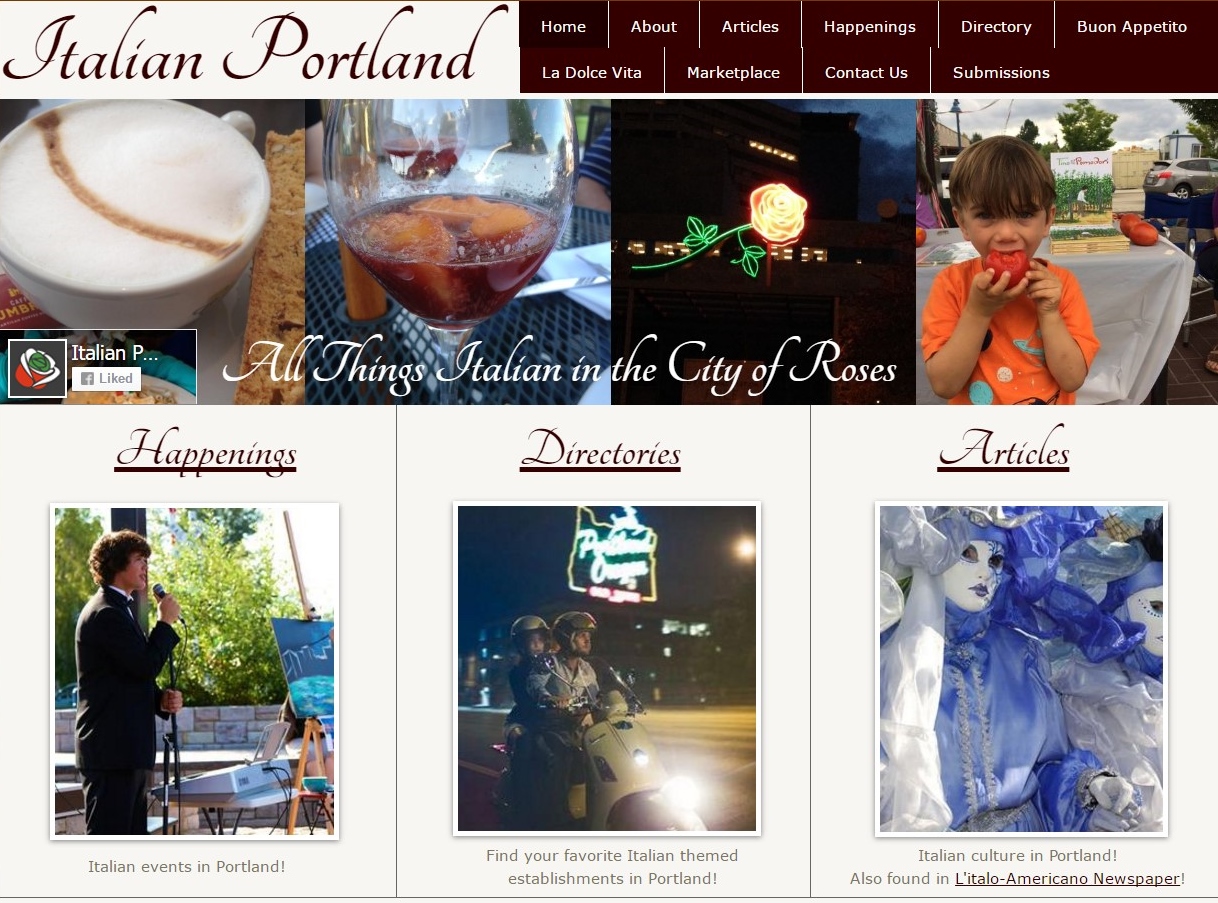
Your website www.italianportland.com has all the informations about your heritage in your city. We wish there was one like this in every American city. Is it a difficult enterprise?
I started the Italian Portland website and our Facebook page after the publication of my books. After "Wrestling with the Devil" was published I authored an illustrated children's book titled "Tino & the Pomodori". This story celebrates the wonders of gardens, Italy, and family traditions and gives children a glimpse of the beautiful Italian language.
Italian Portland is a way for me to focus on two things that I love: Italian culture and writing. It is not so difficult to maintain but I am also an elementary school teacher so it sometimes gets overwhelming to try and keep up with all of the Italian happenings in the Portland area.
I am always looking for ways to improve the website so that it can be a more useful resource to those in the Italian community.
How about the actual Italian presence in Oregon, nowadays? Are there many Italians? Maybe students?
The Italian presence in Portland is quite strong. There are students as well as teachers, businessmen & women, business owners, artists, and musicians. Portland is known for having some of the best restaurants in the nation, and many of those are Italian restaurants. Italian cuisine goes hand in hand with the bounty of produce, humanely raised meats, and seafood available in the Pacific Northwest.
We have an Italian school - Scuola Italiana di Portland - that was established in 2006 by, Grazia Solazzi. Grazia is a mother of three, an up-and-coming entrepreneur, and food critic. She is currently the acting School Board President at Scuola Italiana and is passionate about promoting Italian language and culture in Portland.
There is also a popular band in Portland called, Mbrascatu. The band was founded by, Andrea Algieri, who hails from Calabria. Andrea was given the nickname, Mbrascatu, by his grandfather as a child in Italy. As the lead singer he sings all of his songs in Italian and also plays the guitar and writes his own lyrics. Mbrascatu has a large and continually growing fan base in Portland.
Portland is also part of a long time sister cities program with Bologna in Emilia Romagna, Italy. Is this still an active program?
Yes. This program was founded in 2003 and is still a very active program. Portland Bologna Sister City Association actively promotes the strong ties between Portland, Oregon and Bologna, Italy. This year will be the eighth year of their Youth Exchange, which is a small program where for two weeks, 16 & 17 year olds from each city travel to one another's cities. They alternate travel each year. One city acts as the host while the other city travels. Each city provides an official itinerary to introduce visitors to their sister city, and host families engage them in informal activities. Starting in 2008, with the arrival of seven Bologna teens in Portland, this summer's trip to Bologna will be Portland's fourth. To date, 128 teens have had the opportunity to connect through the PBSCA Youth Exchange, and many friendships have endured.
Festa Italiana Portland is celebrating its 25 anniversary in 2016. Please tell us something about it.
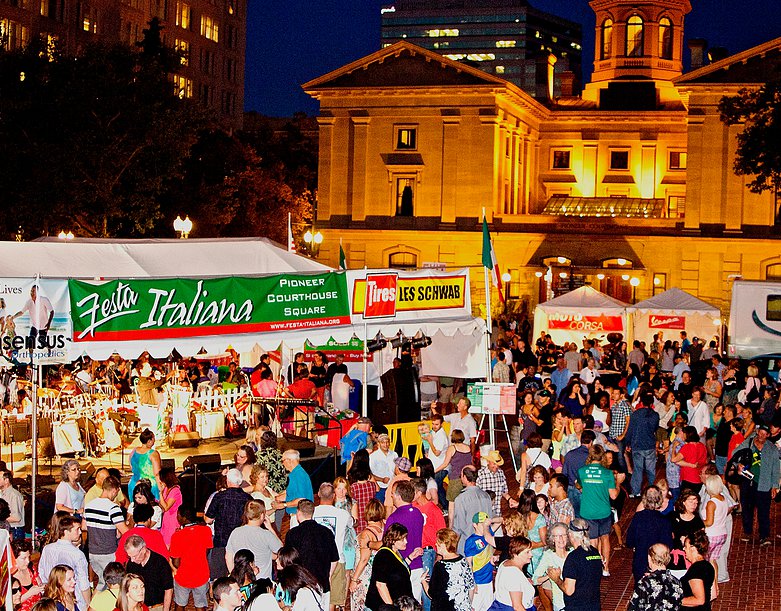
Festa Italiana Portland is a three day event held every August (this year it start on August 25) in the heart of downtown Portland at Pioneer Courthouse Square. It is put on by the non-profit Festa Italiana Association and features Italian music and entertainment as well as Italian food and desserts. Many of the Italian organizations in town volunteer to help make Festa a wonderful event. The pre-festa activities which occur the week leading up to the event hosts a Catholic mass held in the Italian language, a bocce tournament, and Italian movies. During the event, guests can either sit in the piazza and enjoy the food and music or reserve a private table upstairs in the wine garden. There is dancing and singing and it is truly a fun event for all ages.
What's the story of the Italian emigration to Oregon?
I'm not exactly an expert about this, and so I've asked my friend Giuseppina Ciotti Moore to help me with that: she knows very much about Italian emigration to Oregon.
Giuseppina Ciotti Moore: Around the late XIX century many Italians came here to work on logging camps: in the North West logging was a very big industry, lots of trees in the forests to be cut down for building homes and other purposes of working with wood. The Italians also came to work for the railroads: there were also other jobs, but these two were the ones that attracted the vast majority of Italians in this area.
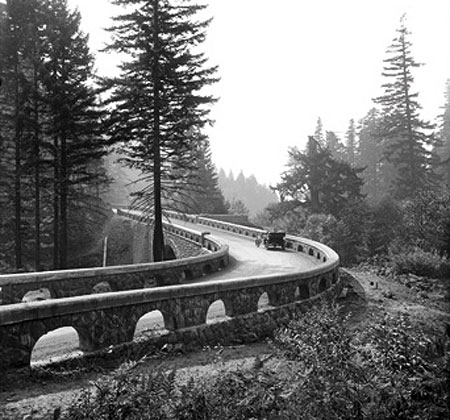
Around 1910 there were approximately 15,000 Italians. During the depression, President Roosevelt created the WPA (Works Progress Administration): many Italians, above all stonemasons, came then to work on the Columbia River Highway, in particular the stone walls protecting the highway serving as guardrails. Others worked in Mt. Hood, where several Italian stonemasons built Timberline Lodge, a very popular ski resort. A lot of these Italians were from Abruzzo, like my family. Another place they worked at was a place called Vista House, which overlooks the whole valley of the Columbia River.
In the early 1900, the Government granted 640 acres of land in Portland for farming. A lot of Italians accepted the offer, but it was not easy because the land had a lot of trees and boulders that they had to remove before being able to plant vegetables and fruits. They worked hard, and even these days this area is still partially used for farming. The Genovesi were the one who worked more on farming, while the Sicilians were the ones who were successful into the produce business: they would have those large trucks, some of which were horse-drawn, that would go around the neighborhoods to sell fruits and vegetables.
After the First World War, many more Italians arrived. There was a couple, Girolamo Colasuonno and his wife: they were very active in helping the immigrants that were coming in the 20's. They were very generous: Girolamo became a notary and so he continued to help many Italians, even working with the city of Portland in finding jobs for them. Many Italian American businesses were established thanks to Girolamo and his wife: they also built an Italian Federation Hall in Downtown Portland, where the Italian organizations would have their meetings and gather, and with a big ballroom for wedding receptions. In 1932 they even started as Columbus Day celebration with thousands of Italians; and they also established a weekly Italian American newspaper in the 30's called "The Columbus record". Their son Giuseppe Colasuonno is the one who established the Oregon Historical Society with many interesting documented information.
We still have a few Italian organizations from the old days: the "Italian Business Club", the "Tuscan Association", "Amici d'Italia", the "Club Paesano" that started with a lot of Sicilians. They're still very active today.
Ci stiamo divertendo molto girovagando per i 50 Stati Uniti alla ricerca di storie italiane: il nostro viaggio oggi si ferma a Portland, Oregon. Siamo lontani dalla madrepatria, ma questo non significa che non ci sia l'Italia anche qui nel Beaver State.
Al contrario, siamo felici e grati di incontrare la nostra amica Tonya Russo Hamilton, che ci aiuterà a capire perché e come anche in Oregon ci si può sentire un po' a casa, se si è italiani.
Tonya, tuo padre Antonio Russo lasciò l'Italia da solo all'età di dieci anni, e riuscì a diventare un famoso campione di wrestling. Su questo tu hai scritto un libro: "Wrestling with the Devil: A Story of Sacrifice, Survival, and Triumph, from the Hills of Naples to the Hall of Fame". E' una tipica storia di un italiano che insegue il suo sogno americano?
"Wrestling with the Devil" è una storia alla quale molte persone possono sentirsi vicine, quando si parla di immigrazione italiana negli Stati Uniti. Mio padre, Antonio Russo, era nato nel meridione d'Italia e viveva in condizioni di povertà in un piccolo villaggio a nord est di Napoli, quando la sua famiglia decise di mandarlo su una nave da solo negli Stati Uniti.
Aveva solo dieci anni quando arrivò a New York, e andò a vivere con alcuni familiari a Brooklyn. Queste persone erano in grandi difficoltà economiche e fu molto difficile per loro aggiungere un'altra bocca da sfamare. Uno dei suoi zii, anche lui di nome Antonio, che si trasferì a Portland, in Oregon, lo portò con lui.
Portland è dove si sviluppò la storia di mio padre, che qui imparò a lottare. Scoprì che il wrestling lo appassionava e fu uno sbocco per uno come lui, obbligati ad assimilarsi ad una nuova cultura senza la sua famiglia. Anche se divenne un macellaio specializzato, e questa doveva essere la sua professione, continuò ad allenarsi ogni giorno in una palestra locale. Un'università notò le sue capacità e per questo fu in grado di praticare il wrestling al college e di diventare un insegnante di grande successo e anche un allenatore.
C'è, o c'era, una Little Italy a Portland?
C'era una fiorente Little Italy a Portland nei primi anni del secolo scorso. Era situata nel centro di Portland ed era cresciuta attorno la Chiesa cattolica italiana di San Michele Arcangelo. Gli italiani da poco immigrati avevano bisogno di un luogo di culto e nel 1901 misero insieme le loro risorse e costruirono la chiesa grazie al loro denaro e con il loro lavoro.
Purtroppo nel 1961, a causa di un grande rinnovamento urbano di Portland, la Little Italy fu demolita. L'unico edificio lasciato al suo posto fu la chiesa di San Michele, che è tuttora ancora in piedi esattamente come la costruirono gli italiani. La chiesa è attualmente in fase di restauro e la comunità italiana locale si è riunita per raccogliere fondi e rendere omaggio a quei primi italiani, prevedendo di abbellire la chiesa con alcune belle vetrate: ogni finestra rappresenterà una diversa regione d'Italia. Anche se non c'è più un luogo fisco caratteristico della comunità italiana a Portland, essa vive ancora attraverso molte organizzazioni italiane.
Ci sono persone o fatti che abbiano avuto o hanno una particolare importanza nel descrivere l'Italia in Oregon? O forse luoghi al di fuori Portland?
Molti immigrati italiani iniziarono a coltivare la terra a Portland e nei suoi dintorni a causa del terreno fertile e produttivo che abbiamo qui. Molte di queste aziende familiari sono ancora oggi attive. C'è anche una strada appena fuori Portland chiamata Cipole Road, che prende il nome dai campi di cipolla che una volta erano coltivati dagli italiani emigrati qui.
Una cittadina locale, Lucia Galizia, che arrivò a Portland da Napoli nel 1963, è stata una forza trainante della comunità italiana qui per quasi quarant'anni. Lucia è stata parte integrante della Festa Italiana Portland sin dal suo inizio nei primi anni 1990, ed è attualmente a capo del comitato che si occupa dell'intrattenimento. Un altro dei contributi di Lucia è il fatto di essere da ben 27 anni la conduttrice di un programma radiofonico "The Italian Hour" sul network KBOO Radio.
Il tuo sito web www.italianportland.com ha tutte le informazioni sul mondo dell'Italia a Portland. Ci piacerebbe che ce ne fosse uno così in ogni città americana. Si tratta di una impresa difficile?
Ho iniziato il sito Italian Portland e la nostra pagina di Facebook dopo la pubblicazione dei miei libri. Dopo "Wrestling with the Devil" ho pubblicato un libro illustrato per bambini intitolato "Tino & the Pomodori". Questa storia celebra le meraviglie che nascono nei giardini, dell'Italia, e delle tradizioni di famiglia e dà ai bambini un assaggio della bella lingua italiana.
Italian Portland è un modo per me di concentrarmi su due cose che amo: la cultura italiana e la scrittura. Non è così difficile da mantenere, ma io sono anche un'insegnante di scuola elementare e a volte cercare di tenere il passo con tutti gli avvenimenti italiani nella zona di Portland diventa molto complicato.
Sono sempre alla ricerca di modi per migliorare il sito in modo che possa essere una risorsa più utile alla comunità italiana.
Cosa si può dire della presenza italiana attuale in Oregon? Ci sono molti italiani? Forse studenti?
La presenza italiana a Portland è abbastanza forte. Ci sono studenti e insegnanti, uomini e donne d'affari, imprenditori, artisti e musicisti. Portland è nota per avere alcuni dei migliori ristoranti del Paese, e molti di questi sono ristoranti italiani. La cucina italiana va di pari passo con la bontà dei prodotti, carni allevate in ambienti sani e frutti di mare dal Pacifico di nord-ovest.
Abbiamo una scuola italiana – la Scuola Italiana di Portland - che è stata creata nel 2006 da Grazia Solazzi. Grazia è una madre di tre figli, un'imprenditrice di successo e un critico gastronomico. Attualmente è Presidente del Board della Scuola Italiana e promuove appassionatamente la lingua e la cultura italiana a Portland.
C'è anche una band popolare a Portland chiamata Mbrascatu. La band è stata fondata da Andrea Algieri, che proviene dalla Calabria. Mbrascatu è il soprannome che fu dato ad Andrea quando era bambino, da suo nonno, in Calabria. Andrea canta tutte le sue canzoni in italiano, suona la chitarra e scrive i suoi testi. Mbrascatu è in grande crescita di successo e di consenso qui a Portland.
Portland è anche da diversi anni gemellata con la città di Bologna. E' ancora un programma attivo?
Sì. La Portland Bologna Sister City Association fu creata nel 2003 e promuove attivamente i forti legami fra Portland, Oregon e Bologna, Italia. Quest'anno sarà l'ottavo anno del loro scambio di giovani, che è un piccolo programma che vede ragazzi di 16 e 17 anni visitare l'altra città per due settimane, alternandosi ogni anno. Ogni città offre un itinerario ufficiale per introdurre i visitatori alla loro città sorella. Si iniziò nel 2008 con l'arrivo di sette ragazzi di Bologna a Portland: quest'estate invece ci sarà il quarto viaggio di ragazzi di Portland a Bologna. Fino ad oggi, 128 ragazzi hanno avuto la possibilità di viaggiare grazie a questo programma, e sono nate moltissime amicizie.
La Festa Italiana Portland festeggia quest'anno il suo 25esimo anniversario. Ce la puoi raccontare?
La Festa Italiana Portland è un evento di tre giorni che si tiene ogni agosto (quest'anno iniziamo il 25) nel centro di Portland presso Pioneer Courthouse Square. E' organizzato da Festa Italiana Association, un'associazione no profit. Nel corso dei tre giorni abbiamo musica italiana e altri diversi eventi che riguardano ad esempio la cucina italiana. Molte delle organizzazioni italiane in città donano il proprio lavoro e il proprio tempo per contribuire a rendere la Festa un evento meraviglioso. Le attività precedenti alla Festa che si tengono la settimana che precede l'evento prevedono una messa cattolica in lingua italiana, un torneo di bocce, e la proiezione di film italiani. Durante l'evento, gli ospiti possono sedersi in piazza e gustare il cibo e la musica o prenotare un tavolo privato al piano di sopra nel giardino del vino. Si balla, si canta ed è veramente un evento divertente per tutte le età.
Qual è la storia dell'emigrazione italiana in Oregon?
Non sono esattamente un'esperta su questo, e così ho chiesto aiuto alla mia amica Giuseppina Ciotti Moore: lei sa molto di emigrazione italiana in Oregon.
Giuseppina Ciotti Moore: Intorno alla fine del XIX secolo molti italiani vennero qui per lavorare sui campi in cui si tagliavano gli alberi e si raccoglieva la legna, che nel nord ovest è un settore industriale di grande importanza. Gli italiani vennero anche a lavorare nelle ferrovie: c'erano anche altre occasioni lavorative, ma questi due furono i settori che attirarono la stragrande maggioranza degli italiani qui.
Intorno al 1910 c'erano circa 15.000 italiani. Durante la depressione degli anni '30, il Presidente Roosevelt creò il WPA (Works Progress Administration): molti italiani, soprattutto tagliapietre, arrivarono qui per lavorare alla Columbia River Highway, in particolare dando vita alle barriere di pietra che proteggono la strada facendo da guardrail. Altri lavorarono a Mt. Hood, dove diversi tagliapietre italiani costruirono Timberline Lodge, una stazione sciistica molto popolare. Molti di questi italiani erano abruzzesi, come la mia famiglia. Un altro posto in cui lavorarono fu l'osservatorio Vista House, che si affaccia su tutta la valle del fiume Columbia.
Nei primi anni del 1900, il governo diede in concessione 640 acri di terra a Portland con finalità agricole. Molti italiani ne approfittarono, anche se si trattava di un lavoro molto duro e difficile perché la terra era piena di alberi e massi, che gli italiani dovettero rimuovere prima di poter piantare ortaggi e frutta. Lavorarono molto duramente, e ancora oggi questa zona è in parte utilizzata per l'agricoltura. Furono gli emigrati genovesi quelli che maggiormente si impegnarono in questo settore, mentre i siciliani soprattutto ebbero successo nella vendita di prodotti: li trasportavano su grandi camion, alcuni dei quali trainati da cavalli, e andavano in giro per i quartieri per vendere frutta e verdura.
Dopo la prima guerra mondiale arrivarono molti più italiani. Una coppia, Girolamo Colasuonno e sua moglie, fu molto attiva nell'aiutare gli immigrati che stavano arrivando negli anni '20. Furono molto generosi: Girolamo divenne un notaio e così poté continuare ad aiutare molti italiani, anche lavorando insieme alla città di Portland, nella ricerca di posti di lavoro. Molte aziende italoamericane furono create grazie a Girolamo e a sua moglie, che costruirono anche la Italian Federation Hall nel centro di Portland, dove le organizzazioni italiane tenevano i loro incontri e si riunivano, con una grande sala da ballo per ricevimenti di nozze. Nel 1932 i Colasuonno diedero vita anche al primo Columbus Day di Portland, una festa con migliaia di italiani; e sempre negli anni '30 aprirono anche un giornale settimanale italoamericano chiamato "The Columbus record". Il loro figlio Giuseppe Colasuonno è colui che creò l'Oregon Historical Society, che riporta molte informazioni e documenti decisamente interessanti.
Ad oggi abbiamo ancora alcune organizzazioni italiane che nacquero a quei tempi e sono ancora molto attive: la "Tuscan Association", gli "Amici d'Italia", il "Club Paesano" che fu creato grazie a tantissimi siciliani.