America has always appreciated the creativity, ingenuity and manual skills of the Italians. These are qualities that have allowed many Italians to emigrate to the US, work hard, prove their skills, find their way, be successful. It has happened in every field, and the person we host today on We the Italians is a living example of this.
Alberto Zamperla leads the company that took his father's name: the head office is in Italy, the American branch is in New Jersey. If in the last 8 years you have been to Coney Island, the most famous amusement park in the world, you probably had fun thanks to him, but it is possible that it has happened in other major amusement parks in America. Zamperla is the Italian who entertains Americans in the amusement places invented by America, with the creativity and ingenuity that only we Italians possess. Two flags, One big smile.
Mr. Zamperla, welcome on We the Italians. Here in Italy we associate amusement parks with the United States; and it is fantastic to discover that among the leaders in that sector in America, an Italian company exists. I would like to ask what it feels like to entertain the American people, who have made the amusement business one of their known strengths throughout the world?
The mental association amusement parks-USA in the collective imagination is absolutely spontaneous if not obvious, but if we talk about fun, we Italians are second to none!
Already the ancient Romans were familiar with fun and its political demagogic value, so as to summarize in the formula "panem et circenses" (bread and circus games) the sense of public welfare, not to mention the famous Venetian carnival, together with public entertainment from ancient origins that date back even to the early years of 1000. Excuse me, my passion for history led me to digress!
I have been "frequenting" the United States since 1976, when my father sent me to the New World to open a commercial outpost for our company, so my familiarity with the world of amusement parks in America is over forty years. I can certainly not hide my satisfaction and pride in having managed, as a company, to make us known and appreciated in the United States by companies such as Disney, Universal, Six Flags, Sea World etc. In short, the best of the entertainment industry.
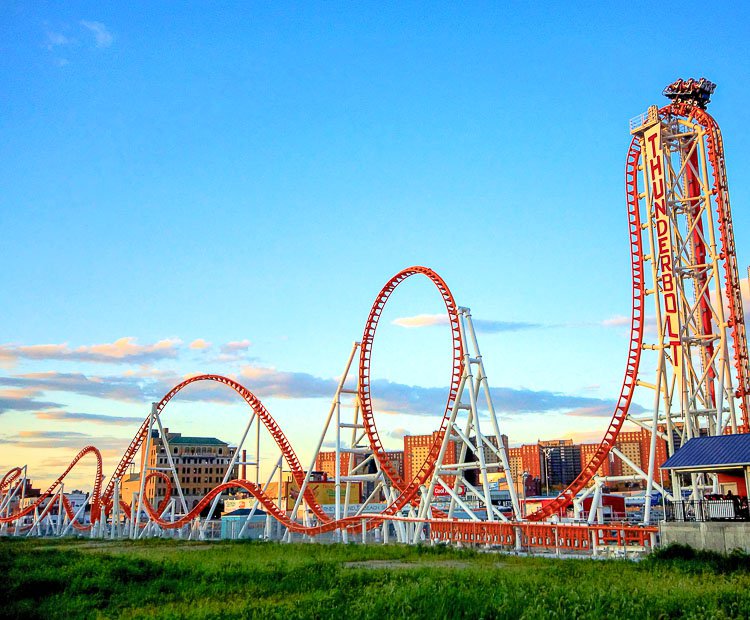
That said and without taking anything away from anyone, I can still say that the feat of which I am most proud of is having been able to revive the Luna Park in Coney Island, NY, in 2010; and to continue to manage it with satisfaction and success.
That's where the term "Luna Park" itself was born - one of the world's best-known amusement parks! If I'm not mistaken, you were called by the then mayor of New York Michael Bloomberg, inspired by his predecessor Rudolph Giuliani, who called you to adapt the area of the Central Park skating rink into a summer amusement park with a perspective that was not just commercial.
Years later we can say that Bloomberg made the right choice and that thanks to your intervention there has been a huge social redevelopment of the entire Coney Island area ...
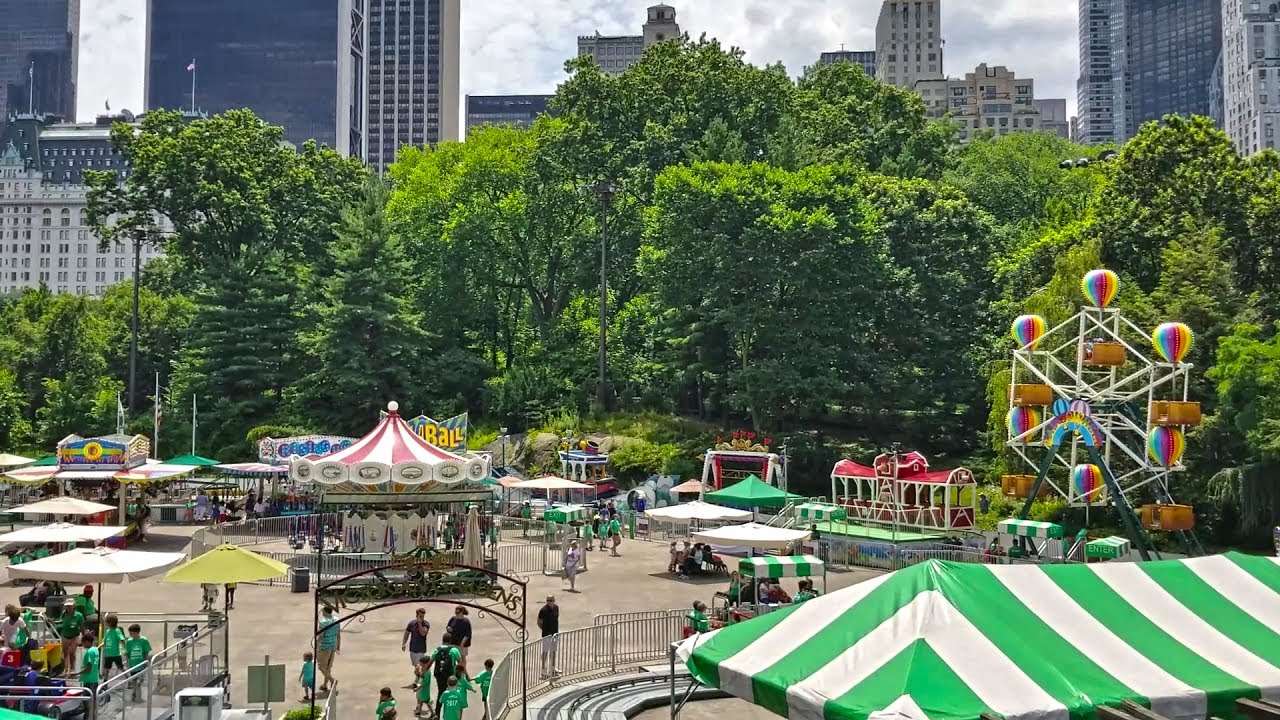
Before I reply, let me clarify that the Central Park project was managed by Donald Trump, as well as the Wollman Ice Rink, who, with the aim of starting a profitable business for the summer, contacted us. So we had no relationship with Mayor Giuliani (before arriving at us, however, Trump had already tried to use the ice rink in the summer by organizing courses in aerobics, skating, dancing and even horseback riding: all failed attempts). We immediately thought of proposing a children's park that would stand out from the usual and be, so to speak, tasteful: we proposed a theme that was inspired by the "bon ton" of the Victorian era and we called it "Victorian Gardens". Well, this is the true story of the amusement park in Central Park.
Back to your question, that is whether Bloomberg has made the right choice in focusing on the redevelopment of Coney Island starting from the amusement park, we can only confirm (attention however: Bloomberg has not called us, has called a public tender in which we participated and that we won). The choice of the pre-Bloomberg administration to give a home to New Yorkers in difficulty without giving them the chance of a job has proved to be a failure and has done nothing but contribute to the general degradation of the area, forcing the population of Brooklyn to a life of expedients.
The reopening of Luna Park on Coney Island was immediately conceived as an integral part of a larger redevelopment project for the entire area for which the Bloomberg administration planned to directly invest more than $ 150 million in infrastructure and urban construction to bring the site back to its former glory. Further investments in the order of several million dollars would also have been made by the State and the Federal Governments.
Today Luna Park employs about one hundred permanent staff and from May to September it employs more than 600 seasonal workers: not bad, don't you think? Also because there are so many small businesses on the side of the park and so many activities have been opened that give work to the local population, not to mention hotels that are already open or about to (consider that the park attracts about 800,000 people every year, including New Yorkers and tourists).
To put it in the American way, we can say that for the city of New York it was a win-win operation where everyone benefited: the municipality that collects rent and taxes for the management of Luna Park, the population that is now in a reclaimed and upgraded area with increasing job opportunities, the company that manages the park and the businesses on the boardwalk, etc... etc...
Do you think there is a reason why a company with Italian DNA is so successful in the United States?
We are technically and professionally good, competent and flexible, we combine imagination and ingenuity and then, not to be underestimated, we are used to beauty! Do you know Vicenza, its Palladian palaces, the natural context and landscape that surrounds it? Well, I believe that we Italians have the ability to bring to the world the beauty we are used to: there may be a reason why Made in Italy is known and appreciated throughout the world, don't you think?
The fact that we have so much history and artistic heritage that the whole world envies us has made us accustomed, as Italians, to being able to grasp the deep meaning of things and have respect for them. When we started to work to the reconstruction of Luna Park we had to win a good dose of declared hostility from the New Yorkers who feared losing, with the new Luna Park, a piece of history and identity. I can't hide my satisfaction when in 2012 the New York Times titled a piece on Coney Island "Renewed but Recognizable": we were able to reopen the park and update it, without upsetting or distorting it!
Antonio Zamperla S.p.A. was founded in 1966 by your father, Antonio. The story of your father, going from being a carny to being the founder of a successful empire all over the world, contains in itself the Italian entrepreneurial perseverance and at the same time the American dream of those who make it. Please tell us something about him.
I have no difficulty in admitting that I owe everything to my father: from education to the transmission of the fundamental values of life. My father taught me that being a "man" means above all always protecting the weakest, he transmitted to me the sense of duty and effort, the attachment to the territory but also the value of open-mindedness, of knowing how to get involved and adapt to the most diverse geographical and cultural realities. He made me travel and get to know new worlds: it was he who, at the age of 24, "democratically" sent me to the United States to "open up" the office and conquer the American market.
It was thanks to my father that I, coming from '68 and from the ideology that wanted all of us to be the same, understood that having all the same rights does not necessarily mean being all the same. When I used to go to the supermarket in the United States, my cart was completely different from that of the American people: I bought only products to cook, they bought only products to heat in the microwave! “Paese che vai, cultura che trovi” (which means that you’ll find a different culture in every country) says a famous proverb: it was when I returned to Italy from my experience in the United States that I decided to organize my company in order to have, at each office or foreign headquarters, a "cultural interpreter", an Italian on the spot able to transfer to the parent company the peculiarities of the place, culture and local traditions.
So you arrived in America in 1976, and since most of your activities were directed to the United States, in 1979 Zamperla Inc. was born in New Jersey. What are the main attractions you have created in America?
At the end of the 80's, just before acquiring the order for Eurodisney Paris, a real milestone in the history of my company, we supplied the first carousel to Disney California: we had never faced such structured and demanding customers and I have no problem admitting that the first supply for Disney was a bloodbath for us. But we're Italian, we're fast and we're capable: we learned the lesson right away and the subsequent supplies were a success. To date we have supplied Disney with more than 25 attractions and we are now loyal partners of the main players in the entertainment industry worldwide.
In 2005 your father was the first Italian to be recognized in the International Association of Amusement Parks and Attractions Hall of Fame, the golden book of the great leaders of the entertainment industry: men like Walt Disney and George Ferris, the inventor of the Ferris wheel. Such a recognition is really something exceptional...
Yes, as exceptional as my father was! He was the first to understand that the bumper cars, at the time a carousel for adults, could be rethought for children: a worldwide success!
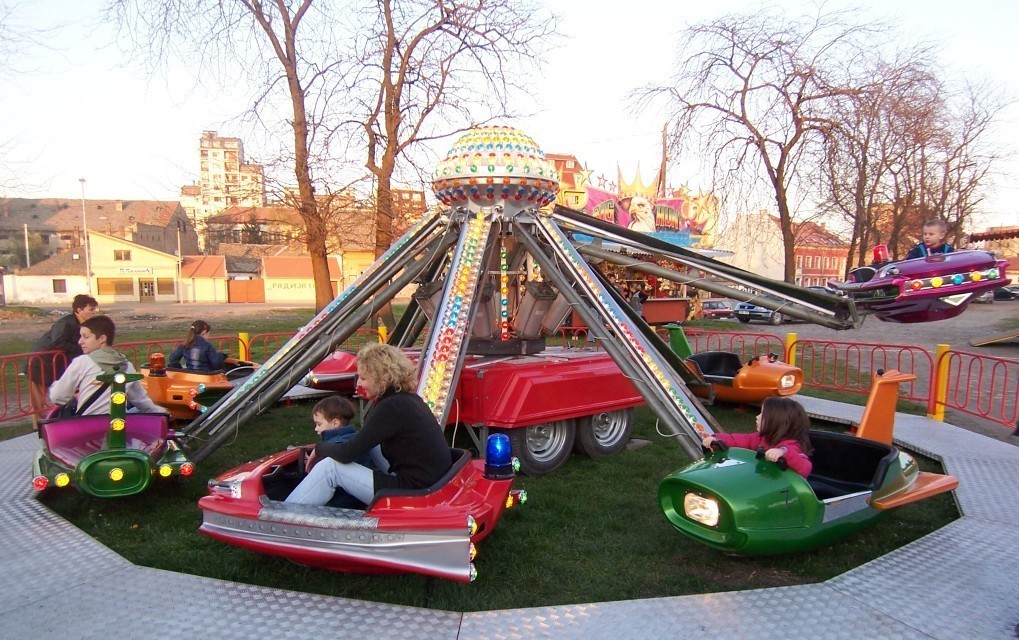
Also the children's airplane carousel, introduced in the market as "Mini Avio", was an "invention" of my father, in the middle of the '70s. Since the Italian mothers of that time did not want to take their children on the merry-go-round because the planes reached heights considered excessive, the first merry-go-rounds of this type were sold abroad, in France and Germany. Here, too, a worldwide success that has become a classic!
Today, the company you manage is a multinational with interests and activities in many countries around the world. Italian creativity is appreciated everywhere, even in this particular form of art and business: what’s in the future of Italian innovation in your field?
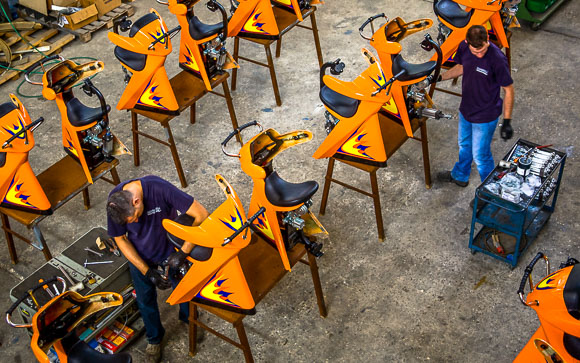
There is still the skill of our employees, from technicians and artists to the last worker, because the rides are complex machines, a well-dosed mix of technology, creativity and imagination but also familiarity with the psychology of people and the expectations of adults and children.
So, to face the challenges of innovation, at Zamperla we have created a group of collaborators, young and passionate, who are analyzing the feasibility of transferring 4.0 technologies to the company. At this moment we’re thinking about IOT (Internet of Things) and AR (Augmented Reality), initially for innovative maintenance based on real-time access to machine and management data as well as the processing of data collected through wearable technologies by technicians and/or products from machine and environmental sensors. We are also looking carefully at other 4.0 technologies such as COBOT (Collaborative Robot) or AM (Additive manufacturing), which for the moment are not "interesting" for our reality in view of limited production volumes (ours is still a niche market) or still excessive costs.
Another project that is maturing within Zamperla is the realization of the Z-LAB, under the direction and coordination of my son Antonio. It is a research center that, thanks to the coexistence of skills ranging from psychology to sociology, from art to technology, is intended to develop as an incubator of ideas, at the same time place and means of research and anticipation of how the fun of the future will be.
The Z-Lab is designed as a 360-degree innovation department, constantly looking for new multidisciplinary ideas useful to create innovative products and services, keeping up to date with the latest research in the fields of design and visual communication, technology, science, culture, psychology and sociology. Consistently with this objective, new professionals will be welcomed into the Lab, able to carry out this research function in first person, but also to act as a link and coordination between other research centers, or specialized external collaborators, and the Lab itself.
That's why among the professional figures soon to be researched and hired at Zamperla there will be not only engineers (mechanical, electronic, informative, aerospace or even nuclear), administrative and graduates in foreign languages, but also designers, decorators, psychologists, sociologists and philosophers.
And as far as the products are concerned, since our youngest customers are already digital natives, we have already launched a new brand called Z+ that offers rides with interactive VR high-tech applications or borderline solutions that go to areas of the market outside Amusement.
L’America apprezza da sempre la creatività, l’ingegno, la manualità degli italiani. Sono doti che hanno permesso a tanti connazionali di emigrare negli Stati Uniti, lavorare duramente, provare le proprie capacità, trovare la loro strada, avere successo. E’ successo in ogni campo, e la persona che oggi ospitiamo su We the Italians ne è un esempio vivente.
Alberto Zamperla guida la società che ha preso il nome di suo padre: la sede è in Italia, la filiale americana è in New Jersey. Se negli ultimi 8 anni siete stati a Coney Island, nel luna park più famoso del mondo, probabilmente vi siete divertiti grazie a lui; ma è possibile che sia successo anche in altri importanti parchi divertimento in America. Zamperla è l’italiano che fa divertire gli americani nei parchi giochi inventati dall’America, con la creatività e l’inventiva che solo noi italiani possediamo. Two flags, One big smile.
Dott. Zamperla, benvenuto su We the Italians. Noi italiani associamo i parchi divertimenti agli Stati Uniti: ed è fantastico scoprire che tra i leader nel settore in America c’è un’impresa italiana. Cosa si prova a far divertire un popolo come quello americano, che del divertirsi ha fatto uno dei suoi punti di forza conosciuti in tutto il mondo?
L’associazione mentale parchi divertimento-USA nell’immaginario collettivo è assolutamente spontanea se non addirittura scontata, ma quanto a divertimento noi italiani non siamo secondi a nessuno!
Già gli antichi romani avevano familiarità con il divertimento e il suo valore politico demagogico, tanto da riassumere nella formula “panem et circenses” il senso del benessere pubblico; per non parlare poi del famoso carnevale veneziano, insieme di divertimenti pubblici dalle origini antichissime che risalgono addirittura ai primi anni dell’anno 1000.
Mi scusi, la mia passione per la storia mi porta a divagare.
“Frequento” gli Stati Uniti dal 1976, anno in cui mio padre mi spedì nel Nuovo Mondo ad aprire un avamposto commerciale per la nostra azienda, quindi la mia familiarità con il mondo dei parchi divertimento in USA è ultra quarantennale. Non posso certo nascondere la mia soddisfazione e il mio orgoglio nell’essere riusciti, come azienda, a farci conoscere ed apprezzare anche in USA da aziende quali Disney, Universal, Six Flags, Sea World etc., insomma il meglio dell’industria del divertimento.
Ciò detto e senza nulla togliere a nessuno, posso comunque affermare che l’impresa di cui sono più orgoglioso in assoluto è essere riuscito a far rinascere il Luna Park di Coney Island, NY, nel 2010 e continuare a gestirlo con soddisfazione e successo.
Quello è il luogo dove il termine stesso “Luna Park” è nato - una delle zone di divertimento più conosciute al mondo! Se non sbaglio a chiamarvi fu l’allora sindaco di New York Michael Bloomberg, ispirato dal predecessore Rudolph Giuliani che vi chiamò per adattare l'area della pista di pattinaggio di Central Park in un parco divertimenti estivo con una prospettiva non solo commerciale.
A distanza di anni si può dire che Bloomberg fece la scelta giusta e che grazie al vostro intervento c’è stata un’enorme riqualificazione sociale dell’intera area di Coney Island…
Prima di rispondere mi permetta una precisazione relativamente al progetto di Central Park: è stato Donald Trump, gestore della pista di pattinaggio sul ghiaccio Wollman Rink che, con l’obiettivo di avviare una attività redditizia per il periodo estivo, ci ha contattati, quindi noi non abbiamo avuto alcun rapporto con il Sindaco Giuliani (prima di arrivare a noi, peraltro, Trump aveva già tentato di utilizzare la pista di pattinaggio nel periodo estivo organizzando corsi di aerobica, skating, ballo e addirittura di equitazione: tutti tentativi naufragati nell’insuccesso). Noi abbiamo subito pensato di proporre un parco per bambini che si distinguesse dai soliti e fosse, per così dire, di buon gusto: abbiamo proposto una tematizzazione che si rifaceva al “bon ton” di epoca vittoriana e l’abbiamo chiamato “Victorian Gardens”. Ecco, questa è la vera storia del parchetto divertimenti a Central Park.
Tornando alla sua domanda, ovvero se Bloomberg abbia fatto la scelta giusta nel puntare sulla riqualificazione di Coney Island partendo dal parco divertimenti, non possiamo che confermare (attenzione però: Bloomberg non ha chiamato noi, ha indetto una gara pubblica alla quale noi abbiamo partecipato e che abbiamo vinto). La scelta dell’amministrazione pre Bloomberg di dare una casa ai newyorkesi in difficoltà senza dare loro la possibilità di un lavoro si è rivelata fallimentare e non ha fatto altro che contribuire al degrado generale dell’area, costringendo la popolazione di Brooklyn ad una vita di espedienti.
La riapertura di Luna Park a Coney Island è stata concepita fin da subito come parte integrante di un più amplio progetto di riqualificazione dell’intera area per la quale l’amministrazione Bloomberg prevedeva di investire direttamente più di 150 milioni di dollari in infrastrutture ed edilizia urbana per riportare il sito ai fasti di un tempo. Ulteriori investimenti nell’ordine di svariati milioni di dollari sarebbero inoltre stati stanziati dallo Stato e dai Governi Federali.
Il Luna Park occupa oggi un centinaio di collaboratori fissi e da maggio a settembre dà lavoro a oltre 600 stagionali: non male, non crede? Anche perché a latere del parco sono nati tanti piccoli esercizi e sono state aperte tante attività che danno lavoro alla popolazione locale, per non parlare di alberghi già aperti o in previsione (consideri che il parco attrae ogni anno circa 800 mila persone tra newyorkesi e turisti).
Per dirla all’americana, possiamo affermare che per la città di New York si è trattato di un’operazione win-win dove tutti hanno tratto vantaggio: la municipalità che incassa canoni di affitto e tasse per la gestione di Luna Park, la popolazione che si ritrova un territorio bonificato e riqualificato con crescenti opportunità di lavoro, la società che gestisce il parco e gli esercizi sul boardwalk, ecc. ecc.
Secondo lei c’è un motivo per cui un’azienda con il dna italiano ha così tanto successo negli Stati Uniti?
Siamo tecnicamente e professionalmente bravi, competenti e flessibili, coniughiamo fantasia ed ingegno e poi, aspetto non trascurabile, siamo abituati al bello! Ma lei ha presente Vicenza, i suoi palazzi palladiani, il contesto naturale e paesaggistico che la circonda? Ecco, io credo che noi italiani abbiamo la capacità di portare nel mondo la bellezza cui siamo abituati: ci sarà pure una ragione perché il Made in Italy è conosciuto ed apprezzato in tutto il mondo, non crede?
Il fatto di avere così tanta storia e un patrimonio artistico che tutto il mondo ci invidia ci ha poi abituati, come italiani, a saper cogliere il senso profondo delle cose e averne rispetto. Quando abbiamo messo mano alla ricostruzione di Luna Park abbiamo dovuto vincere una buona dose di dichiarata ostilità da parte dei newyorkesi che temevano di perdere, con il nuovo Luna Park, un pezzo di storia e di identità. Non Le nascondo la soddisfazione quando nel 2012 il New York Times ha titolato un pezzo su Coney Island “Renewed but Recognizable”: siamo stati capaci di riaprire il parco e riattualizzarlo, senza stravolgerlo o snaturarlo!
La Antonio Zamperla S.p.A. nasce nel 1966, fondata da suo padre, Antonio. La storia di suo padre, da giostraio a fondatore di un impero di successo in tutto il mondo, contiene in sé la pervicacia imprenditoriale italiana e insieme il sogno americano di chi ce la fa. Ci racconta qualcosa di lui?
Non ho difficoltà ad ammettere che io debbo tutto a mio padre: dall’educazione alla trasmissione dei valori fondamentali della vita. Mio padre mi ha insegnato che essere “uomo” significa innanzitutto proteggere sempre i più deboli, mi ha trasmesso il senso del dovere e della fatica, l’attaccamento al territorio ma anche il valore dell’apertura mentale, del sapersi mettere in gioco e adattarsi alle realtà geografiche e culturali più diverse. Mi ha fatto viaggiare e conoscere nuovi mondi: è stato lui che a 24 anni mi ha “democraticamente” inviato in USA ad “aprire” il mercato e l’ufficio americano.
E’ stato grazie a mio padre che, io che venivo dal ’68 e dall’ideologia che ci voleva tutti uguali, ho capito che avere tutti gli stessi diritti non significa essere per forza tutti uguali. Quando andavo a fare la spesa al supermercato in USA, il mio carrello era completamente diverso da quello degli americani: io acquistavo solo prodotti da cucinare, loro solo prodotti da riscaldare nel microonde!. “Paese che vai, cultura che trovi” recita un famoso detto: è al mio rientro in Italia dall’esperienza in USA che ho deciso di organizzare la mia azienda in modo da avere, presso ogni ufficio o sede estera, un “interprete culturale”, un italiano in loco in grado di trasferire alla casa madre le peculiarità del posto, della cultura e delle tradizioni locali.
Quindi lei arrivò in America nel 1976, e visto che molta parte delle vostre attività era rivolta agli Stati Uniti, nel 1979 nacque in New Jersey la Zamperla Inc. Quali sono le principali attrazioni che avete creato in America?
A fine anni ’80, poco prima di acquisire la commessa per Eurodisney Parigi, vera e propria pietra miliare nella storia della mia azienda, abbiamo fornito la prima giostra a Disney California: non ci eravamo mai confrontati con clienti così strutturati e così esigenti e non ho problemi ad ammettere che la prima fornitura per Disney è stata per noi un bagno di sangue. Ma siamo italiani, siamo veloci e siamo capaci: abbiamo imparato subito la lezione e le forniture successive sono state un successo. Ad oggi abbiamo fornito a Disney più di 25 attrazioni e siamo ormai partner fidelizzati dei principali protagonisti dell’industria del divertimento a livello mondiale.
Nel 2005 suo padre fu il primo italiano a venire riconosciuto nella International Association of Amusement Parks and Attractions Hall of Fame, l'albo d'oro dei grandi personaggi dell'industria del divertimento: vi si trovano personaggi come Walt Disney e George Ferris, l’inventore della ruota panoramica. Un riconoscimento del genere è davvero qualcosa di eccezionale...
Sì, eccezionale come eccezionale è stato mio padre! Pensi che è stato lui il primo a capire che gli autoscontri, al tempo una giostra per adulti, potevano essere ripensati a misura di bambino: un successo mondiale!
Anche la giostra aerei per bambini, introdotta nel mercato come “Mini Avio”, è stata una “invenzione” di mio padre, verso metà degli anni ‘70. Pensi che dal momento che le mamme italiane del tempo non volevano far salire i loro bambini in giostra perché gli aerei raggiungevano altezze ritenute eccessive, le prime giostre di questo tipo sono state vendute all’estero, in Francia e in Germania. Anche in questo caso, un successo mondiale diventato un classico!
Oggi l’azienda che lei dirige è una multinazionale con interessi e attività in molti Paesi del mondo. La creatività italiana è apprezzata ovunque, anche sotto questa particolare forma d’arte e di impresa: cosa c’è nel futuro dell’innovazione italiana nel vostro campo?
Continua ad esserci la bravura dei nostri dipendenti, dai tecnici e gli artisti fino all’ultimo operaio, perché le giostre sono macchine complesse, un mix ben dosato di tecnologia, creatività e fantasia ma anche di familiarità con la psicologia delle persone e le aspettative di adulti e bambini.
Ecco quindi che per affrontare le sfide dell’innovazione, in Zamperla abbiamo creato un gruppo di collaboratori, giovani e appassionati, che sta analizzando la fattibilità di trasferire in azienda tecnologie 4.0. Pensiamo ad esempio a IOT (Internet of Things) e AR (Augmented Reality), inizialmente per una manutenzione innovativa basata sull’accesso in real time a dati macchina e gestionali oltre che sull’elaborazione di dati raccolti attraverso tecnologie indossabili da parte dei tecnici e/o prodotti da sensoristica macchina e ambientale. Stiamo guardando con attenzione anche ad altre tecnologie 4.0 tipo COBOT (Robot Collaborativi) o AM (Additive manufacturing), per il momento non “interessanti” per la nostra realtà in considerazione di volumi di produzione limitati (il nostro è comunque un mercato di nicchia) o di costi ancora eccessivi.
Un altro progetto che sta maturando all’interno della Zamperla è la realizzazione dello Z-LAB, sotto la direzione e il coordinamento di mio figlio Antonio. Si tratta di un polo di ricerca che grazie alla coesistenza di competenze che spaziano dalla psicologia alla sociologia, dall’arte alla tecnologia, è inteso svilupparsi come incubatore di idee, allo stesso tempo luogo e mezzo di ricerca ed anticipazione di come sarà il divertimento del futuro.
Lo Z-Lab è pensato come un dipartimento di innovazione a 360 gradi, alla costante ricerca di nuovi spunti multidisciplinari utili a dare vita a prodotti e servizi innovativi, tenendosi aggiornato sulle ricerche più attuali nei settori del design e della comunicazione visiva, della tecnologia, della scienza, della cultura, della psicologia e della sociologia. Coerentemente con questo obiettivo, si accoglieranno al suo interno delle nuove professionalità in grado di svolgere questa funzione di ricerca in prima persona, ma anche di fare da raccordo e coordinamento tra altri centri di ricerca, o collaboratori esterni specializzati, e il Lab stesso.
Ecco perché tra le figure professionali di prossima ricerca ed assunzione in Zamperla non ci saranno solo ingegneri (meccanici, elettronici, informativi, aerospaziali o addirittura nucleari), amministrativi e laureati in lingue straniere, ma anche designer, decoratori, psicologi, sociologi e filosofi.
E per quanto riguarda i prodotti, dal momento che i nostri clienti finali più giovani sono già dei nativi digitali, siamo già usciti sul mercato con un nuovo brand chiamato Z+ che propone giostre con applicazioni high tech VR interattive o soluzioni di confine che si spingono in aree di mercato esterno a quello dell’Amusement.