
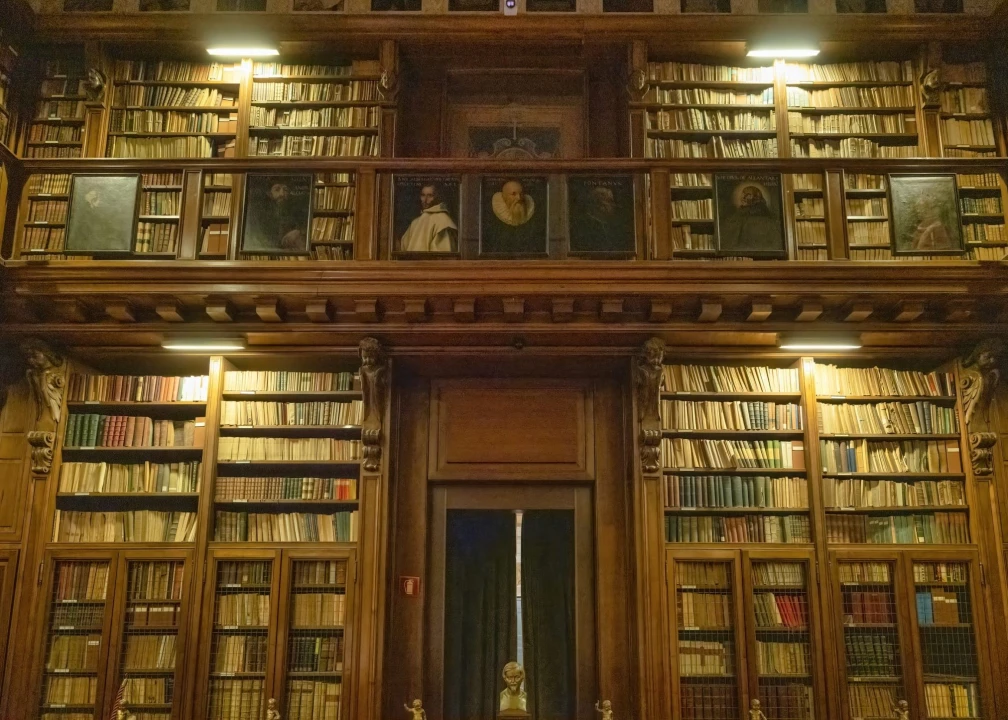
In the age of the Baroque, the archbishop of Milan Federico Borromeo (1564-1631) would send burly yet educated men to sea on a hunt for manuscripts. Cardinal Federico was a younger cousin of the zealous prelate Carlo Borromeo, the eventual guardian saint against the plague who played an important role in the Counter-Reformation. They both belonged to the Borromeo family, a noble Milanese house that left a strong mark in Northern Italy.
But Federico was a “universal” bibliophile who sent out solo emissaries to chase manuscripts throughout the known world because of his great obsession: the Ambrosiana. In his mind it had to become one of the most important cultural institutions in Europe, a public library (the Veneranda Biblioteca Ambrosiana) an art gallery (the Pinacoteca Ambrosiana), an art school, and an ecclesiastic college. Federico planned its foundation and grand opening for 1609.