
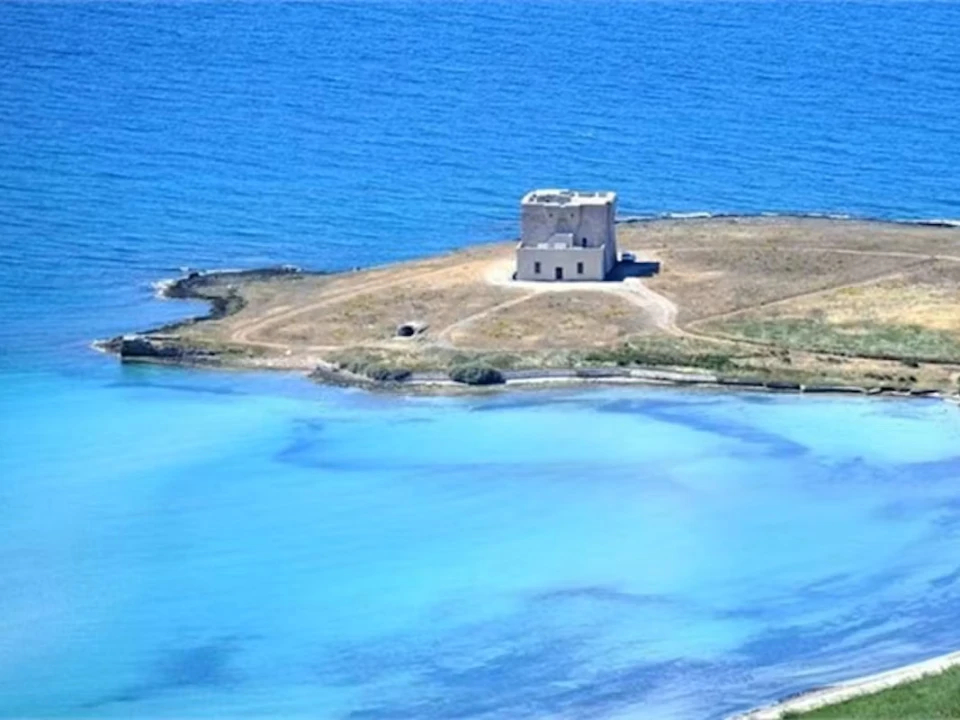

Along the Adriatic coast of Apulia, between the cities of Brindisi and Carovigno, stretches the protected natural landscape of Torre Guaceto, an area where land and sea interact in a rare state of balance. This protected system includes both a marine reserve and a terrestrial nature reserve, extending along about 8 kilometers of coastline. Altogether, the protected area covers more than 3,300 hectares, with approximately 2,200 hectares of sea and over 1,100 hectares of land.
The coastal landscape is shaped by a continuous sequence of sandy beaches, low rocky outcrops, and dune systems that rise up to 10 meters in height. These dunes act as a natural barrier between the sea and inland environments, protecting fragile habitats from erosion and salt intrusion. Behind them, wetlands and seasonal ponds form shallow basins where freshwater mixes with saltwater, creating ideal conditions for diverse plant and animal life.
Vegetation in Torre Guaceto reflects centuries of adaptation to wind, sun, and limited rainfall. Mediterranean scrub dominates much of the land area, with plants such as lentisk, myrtle, rosemary, thyme, and wild olive thriving in sandy and calcareous soils. In spring, flowering species spread color across the dunes and fields, while summer brings a more austere landscape marked by silvery foliage and aromatic herbs. These plant communities stabilize the soil and provide shelter for insects, reptiles, and small mammals.
The wetlands within the reserve play a crucial ecological role. Shallow lagoons and salt flats serve as resting and feeding areas for migratory birds traveling between Europe and Africa. Over the course of a year, dozens of bird species can be observed using these habitats, particularly during spring and autumn migration periods. The quiet nature of these zones allows wildlife to thrive with minimal disturbance.
Offshore, the marine environment is equally diverse. The seabed alternates between sandy plains and rocky formations, supporting extensive meadows of Posidonia seagrass. These underwater meadows are among the most important ecosystems in the Mediterranean, acting as nurseries for fish and contributing to water clarity and oxygen production. Fish, crustaceans, and mollusks find food and protection within these submerged landscapes, often close to the shoreline.
The clarity of the water near Torre Guaceto is directly linked to the health of these marine habitats. In shallow areas, sunlight penetrates easily, supporting plant growth and making underwater life visible even from the surface. Seasonal changes influence marine activity, with warmer months bringing higher biodiversity near shore and cooler months offering calmer, quieter conditions.
Inland areas of the reserve transition gradually from wild scrubland to cultivated fields. Traditional olive groves and agricultural plots remain part of the landscape, reflecting a long coexistence between human activity and nature. These cultivated zones help buffer the fully protected areas and create a varied mosaic of environments. Stone walls, dirt paths, and abandoned rural structures add subtle traces of human history without dominating the natural setting.
Geologically, the area tells a long story shaped by wind, sea currents, and sediment movement. Coastal erosion and deposition continue to reshape beaches and dunes year after year. In some sections, compact clay and limestone formations emerge, offering a contrast to softer sandy stretches and increasing habitat diversity along the coast.
Seasonal rhythms strongly define the experience of Torre Guaceto. Spring brings mild temperatures and active wildlife, summer highlights the contrast between deep blue water and pale sand, autumn introduces softer light and renewed vegetation, and winter reveals a more dramatic, windswept coastline. These cycles reinforce the sense of an environment governed by natural processes rather than human schedules.
Torre Guaceto stands today as a living landscape where land and sea evolve together. Its value lies not only in its size or location, but in the continuity of ecosystems that remain closely connected, offering a clear example of Mediterranean nature preserved in its dynamic and resilient form.