Italy is the greatest food and wine superpower of the planet: it's hard to find somebody who disagrees with this statement. But food is not just nourishment: food is culture, integration, dialogue and innovation. And, also from this point of view, Italy has excellences that look towards the future with leadership and talent.
One of them is Marco Gualtieri, creator of "Seeds&Chips": one of the world's leading events in the field of Food Innovation. Marco is also one of the many Italians who has a special love relationship with the United States. We are pleased to host him on We the Italians, and we thank him for what he does and for his friendship
Marco, food is effectively a part of the cultural heritage of a country. Indeed, it was the philosopher Feuerbach who stated that, "Food is the foundation of culture and sentiment ... We are what we eat." By this account, Italy is the richest country in the world by far. What do you think needs to be done to enhance this, considering how we are perceived by the world?
Even before Feuerbach, though certainly from a different perspective as it was linked to health, the same thing was said by Hippocrates. Today, we have something that was not present before that enhances both of those aspects: technology. That comprises digital resources, big data, artificial intelligence, along with many other elements. On one hand, this opens up an immense horizon in knowledge and understanding of the relationships between food and health; on the other hand, it can help us communicate directly to communicate the history, traditions, origins and production processes of our food and agri-food system. The wide range and growing availability of these tools portend a moment of great change, which I think is irreversible, in which consumers want to know who and what is behind and around a food product.
With this in mind, the characteristics which make Italy so special not only can, but must seize this opportunity by enhancing its traditional products and the uniqueness of both its system and model. This can be accomplished using available technologies, primarily in the digital realm, and seizing the opportunity to use the most cutting edge products and services available. A great example of this is the application of blockchain technology to food, which can help build an extraordinary certification system that establishes traceability in the food system. But as always, it is not enough just to have the tools available, you need to know how to use them. In our case the biggest mistake (along with the dramatic and incomprehensible lack of system building!) is to take things for granted. Too often we not only tell each other how our food is the best and healthiest in the world, but we are convinced that the world shares this belief and knows it implicitly.
Instead, it is fundamental to change this paradigm almost as if we were starting from scratch, and start talking about this in a new way that does not rely on foregone conclusions. This is to say nothing about what people may know about us in ‘emerging’ markets (which may be little to nothing) or massive markets like what China is shaping up to be. I always like to remember, and use as my reference, an idea that an American friend told me many years ago: "Remember that 85% of Americans do not have a passport". What does that mean? It means that they have never traveled outside of the continent and that much of what they know has been mediated through indirect experience. Today we have the opportunity to communicate directly with people and, if done right, this can be the catalyst for extraordinary development in both the Italian agro-food system as well as the tourism sector.
You are the creator of "Seeds & Chips", one of the world's leading events in the field of Food Innovation. It is also the most important, and a natural heir to the wealth of content and communication that came out of Expo 2015. Can you tell us about it?
From May to October 2015, Milan organized Expo 2015 with the title "Feeding the planet, energy for life". For the first time the world came together to talk about food as the center of an enormous matrix, which led to a real discussion of the challenges related to the growth of the world population, to climate change, to urbanization, and to the word that has come to define our era and will continue to do so in the coming decades: sustainability.
Those of us for whom memory serves longer than the short term (a condition which, alas, is often a defining feature), would do well to remember that the majority of people, including those within our economic and political system thought, until the opening day, that the event would be a huge flop. Some even believed that the event would not be held at all.
Despite those difficulties I always thought that EXPO would be a huge success but, to be frank, we should have kept Italy at the center of the discourse and continued advancing the central themes of EXPO as well as everything that it represented. That it was a success, organizationally as well as in the public that attended, is an objective fact; it has also had an undeniably positive effect both on Milan and on Italy as a whole. Less well known, however, is what the event represented for the global food system, be it within the different sectors as well as the growing awareness that has taken hold at the societal level.
Coincidentally, EXPO happened in the same year in which the United Nations approved the SDGs (Sustainable Development Goals for 2030), and as nearly every nation in the world signed the COP21 Agreement in Paris to combat climate change. These events coalesced to generate, and will continue to generate, an epochal change for the entire global economic system: as I mentioned above, the concept of sustainability has been a uniting force, and within this, food is a dominant and transversal factor. In this push and on these themes, Italy has been a driving force. It is perhaps a matter of luck or fate, though I tend to think it was a matter of vision and foresight as well as a specific skill set that we brought to the table.
It was on this basis and in light of these various global scenarios that I thought, even before the opening of Expo, that we had to lay the foundations to make that universal exhibition live on even after its closure. Thus, in March 2015, quite honestly on our own and barely understood, we organized the first edition of Seeds & Chips. It was a four-day summit to talk about all the challenges and issues of food, involving all stakeholders (policy makers, companies, media, startups, investors, etc) and comprised of three fundamental elements: the presence and substantive involvement of young people (not only Millenials but also teenagers, or what is labeled Generation Z); a special exhibition area for research and the presentation of solutions and models that not only talked about change but were actively working on it; and a strong sense of the international character of an event which was, while distinctly Italian, tackling global issues.
We have a rule regarding young people: every conference session must have at least one speaker under 30, and each session is opened by a teenager, who we call ‘Teenovator’, who takes the stage at the beginning of the discussion to talk about their dreams, projects, ideas, and values. This is a steadfast rule we have and one of which I am very proud. Indeed, I often find myself listening to these speeches over and over again: they are an incredible source of inspiration and give me great confidence in the future.
In the last two editions of “Seeds&Chips” you chose Barack Obama and John Kerry, two incredibly prestigious Americans, to give Keynote speeches. What is your relationship with the United States?
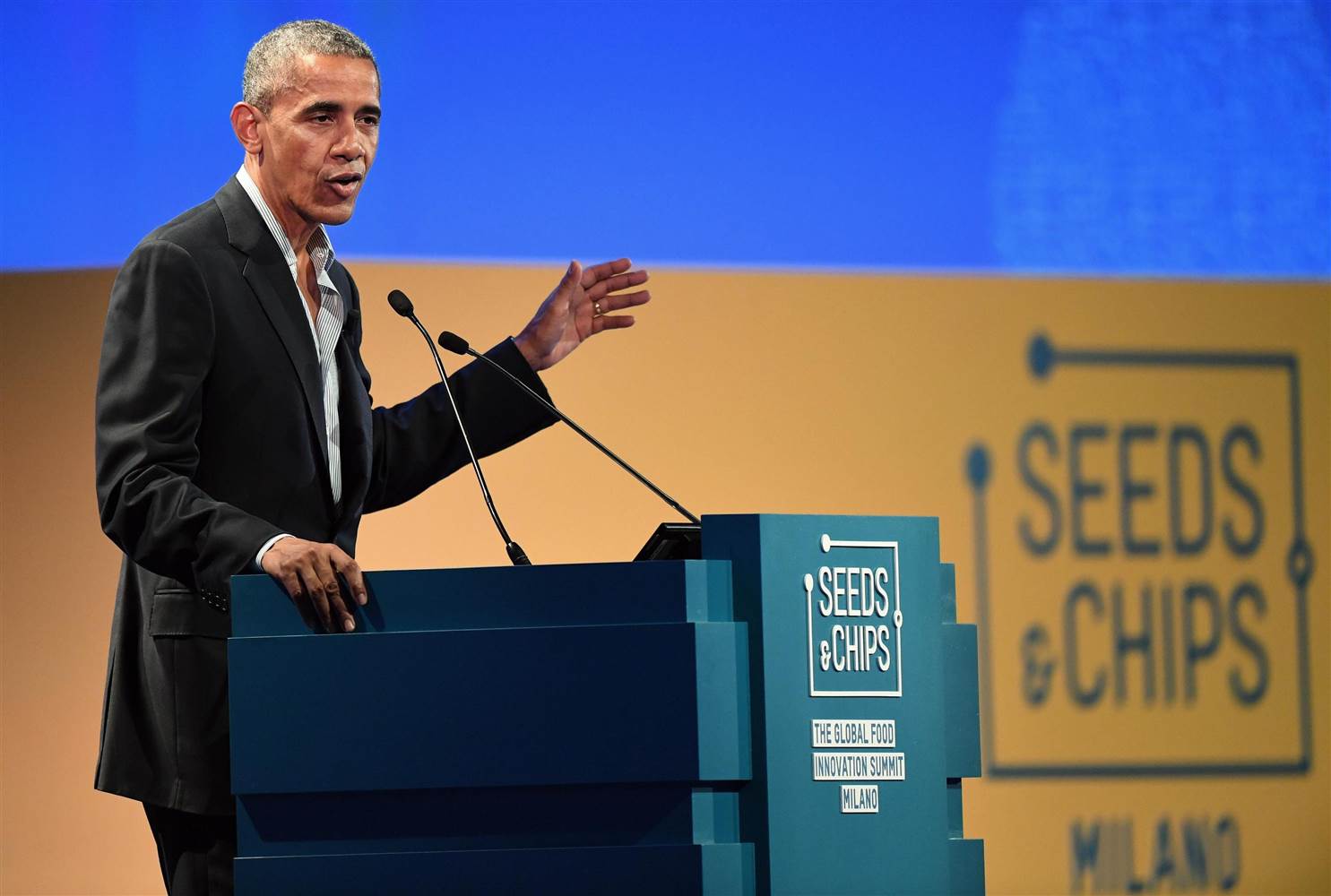
First let me say that rather than us choosing them, it was our honour to have them accept our invitation. In particular, to have President Obama make his first public appearance after two terms in the White House, was obviously a turning point. His speech (with the Milan logo well framed, if I may emphasize!) was broadcast live by 144 television stations worldwide. This was of course, our goal: to make everyone understand the importance of the topic with which we are dealing, and the enormous opportunity for economic development that it represents. Paradoxically, this has been especially difficult in Italy, and continues to be a challenge. The arrival this year of John Kerry, Howard Schultz (founder of Starbucks) and many other important figures is confirmation not only of the continuing importance of these issues, but also of the fact that in while small, we work with passion and tenacity.
Certainly, this resulted from my long standing, and in many ways broad links to the United States. A fundamental aspect of this, and a key element in my own life, has been the strong relationship with the Kennedy family and specifically with Kerry Kennedy, one of my dearest friends and one of the most special people I know. We met many years ago when I was asked to give my small contribution to the enormous work that she, with her mother Ethel and all the so-called "Kennedy clan" have been carrying out for years with the Robert F. Kennedy Center for Justice and Human Rights. Today, Seeds & Chips has an incredible network in the US that includes people, companies, universities, startups, incubators, investors, research centers. We have ongoing and daily relationships that never cease to inspire us and present opportunities, much of which is extraordinarily cultivated and nurtured by Sharon Cittone, Chief Content Officer of Seeds & Chips, who calls herself "half Italian and half American" (Sharon was born in Italy but lived in the USA for 25 years).
I will tell you a little anecdote. Sharon and I met through her daughter Morgane who was 15 years old at the time. I asked her, "what do you want to be when you grow up?" Morgane replied "I want to change the world". She wasn’t joking! It then occurred to me last year to call her to ask if she would like to introduce President Obama at Seeds & Chips. It was very emotional for all of us: myself, Morgane, Sharon, and Morgane’s legendary grandmother Marilena who keeps us all in step. On that same day, they showed me a picture of Morgane who, proud and full of conviction at the age of 7, sported a T-shirt with the words "Obama, my President!" Morgane, at 3 years old, was in the Twin Towers on 11 September 2001. And President Obama, just before his speech, tried to reassure her backstage by saying: "don’t worry, don’t think about the people and cameras, it's just you and me". She replied, "You are not helping!"
One of the main problems with which the Italian system is confronted is distribution, whether by an entrepreneurial structure that privileges the great diversity of thousands of exceptional but small producers, or by the historic lack in the Italian food sector of large international distribution channels. Do you think it’s possible that networks and new technologies could help us unite supply and demand, and to promote and distribute our extraordinary products, particularly in America?
As I previously stated, absolutely! Provided, however, that the tools are used properly; for example, regardless of the revenue, every study reports double-digit growth in the next few years in e-commerce, and this alone is enough to warrant our attention and investment. Digital is THE channel and if you're not there, you do not exist. Even large retailers are changing rapidly and in some ways radically; retailers have understood that they can safeguard their business by focusing on food.
This means creating an experience for physical retailers, but for everyone it means imbuing value onto the product, telling its story and continuing to incorporate innovation. The speed of these changes and the explosion of startups or small and medium-sized companies that focus on innovative products as well as the appearance of new online distribution models makes the transactional process of large chains even more complicated. This is precisely why I, for example, am giving all my support to an extraordinary Italian startup, Emerge, which has developed a completely disruptive platform to help streamline the process and the relationship between producers and distribution networks.
It is a model that brings enormous benefits to both actors and that not only reduces both sales management and research costs, but it optimizes their dynamism. Emerge not only has a platform that allows you to find or be easily found, but leads to buyers a system that operates on the logic of social networks and tells the stories of products, producers and the territory in which these operate with a brilliant mechanism that helps you discover and get to know them. This is a concrete example of how a small startup can become a large company and in doing so, can contribute to an enormous development to the agri-food system and, ipso facto, to tourism.
It is one of those situations in which, beyond the economic return for the individual producer, one can create value for ecosystems and for the entire Italian system as a whole. In short, where the whole is greater than the sum of its parts. To give a sense of its potential, Emerge, which is not even 2 years old and which is still developing and evolving it’s platform, has already started working with some of the world's largest retailers. In addition, and this is no small thing, they’re working with colleagues and startups around the world that are growing by two percentage points. One of them, practically unknown to most, has two thousand employees and 400 electric vehicles for deliveries and has done so in less than 3 years.
In an interview with WTI, Piero Bassetti shared his thoughts on Italian Sounding, which has one of the main markets in America: he sees the many cases of obvious product fraud as a sort of tribute to Italian excellence. In addition, a marketing plan for these products would lead the way and thus facilitate the entry onto the market of original Italian foods, which would save the effort of launching an unfamiliar food in a virgin market. In short, not a problem, but an opportunity. What is your opinion on this?
As I see it, Piero Bassetti’s idea of tribute to, or better of the potential of, Italian excellence. And I think that’s the question right there: the potential we have! But we must exploit it. To me honestly it hurts when I see people’s belief in and enthusiasm about products that are considered ‘Italian’ but are clearly not. Just as it hurts me, traveling continuously and understanding this incredible potential, to realize that we are not taking advantage of it. Consider this: the Netherlands, which has only 17 million inhabitants and an area equal to that of Lombardy and Veneto combined, with land and biodiversity that does not come close to Italy, has an export revenue of almost € 92 billion, which is double that of Italy. Why? Because they are better at system building, and because they were at the forefront of innovation.
However, as an optimistic person, I see the glass half full. We have all of the ingredients for huge economic development in Italy that, were we to combine the agri-food-tourism sectors, would serve at the catalyst for billions of euros in growth. We just have to be aware of it, see it as a priority and know how to use these ingredients well. The key word is innovation: not only in the technical sense of the term, but also in the cultural sense of changing our thinking (by not taking things for granted), our methodology and finally trying to build a system.
The Italian production of quality food views the huge Italian-American community as a valuable network of ambassadors. Their cuisine is born from the recipes of Italian immigrants and evolved according to the different foods they found in the new world, which were much different from those they had in Italy. There was also the need to inexpensively feed nutritious meals to families, particularly given the difficult work that most Italians were tasked with doing in America.
There is also a parallel with the Italian ‘cucina povera’ rooted in the need to cook cheap and highly nutritious dishes. If Italy were to recognize this, as a tribute to a cuisine that has distinguished itself from its roots through evolution, what does that say about the roots that are firmly and distinctly Italian?
Italian Americans, what an untapped potential. And I speak of Italians abroad all over the world, not just in America. The change in mentality must also go in this direction, and your suggestion is certainly interesting. It is about understanding to what extent we should be puritanical, what is extreme, or to recognize and enhance those evolutions and interpretations that deserve respect. There is a thin line that must be defined. To be sure, however, in this case I support the defenders of tradition in the broadest sense of the word. When I accidentally find myself in restaurants that pretend to be Italians or run by people of Italian descent, are clearly bluffing, I get angry and run away. Because it is one thing to adapt to certain circumstances and then adapt the dishes, the menu, etc; another is fooling people across the board. Today, however, making claims about the supply of raw materials is no longer a valid alibi.
Rightly, one of the topics you insist on is the sustainability of Italian food. With her "The Italian Garden Project", Mary Menniti told us that even in the United States, Italians are recognized leaders in the cultivation of the garden, prizing the sustainability of natural products and composting as traditions that go back to the habits of Italian immigrants to beginnings of the last century ...
Sustainability is the key word for everything from here on. And so it is also and above all for food. People want to know how a product was grown, where it comes from, what impact it has on the planet, etc. They want to know. Here is the great opportunity we have. We have a lot of those things that people want to know. We just have to tell them. Until recently, all the wonderful storytelling around our products interested only a select few, they were a niche. Today they have the power to evoke feeling. And therefore to honor. Think of Parmesan: being able recount the pedigree of Padano, Reggiano, Trentino, and then specifically talk about the dairy that has a hundred years of history... And so on. It’s a wonderful, never-ending story made up of extraordinary elements that have been maintained and evolved over the years. I am convinced, and I hope to be able to communicate, that innovation is the best ally of tradition.
The theme of food waste, and the fight against it, is also among those dearest to you. And at Seeds & Chips you postulate how pasta can be particularly helpful. It is the same principle that motivates Bruno Serato, an Italian chef now living in California, to serve a dish of pasta for free every day to 1800 children too poor to afford a meal. Looking into the future: can the combination of innovation + Italy help eliminate waste and help those who need it?
One third of the food produced in the world is wasted, and goes directly into the trash. Beyond this, there are ethical problems: almost 800 million people on the planet have no access to regular food and water, the global population is growing, all scientific findings conclude that resources are limited. And again: producing and eliminating that wasted food has a huge impact on the environment including the impact on climate change. What madman who would waste 1/3 of what he has? All of us!
The issue is complex and must be urgently addressed in a number of ways: first cultural, then normative and finally by exploiting and developing solutions. By cultural I mean that from childhood and beyond, respect for food should be taught. For example, I think that American is light years ahead and Italy is exactly the opposite about what we call the Doggy Bag. In America it is customary to ask, and often waiters do it automatically, to bring home leftover food from a restaurant. In Italy we are ashamed. Madness! One should be ashamed not to do it. I paid for that food and that food has cost resources to produce.
Removing the stigma of this would benefit everyone: our wallets, restaurateurs (because I think it could also help achieve growth), the planet (especially the breaking of a vicious circle that occurs with this simple gesture of manners and intelligence). Normatively, there are already many examples that are increasing all over the world and that should be copied. Among the many, and as Italy has recently done, I think we need to institute a rewarding mechanism, more than punitive: less waste, more advantages. Otherwise, we might be forced to cede what is likely to be lost because it is no longer marketable to those who need it.
Regarding the technological aspect, there is an extraordinary world of opportunities opening up to us for, as we have said, waste affects the entire supply chain, from field to table. I think of the solutions that improve the transport or the shelf life of the products (biomimetic opens up stimulating horizons), systems of optimization of supplies and so on. But culture and education, as in all things, are fundamental and make all the difference.
You are part of the Coordinating Committee for the Year of Italian Food 2018, an initiative that is facing the inevitable slowdowns in government changes. Do you think the project will be able to continue, and will it create an an opportunity to promote our food and wine in the United States as well?
I accepted this position with great honor and a sense of responsibility. On the other hand, I told myself, this is what I have been doing for years on a daily basis. I am one of those people who is deeply in love with Italy, and who has wrung their hands seeing the enormous opportunities available, and who made acting and pitching in a way of life. In this case, I combine everything in which I believe and to which I have committed myself: in that sense, it feels quite easy and natural for me. Of course, the recent change of government has not facilitated that which, with the extraordinary personalities and professionalism of the other colleagues of the Committee, could or should have been done. I hope it will endure. But if it should not, in my small way and beyond the role I have, I will continue to believe and above all to act. Because I believe in it.
L’Italia è la più grande superpotenza enogastronomica del pianeta: è difficile che qualcuno non sia d’accordo con questa affermazione. Ma il cibo non è solo nutrimento: è cultura, integrazione, dialogo, innovazione. E anche da questo punto di vista, l’Italia ha eccellenze che guardano al futuro con leadership e talento.
Uno di questi è Marco Gualtieri, creatore di “Seeds&Chips”: uno degli eventi di riferimento a livello mondiale nel campo della Food Innovation. Marco è anche uno dei tantissimi italiani ad avere un particolare rapporto di amore con gli Stati Uniti. Noi siamo lieti di ospitarlo su We the Italians, e lo ringraziamo per quello che fa e per la sua amicizia
Marco, il cibo è a tutti gli effetti parte del patrimonio culturale di un Paese. Il filosofo Feuerbach asseriva che “L’alimento è il fondamento della cultura e del sentimento… Noi siamo quello che mangiamo”. L’Italia è, da questo punti di vista, il Paese più ricco del mondo, per distacco. Cosa pensi che si dovrebbe fare per valorizzare questo fattore attrattivo, pensando a come siamo percepiti nel mondo?
Ancora prima di Feuerbach e con una angolatura evidentemente diversa perché legata alla salute, la stessa cosa la diceva Ippocrate. Oggi per valorizzare ed evidenziare entrambi gli aspetti abbiamo a disposizione qualcosa che prima non c’era: la tecnologia intesa come il digitale, i big data, l’intelligenza artificiale, l’Iot; infatti se da una parte questa ci apre un orizzonte immenso nel conoscere e capire le relazioni tra cibo e salute, dall’altro ci può aiutare a comunicare direttamente a raccontare e fare conoscere la storia, le tradizioni, le origini ed i processi produttivi del nostro cibo e del nostro sistema agroalimentare. L’ampia e crescente disponibilità di questi strumenti si palesa in un momento di grande cambiamento, che penso sia irreversibile, nel quale i consumatori pretendono di conoscere chi e cosa c’è dietro ed attorno ad un prodotto alimentare.
L’Italia per le sue caratteristiche pertanto non solo può, ma deve cogliere questa opportunità valorizzando le tipicità ed in molti casi l’unicità del proprio sistema e modello. Lo può fare usando propriamente le tecnologie a disposizione, in primis il digitale, ma anche non arrivando anche questa volta in ritardo con l’utilizzo di quelle più emergenti come può essere l’esempio della blockchain che applicata al food è uno straordinario sistema di certificazione così come lo sarà anche di tracciabilità. Ma come sempre accade, non è sufficiente solo avere gli strumenti a disposizione, bisogna saperli usare.
Nel nostro caso l’errore più grande (insieme a quello drammatico e per me incomprensibile di non riuscire a fare sistema!) è quello di dare le cose per scontato. Troppo spesso non solo, infatti, ce la raccontiamo tra di noi di quanto il nostro cibo sia il più buono e sano al mondo, ma siamo convinti che il mondo lo condivida e lo sappia. E’ invece fondamentale cambiare questo paradigma quasi come se si dovesse partire da zero ed iniziare a raccontarci in un modo nuovo e non scontato.
Per non parlare di cosa sanno di noi (ovviamente poco se non nulla) i cittadini di molti mercati “emergenti” ed enormi come può essere la Cina; mi piace sempre ricordare, ed usare sempre come mio riferimento, un concetto che un amico americano mi ha detto molti anni fa: “Ricorda che l’85% degli americani non ha il passaporto”. Cosa vuole dire? Significa che non sono mai stati fuori dal loro continente e che molto di quello che sanno, è stato intermediato. Oggi abbiamo la possibilità di comunicare e raccontare direttamente, e questo, se fatto opportunamente, può aprire uno straordinario sviluppo per il sistema agroalimentare italiano e per il turismo.
Sei il creatore di “Seeds&Chips”, uno degli eventi di riferimento a livello mondiale nel campo della Food Innovation. E’ anche il più importante e naturale erede del patrimonio di contenuti e comunicazione scaturito dall’esperienza di Expo 2015. Ce lo racconti?
Milano, da maggio a ottobre del 2015, ha organizzato Expo 2015 con il titolo “Feeding the planet, Energy for life”. Per la prima volta il mondo si è trovato insieme a parlare del cibo posizionato al centro di una matrice enorme e primaria e quindi anche delle sfide legate alla crescita della popolazione mondiale, al cambiamento climatico, all’urbanizzazione, ad una parola fondamentale per oggi e per i prossimi decenni, la sostenibilità.
Se abbandoniamo la memoria corta che spesso, ahimè, ci contraddistingue, ci dovremmo ricordare che la maggioranza sia delle persone e del sistema economico e politico pensavano, fino al giorno di apertura, che l’evento sarebbe stato un enorme flop e per alcuni neanche si sarebbe tenuto.
Fin da tempi non sospetti, ho invece pensato che Expo sarebbe stato un enorme successo ma, che per essere tale, avremmo dovuto tenere qui in Italia la centralità dei contenuti e portare avanti il tema di Expo e tutto quello che rappresenta. Che sia stato un successo organizzativo e di pubblico è assodato ed oggettivo, anche in relazione all’indotto positivo che questo ha scaturito su Milano e sull’Italia intera. Meno noto è ciò che quell’evento ha rappresentato a livello internazionale nel food system, sia per il settore, che nella creazione di una crescente consapevolezza delle persone. Expo è casualmente avvenuto nello stesso anno in cui, a New York, le Nazioni Unite approvavano gli SDGs (Sustainable Development Goals per il 2030) e a Parigi quasi tutti i paesi del mondo sottoscrivevano l’accordo Cop21 per combattere il cambiamento climatico. Eventi che messi assieme hanno generato e genereranno un cambiamento epocale per tutti i settori economici, accomunati, come detto sopra, dal concetto di sostenibilità e dove il cibo e l’acqua sono i fattori trasversali e dominanti. Ecco, l’Italia è stata la protagonista internazionale su questo tema. Forse per fortuna e casualità, ma io penso più per visione e lungimiranza, certo poi in concreto per capacità.
Con queste basi e scenari alcuni anni fa avevo pensato che, ancora prima dell’apertura di Expo, bisognasse porre le fondamenta per far vivere l’esposizione universale anche dopo la sua chiusura e così, a marzo 2015, onestamente con le nostre sole forze e poco capiti, abbiamo organizzato la prima edizione di Seeds&Chips, un summit di quattro giorni per parlare di tutte le sfide e le tematiche del cibo, coinvolgendo tutti gli stakeholder (policy maker, aziende, media, startup, investitori, etc) con tre elementi fondamentali: la presenza ed il coinvolgimento vero e pratico dei giovani (non solo i Millennial ma anche i teenager, cioè la Generazione Z), la continua ricerca e presentazione, con una apposita area espositiva, di soluzioni e modelli per non lasciare spazio solo alle parole ma anche ai fatti, e una forte caratterizzazione internazionale: evento sì italiano, ma globale. Per quanto riguarda i giovani, ad esempio, la nostra regola è che ogni conferenza abbia almeno uno speaker sotto i 30 anni; e ogni conferenza viene aperta da un teenager, che noi chiamiamo Teenovator, che è il primo a salire sul palco e ad avere l’attenzione per poter trasmettere i propri sogni, progetti, idee e valori. Una cosa di cui andiamo molto fieri. Non riesco a smettere di riascoltare questi interventi che sono fonte di grande ispirazione e mi danno anche una grande fiducia nel futuro.
Hai scelto come keynote speakers delle due ultime edizioni di “Seeds&Chips” due americani di grandissimo prestigio come Barack Obama e John Kerry. Qual è il tuo rapporto con gli Stati Uniti?
Più che aver scelto noi, siamo onorati che abbiano accettato. In particolare modo la presenza del Presidente Obama, alla sua prima apparizione pubblica dopo due mandati alla Casa Bianca, è ovviamente stato un punto di svolta. Il suo intervento (con, e ci tengo a sottolinearlo, il logo Milano ben inquadrato) è stato trasmesso in diretta da 144 televisioni nel mondo. Era ovviamente il nostro obiettivo: far capire a tutti, ma soprattutto all’ Italia, cosa che paradossalmente è stata ed è ancora molto difficile, l’importanza del tema che trattiamo e quindi anche della sua enorme opportunità per lo sviluppo economico. L’arrivo quest’anno di John Kerry, di Howard Schultz (fondatore di Starbucks) e di molti altri grandi nomi è stata la conferma di questa importanza, ma anche del fatto che nel nostro piccolo lavoriamo bene, con passione e tenacia.
Certamente, per avere ottenuto questi risultati, c’è anche il mio forte e lungo - e per certi versi ampio - legame con gli Stati Uniti. Consolidato su quello che oramai è un pezzo fondamentale della mia vita: il profondo rapporto con la famiglia Kennedy e nello specifico con Kerry Kennedy, una delle mie amiche e persone più care, che ho conosciuto molti anni fa quando mi è stato chiesto di dare il mio piccolo contributo all’enorme lavoro che lei, con la mamma Ethel e tutto il cosiddetto “clan Kennedy” portano avanti da anni con il Robert F. Kennedy Center for Justice and Human Rights.
Oggi, con Seeds&Chips abbiamo un network incredibile negli Usa con persone, aziende, università, startup, incubatori, investitori, centri di ricerca; un contatto continuo e quotidiano, ricco di ispirazioni e opportunità, straordinariamente coltivato e stimolato da Sharon Cittone, Chief Content Officer di Seeds&Chips, che si autodefinisce “mezza italiana e mezza americana” (Sharon è nata in Italia ma ha vissuto 25 anni negli USA).
Vi racconto un piccolo aneddoto: ci siamo conosciuti tramite sua figlia Morgane che all’epoca del nostro incontro aveva 15 anni. Alla mia domanda “cosa vuoi fare da grande?” Morgane mi ha risposto “voglio migliorare il mondo”. Non scherzava! Mi è venuto naturale l’anno scorso chiamarla per chiederle se aveva piacere di presentare il Presidente Obama a Seeds&Chips. Ci siamo emozionati tutti: io, lei, la mamma e la mitica nonna Marilena che ci fa marciare tutti quanti per la sua energia da ventenne; e in quello stesso giorno Sharon mi mostra una foto di Morgane che, convinta ed orgogliosa all’età di 7 anni, sfoggiava una maglietta con scritto “Obama, my President!”. Morgane l’11 settembre del 2001 era nelle Torri Gemelle. Aveva 3 anni e per fortuna si è salvata. Il Presidente Obama, poco prima del suo intervento, nel backstage provò a tranquillizzarla dicendole: “non ti preoccupare, non devi pensare alla gente ed alle telecamere, pensa che siamo solo tu ed io”. Gli risponde con “You are not helping!”
Uno dei principali problemi che incontra l’eccellenza italiana nella produzione di cibo è la distribuzione, sia per una composizione imprenditoriale che privilegia la grande diversità di migliaia di produttori eccezionali ma piccoli, sia per la storica mancanza italiana nel campo della grande distribuzione internazionale. Credi sia possibile che la rete e le nuove tecnologie oggi aiutino sensibilmente a far incontrare domanda e offerta promuovendo e diffondendo sempre più i nostri straordinari prodotti ovunque, e in primo luogo in America?
Come spiegavo, assolutamente sì! A condizione però che si sfruttino adeguatamente gli strumenti; ad esempio non importa quanto vale l’e-commerce sul fatturato, fermo restando che tutti gli studi ci parlano di una crescita a due cifre per i prossimi anni, per giustificare attenzione ed investimenti in questo campo. Il digitale è IL Canale per farci conoscere e se non ci sei, semplicemente non esisti.
Anche la grande distribuzione sta cambiando rapidamente e per certi versi radicalmente; i retailer hanno capito che possono tutelare il loro business con una particolare attenzione al food. Questo vuole dire creare per i negozi fisici un’esperienza, ma per tutti gli operatori vuole dire dare il giusto valore al prodotto, raccontandolo nelle sue profondità e continuando ad innovare le referenze. La velocità di questi cambiamenti insieme all’esplosione di startup o piccole medie imprese che si focalizzano in prodotti innovativi, rende ancora più complicato il processo transazionale delle grandi catene, così come è crescente la comparsa di nuovi modelli di distribuzione on line.
Per questo, ad esempio, sto dando tutto il mio supporto ad una straordinaria startup italiana, Emerge, che ha sviluppato una piattaforma completamente disruptive per aiutare ad efficientare il processo ed il rapporto tra i produttori e le reti distributive. E’ un modello che porta enormi vantaggi ad entrambi gli attori e che non solo riduce per entrambi i costi di gestione, di vendita da una parte e di ricerca dall’altra, ma ne ottimizza il dinamismo. Emerge non solo ha una piattaforma che consente di trovare o farsi trovare con facilità e con modalità diverse, ma porta ai buyer un sistema che ha le logiche dei social network e che aiuta anche a raccontare le storie dei prodotti, dei produttori e del territorio in cui questi operano con un meccanismo virtuoso che ti aiuta a conoscere e a scoprire. Questo è un esempio di una realtà che da piccola startup può diventare una grande azienda e nel farlo, inoltre, può creare uno sviluppo enorme al sistema agroalimentare e, per come è stata concepita, anche al turismo. E’ proprio una di quelle situazioni in cui oltre al ritorno economico per il singolo produttore, si può creare valore per ecosistemi e per l’intero sistema Italia. Insomma, dove il risultato è molto maggiore della somma degli addendi.
Per capirne le potenzialità si pensi che oggi Emerge, che non ha neanche 2 anni di vita e che ha una piattaforma in continuo sviluppo ed evoluzione, ha iniziato già a lavorare con alcuni dei più grandi retailer al mondo, ma anche, cosa da non sottovalutare, con realtà colleghe (startup) che in molte parti del mondo, stanno crescendo a due cifre percentuali. Una tra tutte, praticamente sconosciuta ai più, in meno di 3 anni ha già duemila dipendenti e 400 veicoli elettrici per le consegne. Così, tanto per dire, a quelli che ancora pensano che le startup siano qualcosa di marziano.
Nell’intervista che ci ha concesso, Piero Bassetti ha condiviso con noi il suo pensiero sull’Italian Sounding, che ha in America uno dei principali mercati: al netto della lotta alle frodi palesi, secondo lui va visto come tributo all’eccellenza italiana. Inoltre, il marketing di questi prodotti farebbe da apripista e dunque agevolerebbe l’inserimento sul mercato di quelli originali italiani, che risparmierebbero lo sforzo di introdurre un alimento sconosciuto in un mercato vergine. Insomma, non un problema, ma un’opportunità. Qual è la tua opinione in merito?
Il ragionamento di Piero Bassetti credo che sia corretto nel concetto di tributo o meglio di potenziale dell’eccellenza italiana. E credo stia proprio qui la questione: la potenzialità che abbiamo! Ma dobbiamo sfruttarla.
A me, onestamente, fa male quando vedo convinzione e anche entusiasmo su quello che viene considerato italiano, ma tale non è. Così come mi fa male, viaggiando continuamente e capendo le potenzialità, constatare che non le stiamo sfruttando.
Mi chiedo, ma sappiamo che l’Olanda, che ha solo 17 milioni di abitanti ed una superficie pari a quella di Lombardia e Veneto combinati, con un terreno ed una biodiversità peraltro non paragonabili a quello italiano, ha un export di quasi € 92 miliardi cioè il doppio dell’Italia? Come mai? Perché sono bravi nel fare sistema e perché sono tra i primi innovatori.
Ecco allora, da persona ottimista, vedo il bicchiere mezzo pieno: oggi ci sono tutti gli ingredienti per creare un enorme sviluppo economico per l’Italia capace, nel combinato agroalimentare-turismo, di creare un volano da miliardi di euro di crescita. Dobbiamo solo esserne consapevoli, vedere il tutto come una priorità e saper usare bene gli ingredienti. La parola chiave è innovazione; non solo nel senso tecnico del termine, ma anche nel senso culturale del cambiare il pensiero (non dando più le cose per scontato), la metodologia e quindi anche di cercare, una volta per tutte, di fare sistema.
La produzione italiana di cibo di qualità vede nella enorme community italoamericana una rete di ambasciatori da valorizzare. La loro cucina nasce dalle ricette degli immigrati italiani e si evolve in base ai diversi alimenti che trovavano nel nuovo mondo, diversi da quelli che avevano in Italia, ed alla necessità di alimentarsi con prodotti poco costosi e molto nutrienti, visto l’enorme lavoro al quale ogni giorno si sottoponevano gli italiani in America.
C’è un parallelo con la cucina povera italiana e le sue radici nella necessità di cucinare piatti economici e ad alto contenuto nutritivo. E se l’Italia volesse riconoscere un tributo ad una cucina che evolvendosi si è solo distinta dalle sue radici, ma che quelle radici trova e orgogliosamente rivendica nella cucina italiana?
Gli italoamericani, che potenziale inesploso. E parlo di italiani all’estero in tutto il mondo, non solo in America. Il cambio di mentalità deve andare anche in questa direzione e la vostra suggestione è certamente stimolante. Si tratta di capire fino a che punto essere puritani all’estremo, oppure riconoscere e valorizzare quelle evoluzioni ed interpretazioni che meritano rispetto.
C’è una sottile linea che deve essere definita. Nel dubbio però in questo caso mi schiero con i difensori della tradizione nel senso più ampio del termine. Quando, per sbaglio, mi trovo in ristoranti che si spacciano per italiani o gestiti da persone di origine italiana, ma dove “il bluff” si respira ovunque, mi arrabbio e scappo a gambe levate. Perché un conto è adattarsi a determinate circostanze ed adattare quindi i piatti, il menu, etc; un altro è ingannare su tutta la linea. Oggi peraltro viene meno l’alibi dell’approvvigionamento delle materie prime.
Giustamente, uno dei temi sui quali tu insisti molto è quello della sostenibilità del cibo italiano. Con il suo “The Italian Garden Project”, Mary Menniti ci ha raccontato che anche negli Stati Uniti gli italiani sono riconosciuti leader nella coltivazione dell’orto, premiando la sostenibilità dei prodotti naturali e il compostaggio come tradizioni che risalgono alle abitudini degli emigrati italiani agli inizi del secolo scorso…
La sostenibilità è la parola chiave per tutto quello che ci circonda da qui in avanti. E quindi lo è anche, e soprattutto, per il cibo. La gente vuole sapere come è stato coltivato un prodotto, da dove arriva, che impatto ha per il pianeta, etc. Vuole sapere. E’ qui la grande opportunità che ci si presenta. Noi abbiamo moltissime di quelle cose che la gente vuole sapere ed avere. Dobbiamo solo comunicargliele. Fino a poco tempo fa tutti i meravigliosi storytelling intorno ai nostri prodotti interessavano pochi, erano una nicchia. Oggi sono in grado di commuovere. E quindi di premiare. Pensate al Parmesan: poter raccontare quali disciplinari hanno il Padano, il Reggiano, il Trentino e poi nello specifico raccontare di quel caseificio che ha cento anni di storia e che…. E così via. Una meravigliosa storia potenzialmente infinita, fatta di straordinari elementi che si sono mantenuti ed evoluti negli anni. Io sono convinto, e spero di dimostrarlo, del fatto che l’innovazione sia il migliore alleato della tradizione.
Anche il tema della lotta allo spreco del cibo è tra quelli a te più cari. E a Seeds&Chips avete postulato come la pasta possa essere particolarmente di aiuto. E’ il principio che muove Bruno Serato, chef italiano ora trapiantato in California, che ogni giorno serve gratuitamente un piatto di pasta a 1800 bambini troppo poveri per permettersi un pasto. Aiutaci a vedere il futuro: può il connubio innovazione+Italia aiutare ad azzerare gli sprechi e aiutare chi ne ha bisogno?
Un terzo del cibo prodotto al mondo è sprecato, va nella pattumiera. Poi ci sono i problemi etici: quasi 800 milioni di persone sul pianeta non hanno accesso a cibo e acqua regolare, la crescita della popolazione mondiale, la constatazione scientifica che le risorse sono limitate. E ancora: produrre ed eliminare quel cibo sprecato costa un enorme impatto all’ambiente inclusa l’incidenza sul cambiamento climatico. Chi è quel pazzo che si permetterebbe di buttare nella pattumiera 1/3 di quello che ha? Tutti noi!
La questione è complessa e va urgentemente affrontata con un mix di strumenti: primo culturale, poi normativo ed infine sfruttando e sviluppando le soluzioni. Culturale significa che a partire dai bambini, ma anche oltre, va insegnato il rispetto per il cibo; penso ad esempio ad una cosa su cui l’America è avanti anni luce e l’Italia all’opposto: quello che noi chiamiamo Doggy Bag. In USA è consuetudine chiedere, anzi spesso lo propongono direttamente i camerieri, di poter portare a casa il cibo avanzato al ristorante. Da noi in Italia ci si vergogna. Una vera follia! Ci si dovrebbe vergognare a non farlo. Ho pagato per quel cibo e quel cibo è costato molte risorse. Sdoganando questo aspetto retrogrado ne beneficerebbero tutti: il mio portafoglio, i ristoratori (perché credo ne potrebbe conseguire anche una crescita), il pianeta (soprattutto per il circolo vizioso che si crea con questo semplice gesto di civiltà ed intelligenza).
Per l’aspetto normativo ci sono già molti esempi che stanno aumentando in tutto il mondo e che dovrebbero essere copiati ed applicati. Tra i tanti mi piace pensare, come è stato fatto anche recentemente in Italia, ad un meccanismo premiante, più che punitivo: meno sprechi, più hai vantaggi. Oppure sei obbligato a cedere a chi ne ha bisogno quello che rischia di andare perduto perché non più commerciabile.
Per quanto riguarda l’aspetto tecnologico e dell’innovazione si apre un mondo straordinario di opportunità perché, come abbiamo detto, lo spreco riguarda tutta la filiera, dal campo alla tavola. Penso alle soluzioni che migliorano il trasporto o allungano la shelf life dei prodotti (la biomimetica ci apre orizzonti stimolanti), sistemi di ottimizzazione degli approvvigionamenti e così via. Ma la cultura e l’educazione, come in tutte le cose, sono fondamentali e fanno la differenza.
Tu fai parte del Comitato Tecnico di Coordinamento dell’Anno del Cibo Italiano 2018, iniziativa che sta scontando gli inevitabili rallentamenti dei cambi di governo. Pensi che sia un progetto che avrà continuità e possa essere l’occasione per promuovere la nostra enogastronomia anche negli Stati Uniti?
Ho accettato con grande onore e senso di responsabilità questo incarico. D’altronde, mi sono detto, è quello che faccio quotidianamente da anni. Io sono una di quelle persone fortemente innamorate dell’Italia a cui prudono le mani nel vedere enormi opportunità inevase, ma che ha fatto dell’agire e contribuire un modo di vita; in questo caso con la piattaforma Seeds&Chips che abbiamo creato e di cui il Summit è il perno centrale ma solo una parte, unisco tutto quello in cui credo e per il quale mi impegno e quindi mi viene molto facile e naturale.
Certo che il recente cambio di Governo non ha facilitato quello che con personalità e professionalità straordinarie degli altri colleghi del Comitato si sarebbe potuto o si potrà fare. Spero ci sarà una continuità. Ma se così non fosse, io nel mio piccolo e al di là dei ruoli e dei titoli, continuerò a crederci e soprattutto a fare.