For 7 years I have been dealing with everything that is Italian American on a daily basis, and by now I have learned to recognize when a name comes back often, involved in many things: that is a leader of the community in which he/she lives and works.
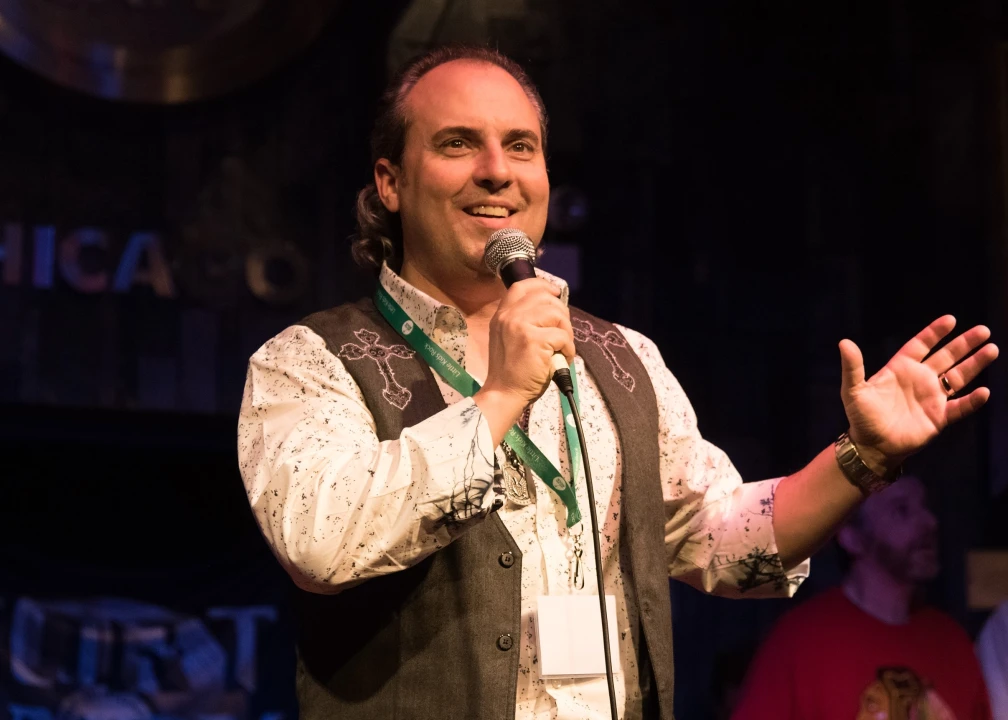
This is what happens in the Italian American community in Chicago: if there is music or the celebration of Columbus, the institutions that represent the Italian spirit or even sport, the name that recurs is always that of Ron Onesti. Recently, but it is only the latest in a series of testimonies to his success, Ron has been named the new President of the National Italian American Sports Hall of Fame. It is with great pleasure that we welcome here on We the Italians this great Italian, who seems to be loved by really everyone, starting today certainly by us too!
Ron, first I'd like you to tell our readers something about yourself. In what region of Italy are your origins, and where you grew up, and how would you define your being part of the Italian American community?
I was born on Taylor Street in the most famous Chicago’s Little Italy, where many of the Italians who came from the 1880s through the 1950s settled. My grandparents came here through Ellis Island from Oliveto Citra in the province of Salerno in Campania, around 1911, and my father was born on Taylor Street as well. He met my mother in World War 2 in Florence, where she was born. He brought her over to Chicago and they got married in 1961, and I was born in 1962.
My Italian heritage was instilled by my parents, and I’m very proud of my heritage. When I was younger, it was not about pushing the fact that you were Italian, it was a little bit the opposite. In those days, if you came to America from Italy it was about being American, not being Italian, and that is the reason why my parents named me Ronald, my brother Richard and my sister Victoria: they wanted to Americanize us to let us fit in. However, the Italian experience of food, family and faith was taught to me when I was a little young boy and I have never let it go. Nowadays, this heritage is widely considered as a value. And, as I was growing older, I felt important to get involved in the Italian American community.
You have produced hundreds of events of all kinds, many of them dedicated to the world of entertainment. Who are your favourite Italian American artists?
What I love doing in my job is to perpetuate the classic artists, especially because there are a lot of young people who don’t even know many of them. They are – let’s say - twenty five year olds and they do not even know who Dean Martin and Frank Sinatra were, or a lot of other wonderful Italian American artists. I also brought many Italian artists to the US. My favorite is Zucchero. We have become good friends, he’s an icon and a legend but also a very humble person.
I brought many others such as Laura Pausini, Renzo Arbore and Eros Ramazzotti. We also brought Il Volo in the US for the first time: they are International Superstars now, but back at that time they were just three Italian talented teenagers, and I remember the four of us playing soccer behind the stage of outdoor venue!
You also produce several festivals. Which are the Italian ones? Is there an anecdote about one of these festivals you would like to share with our readers?
My approach to the concerts or festivals that I organize is interesting because I try to recreate the experience of a family party. A few years ago, I was able to bring Connie Francis to Chicago, making her accept an award that I created: a beautiful Capodimonte piece on which I put a plaque from the little town that she was from. And this was part of a Festival that I organized that was called “The Taylor Street Festival”, where we managed to bring 150,000 people. So Connie Francis flew in from Florida, I picked her up at the airport and I was very excited, and we went to Taylor Street. We organized a tribute concert with more than 5,000 people in the audience, in which many singers, such as Deanna Martin and also The Jersey Boys, sang her songs. Connie was really touched, and she cried. During the concert, I was able to make her sit next to my parents and to my ninety years old aunt, for her it was a dream that came true. When we brought Connie to the stage, she said that it was such a beautiful day and tribute for her, and she felt so much love by the audience that she decided to sing a song and then she did two, Mamma and Where the Boys Are. The people were screaming like crazy for her, she was like a goddess for them.
Another interesting story is the one of a young lady, Crystal Bowersox, who is now a big star of American Idol. My wife liked very much her music, and so I invited her to my venue, the Arcada Theatre. I never even met her before, but when I went to welcome her she jumped right into my arms and started telling me her story. She is from St. Louis and she came to Chicago just a few years before, trying to find her way: she was at the end of her rope, she was almost homeless. But everything changed the day in which a common friend asked me to give her the chance to exhibit in one of the festivals that I organized. He said “I've got a friend down-on-her-luck. Is there any way you could book her to sing?” And you know, for friends I’d do anything, so I said yes, let’s have her. She did really well, people liked her very much, and this was the beginning of her career. And I didn’t remember any of it when I went to welcome her at the Arcada!
For more than two decades, you have been an integral part of the National Italian American Sports Hall of Fame that once was on Taylor Street in Chicago, and now you are the President. Please, tell us more about this wonderful place, its activities, and what is your vision for its future.
George Randazzo, the founder and President of the National Italian American Sports Hall of Fame, unexpectedly passed away about 10 months ago. Therefore the future of the organization was uncertain, it was falling apart, our building had been sold, all the memorabilia put on a storage. Since I was part of it for so many years, it was devastating to me. So the organization put together a board of directors and I was on the board, and they elected me president, in order to perpetuate George Randazzo’s dreams and make this wonderful institution again the international organization that it was once.
We just signed a deal for a building in Harlem Avenue, another Little Italy in Chicago. I’m happy to announce that we will reopen soon! You know Umberto, I actually designed all the exhibits and put all the memorabilia that you saw in the Hall of Fame when it was in Taylor Street. The objective is to create an advanced centre that really teaches the accomplishments of Italians Americans in sports. I would love to expand it in an Italian experience, where we also honour Italian Americans in entertainment, science and other fields. My goal is to let future generations know the inspirational stories of famous Italian American people, and especially what it took to them to become a legend.
The Columbus Day Parade is among the events that you have organized. What do you think about the attacks against Columbus, and what do you think the Italian American community should do?
I am the Vice President of an association called the Joint Civic Committee of Italian Americans that started in 1950s. I keep understand and respect people’s positions about their perception of Columbus Day, but judging if what he has done was good or not is not the purpose of the festivity. Columbus Day is a moment in which we celebrate Italian heritage. I think that protest something that was done 500 years ago does not have sense. So, why don’t we do the same with Pyramids? Egyptians used salves to build them. I repeat, the problem is that people forgot the real meaning of what Columbus Day is.
What I believe is that disagreement is understandable, but disruption and violence is never justifiable. I think that the most important thing is to discuss and try to find an agreement about how our future is going to be.
Da 7 anni mi occupo quotidianamente di tutto ciò che è italoamericano, e ormai ho imparato a riconoscere quando un nome ritorna spesso, coinvolto in tante cose: quello è un leader della comunità in cui vive e lavora.
E' quello che accade nella comunità italoamericana di Chicago: se c'è di mezzo la musica o la celebrazione di Colombo, le istituzioni che rappresentano l'italianità o anche lo sport, il nome che ricorre è sempre quello di Ron Onesti. Recentemente, ma è solo l'ultima di una serie di testimonianze del suo successo, Ron è stato nominato nuovo Presidente della National Italian American Sports Hall of Fame. E' con grande piacere che diamo il benvenuto su We the Italians a questo grande italiano, a cui sembra che davvero tutti vogliano bene, da oggi certamente anche noi!
Ron, per prima cosa vorrei che raccontassi ai nostri lettori qualcosa di te. In quale regione d'Italia hai le tue origini, e dove sei cresciuto? E come definiresti il tuo essere parte della comunità italoamericana?
Sono nato a Taylor Street in quella che è la più famosa Little Italy di Chicago, dove si sono stabiliti molti degli italiani che sono venuti dagli anni Ottanta del XIX secolo fino agli anni Cinquanta del XIX. I miei nonni sono arrivati qui attraverso Ellis Island da Oliveto Citra, in provincia di Salerno in Campania, intorno al 1911, e anche mio padre è nato a Taylor Street. Ha conosciuto mia madre nella seconda guerra mondiale a Firenze, dove è nata. La portò a Chicago e si sposarono nel 1961, e io sono nato nel 1962.
L’amore per le mie radici italiane mi è stato instillato dai miei genitori, e sono molto orgoglioso di esse. Quando ero più giovane, non si trattava tanto di rivendicare l’orgoglio di essere italiano, era un po' il contrario. A quei tempi, se si veniva in America dall'Italia si trattava di integrarsi nel tessuto americano, non di rivendicare l’italianità, ed è per questo che i miei genitori hanno chiamato me Ronald, mio fratello Richard e mia sorella Victoria: volevano americanizzarci per permetterci di inserirci. Tuttavia, l'esperienza italiana del cibo, della famiglia e della fede mi è stata insegnata quando ero un ragazzino e non l'ho mai lasciata andare. Oggi questo patrimonio è ampiamente considerato un valore. E, crescendo, ho sentito importante attivarmi per entrare a far parte della comunità italoamericana.
Hai prodotto centinaia di eventi di ogni tipo, molti dei quali dedicati al mondo dello spettacolo. Chi sono i tuoi artisti italoamericani preferiti?
Quello che amo fare nel mio lavoro è promuovere gli artisti più classici, soprattutto perché ci sono molti giovani che non ne conoscono tanti. Chi ha venticinque anni oggi spesso non sa nemmeno chi fossero Dean Martin e Frank Sinatra, o molti altri meravigliosi artisti italoamericani. Ho portato anche molti artisti italiani negli Stati Uniti. Il mio preferito è Zucchero. Siamo diventati buoni amici, è un'icona e una leggenda, ma anche una persona molto umile.
Ne ho portati molti altri come Laura Pausini, Renzo Arbore ed Eros Ramazzotti. Ho anche portato Il Volo negli Stati Uniti per la prima volta: ora sono superstar internazionali, ma all'epoca erano solo tre giovani ragazzi italiani di talento, e mi ricordo di noi quattro che giocavamo a calcio dietro il palco di un locale all'aperto!
Tu produci anche molti festival. Quali sono quelli italiani? C'è un aneddoto su uno di questi festival che vorresti condividere con i nostri lettori?
Il mio approccio ai concerti o ai festival che organizzo è interessante perché cerco di ricreare l'esperienza di una festa in famiglia. Qualche anno fa sono riuscito a portare Connie Francis a Chicago, facendole accettare un premio che ho creato io: un bel pezzo di Capodimonte su cui ho messo una targa della cittadina da cui proveniva. Questo evento faceva parte di un festival organizzato da me che si chiamava "The Taylor Street Festival", dove siamo riusciti a portare 150.000 persone. Così Connie Francis è arrivata in aereo dalla Florida, sono andato a prenderla all'aeroporto ed ero molto emozionato, e siamo andati a Taylor Street. Abbiamo organizzato un concerto tributo con un pubblico di più di 5.000 persone, con molti cantanti, tra cui Deanna Martin e anche i Jersey Boys, che hanno cantato le sue canzoni. Connie era davvero commossa e ha pianto. Durante il concerto ho potuto farla sedere accanto ai miei genitori e alla mia zia novantenne, per lei è stato un sogno che si è avverato. Quando abbiamo portato Connie sul palco, ha detto che per lei era una giornata bellissima e un grande omaggio per lei, e ha sentito così tanto amore da parte del pubblico che ha deciso di cantare una canzone e poi ne ha fatte due, Mamma e Where the Boys Are. La gente era complòetamente impazzita per lei, per loro lei era come una dea.
Un'altra storia interessante è quella di una giovane donna, Crystal Bowersox, che oggi è una grande star di American Idol. A mia moglie piaceva molto la sua musica, e così l'ho invitata nel mio locale, l'Arcada Theatre. Non l'avevo mai incontrata prima, ma quando sono andato ad accoglierla mi è saltata tra le braccia e ha iniziato a raccontarmi la sua storia. Lei è di St. Louis ed era venuta a Chicago qualche anno prima, cercando di trovare la sua strada: era al capolinea, era quasi una senzatetto. Ma tutto è cambiato il giorno in cui un comune amico mi ha chiesto di darle la possibilità di cantare in uno dei festival che organizzavo. Mi disse: "Ho un'amica in difficoltà. C'è modo di farla cantare?". E sai, per gli amici farei qualsiasi cosa, quindi ho detto di sì, facciamola cantare. È stata molto brava, la gente l'ha apprezzata molto, e questo è stato l'inizio della sua carriera. E non ricordavo nulla di tutto questo quando sono andato a darle il benvenuto all'Arcada!
Per più di vent'anni, tu sei stato parte integrante della National Italian American Sports Hall of Fame che una volta era a Taylor Street a Chicago, e ora ne sei il Presidente. Dicci qualcosa di più su questo posto meraviglioso, sulle sue attività, e qual è la tua visione del suo futuro.
George Randazzo, fondatore e presidente della National Italian American Sports Hall of Fame, è scomparso inaspettatamente circa 10 mesi fa. Il futuro dell'organizzazione era quindi incerto, stava cadendo a pezzi, il nostro edificio era stato venduto, tutti i cimeli erano stati messi in un deposito. Poiché ne ho fatto parte per così tanto tempo, per me è stato devastante. Così l'organizzazione ha messo insieme un consiglio di amministrazione e io ero nel consiglio, e mi hanno eletto presidente, per perpetuare i sogni di George Randazzo e fare di questa meravigliosa istituzione di nuovo l'organizzazione internazionale che era una volta.
Abbiamo appena firmato un accordo per un edificio in Harlem Avenue, un’altra Little Italy a Chicago. Sono felice di annunciare che riapriremo presto! Sai Umberto, in realtà ho progettato tutte le mostre e ho sistemato personalmente tutti i cimeli che hai visto nella Hall of Fame quando era in Taylor Street. L'obiettivo è quello di creare un centro avanzato che insegni davvero le conquiste degli italoamericani nello sport. Mi piacerebbe espanderlo in modo che celebrasse l'esperienza italiana nel suo complesso, dove onorare anche gli italoamericani nello spettacolo, nella scienza e in altri campi. Il mio obiettivo è quello di far conoscere alle generazioni future le storie ispiratrici di famosi italoamericani, e soprattutto qual è stato il loro percorso per diventare le leggende che sono.
La parata del Columbus Day è tra gli eventi che hai organizzato. Cosa pensi degli attacchi contro Colombo e cosa pensi che dovrebbe fare la comunità italoamericana?
Sono il vicepresidente di un'associazione chiamata Joint Civic Committee of Italian Americans che è nata negli anni '50. Continuo a capire e a rispettare le posizioni della gente sulla loro percezione del Columbus Day, ma giudicare se quello che ha fatto è stato buono o no non è lo scopo della festa. Il Columbus Day è un momento in cui si celebra l'italianità. Credo che protestare contro qualcosa accaduto 500 anni fa non abbia senso. Allora, perché non facciamo lo stesso con le Piramidi? E’ grazie agli schiavi che gli egiziani le costruirono. Ripeto, il problema è che la gente ha dimenticato il vero significato di quello che è il Columbus Day.